


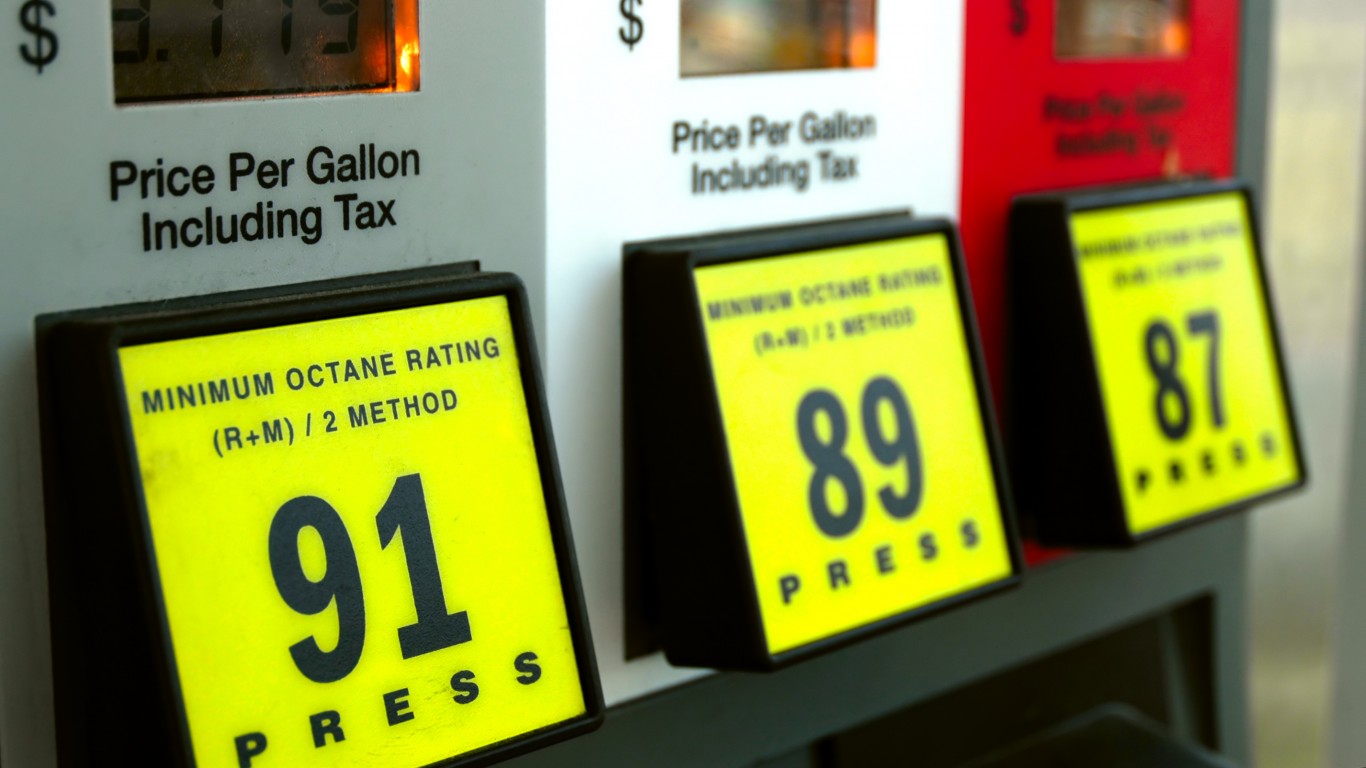
For a long stretch, which began in mid-December and lasted until late last month, crude oil traded below $50 a barrel. This pulled gasoline prices below $2 in a number of states and cities. Crude has been above $55 most of the past month though, and that means drivers can say goodbye to $1.99 gas prices almost everywhere in America.
Research firm GasBuddy determines the trend of gas prices based on the average cost at the pump for a gallon of regular at approximately 150,000 gas stations. At those stations, it tracks over 10 million transactions a week. Last week, the number of stations that sell gas for $2 or less dropped to 11,286. On December 9, that number was nearly 36,000. Only one state, Mississippi, has an average price for a gallon for regular below $2. Currently, the number in the state is $1.99.
The average price for a gallon of regular across the country was $2.19 last week. The research firm also measures what the most common price is across the 150,000 stations. Last week, that most common price per station also was $2.19 per gallon. The second most common price was $2.09 per gallon, and the third most common price was $2.29.
Oil prices are not the only factor that affects prices. Refinery capacity for gasoline production has an impact as well. The Energy Information Agency reported last week that refiners posted a drop in utilization rates of nearly 5% to 85.9%. Less refinery use means less gasoline supply. The primary reason for this drop was refinery maintenance, which usually happens from February to May.
[nativounit]
Oil prices may stay relatively high for a long period, which means gas prices are more likely to rise than fall. According to Patrick DeHaan, head of petroleum analysis for GasBuddy:
[B]ullish data and optimism on a U.S.-China trade deal helped propel markets last week, as well as turmoil in Venezuela making a strong case for a larger absence of heavy crudes the market depends on. But while gas prices are nearly guaranteed to be higher in May than today, it is looking more likely that the rise in prices this year may be more muted than we’ve seen in years past when prices launched 35-75 cents during the spring.
Gas prices continue to vary widely by state, which is always the case, based on state gas taxes and proximity to refineries and oil production locations. The average price of regular in Mississippi, Alabama, Louisiana, South Carolina, Arkansas, Texas, Missouri, Oklahoma, Kansas and New Mexico was below $2.10 last week. Most of these states are relatively close to the huge Texas refineries on the Gulf of Mexico south of Houston. All these states, except Kansas, rank in the bottom 10 on the list of state gas taxes in all 50 states, according to the American Petroleum Institute.
At the other end of the spectrum, California had an average price of $3.36 last week, and Hawaii’s was $3.23 a gallon. California has the second highest gas taxes among any state, and Hawaii has the fourth highest. Hawaii, in particular, is not near any large refinery, and some of its gasoline supply has to be shipped from the west coast of the United States.
With Memorial Day just over three months away, and with it the summer gas price season as Americans take to the roads, gas prices are more likely than not to rise through Labor Day. So, $1.99 gas is not just disappearing. The day when it will reappear is probably a long time away.
[recirclink id=528816]

[wallst_email_signup]






 Top Gaining Stocks
 Top Losing Stocks