



The oil industry’s largest and most powerful lobbying/trade association is expected to announce this week that it backs a federal carbon-pricing policy to reduce carbon emissions. The American Petroleum Institute (API) is said to be considering the statement this week, according to a report in the Wall Street Journal that appeared Monday evening.
As cited by the Wall Street Journal, the draft statement reads, “API supports economy-wide carbon pricing as the primary government climate policy instrument to reduce CO2 emissions while helping keep energy affordable, instead of mandates or prescriptive regulatory action.”
The group’s senior vice president of communications told the Wall Street Journal that API’s current efforts “are focused on supporting a new U.S. contribution to the global Paris agreement.”
The API draft statement supports the principle of carbon pricing but has nothing to say about how that price should be set except that no government mandates or regulator actions are required.
[nativounit]
What is likely to emerge after all the announcements are released into the wild is a proposal similar to one put forward in 2019 by the Climate Leadership Council (CLC). Its Baker-Shultz Carbon Dividends Plan proposed setting a starting tax of $40 a ton on carbon emissions that would increase over time. Consumers would pay the tax and would receive a dividend that repays 100% of collections from a U.S. carbon tax. The CLC estimates a rebate amount of $2,000 for a family of four from a $40 per-ton fee.
We pointed out a couple of serious problems with this plan at the time.
In the current case, the API supports carbon pricing without a mandate. Without a mandated price, how does a carbon pricing scheme work?
Suppose the API or some other industry group gets to set the price. What should the price be? Here’s what a United Nations commission said about carbon pricing in 2017:
[T]his Commission concludes that the explicit carbon-price level consistent with achieving the Paris temperature target is at least US$40–80/[metric ton of] CO2 by 2020 and US$50–100/[metric ton of] CO2 by 2030, provided a supportive policy environment is in place.
In January of this year, the European Union’s cap-and-trade carbon price reached an all-time high of around $41.37 per metric ton (mt), according to S&P Global Platts. A World Bank survey of carbon pricing found just five countries where carbon emissions cost at least $40 per mt: Sweden ($133), Liechtenstein ($106), Switzerland ($105), Finland ($72) and Norway ($57). All are taxes; the EU’s emissions trading system priced carbon at the time at about $30 per mt.
The United States does not have a national carbon tax or even a national emissions trading scheme. California’s carbon tax is around $17 per metric ton, and the Regional Greenhouse Gas Initiative (RGGI) cap-and-trade rate was less than $6 per mt. The RGGI allows electric power suppliers in nine northeastern states to emit up to a specified number of allowances annually. Those plants that can generate fewer may sell their extra allowances to other plants. If the price of allowances exceeds a predefined level ($13 per metric ton in 2021), a reserve equal to 10% of the regional cap (nearly 120 million allowances) is triggered to keep the cost within limits.
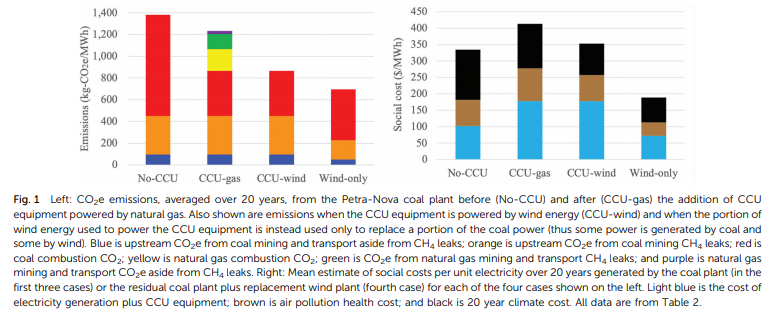
The chances that API is going to support a carbon price of $40 to $80 are slim. What the group is likely to argue more strongly in favor of is carbon capture, use and storage. The big attraction to the oil and gas industry of carbon capture is the belief that the developing technology can solve the carbon emissions problem and consumers wouldn’t have to change a thing. That may not be true.
A 2018 report by the Intergovernmental Panel on Climate Change (IPCC) estimated that carbon capture technologies can help lower global carbon dioxide emissions by 75% to 90%. That estimate assumes that carbon capture removes 85% to 90% of carbon dioxide, with a penalty of around 25% to operate the carbon capture equipment itself. Simply scrapping carbon-emitting plants and replacing them with renewables is far more effective.
We’ll have to wait a little longer to hear from the API, but anything more specific than a bromide about fighting carbon emissions is unlikely. Yet, it’s still welcome.
[recirclink id=843865][wallst_email_signup]










 Top Gaining Stocks
 Top Losing Stocks