



Shares of Ford Motor Company (NYSE: F | F Price Prediction) lost 0.51% over the past month after gaining 6.13% the month prior. The legacy automaker’s stock has gained nearly 57% since its one-year low on April 8. Over the past year, Ford is up 38.56%. It continues to pay patient shareholders with a dividend currently yielding 4.41%, or 15 cents per share quarterly.
In its Q3 earnings call on Oct. 23, 2025, Ford reported top- and bottom-line beats with EPS of 45 cents versus analysts’ expectations of 36 cents, and revenue of $47.19 billion versus $43.08 billion expected. But the Detroit carmaker lowered 2025 full-year guidance due to the anticipated fallout from of a fire at one of its major aluminum suppliers.
Ford’s iconic brand helped to define American mechanical design and business supremacy in the 20th century and continues to remain a major player to this day. Founder Henry Ford created the mass production assembly line manufacturing process, and Ford cars and trucks are sold worldwide. It is the second-largest U.S. auto industry builder after General Motors (NYSE:GM) and sixth largest worldwide, the Dearborn-headquartered company has remained resilient despite lackluster performance over the past few years.
But investors are concerned with future stock performance over the next one five and 10 years. While most Wall Street analysts will calculate 12-month forward projections, it’s clear that nobody has a consistent crystal ball, and plenty of unforeseen circumstances can render even near-term projections irrelevant. 24/7 Wall St. aims to present some farther-looking insights based on Ford’s own numbers, along with business and market development information that may be of help to our readers’ own research.
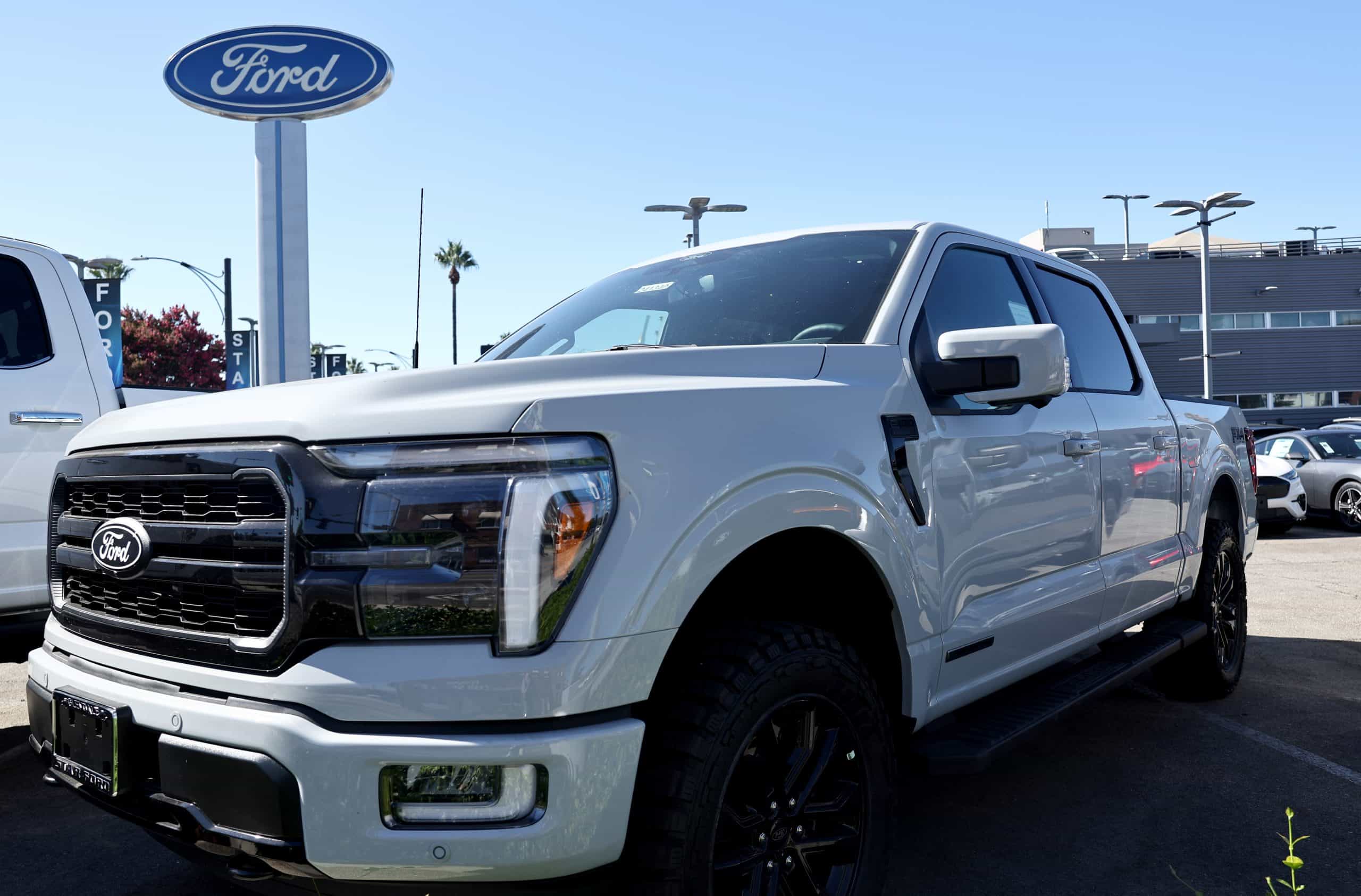
Ford (F) Recent Stock Performance
While longtime Ford investors may have benefited from Ford’s dividend, its stock price clearly has not experienced the recent exponential growth of Magnificent Seven stocks, like NVIDIA (NASDAQ: NVDA) or Microsoft (NASDAQ:MSFT). The last time Ford had a strong bull run was during the pandemic in March 2020, when the stock soared from an aberrantly low $4.27 to $25 in January 2022, before settling back into its current range in mid-2022, where it has remained ever since. Apart from that last 500% gain, past comparable periodic rise and falls of Ford stock price can be traced back historically going back decades.
|
Fiscal Year |
Price |
Revenues |
Net Income |
|
2014 |
$16.13 |
$135.378B |
$1.23B |
|
2015 |
$11.17 |
$140.56B |
$7.37B |
|
2016 |
$12.38 |
$141.54B |
$4.59B |
|
2017 |
$10.43 |
$145.66B |
$7.73B |
|
2018 |
$8.71 |
$148.321B |
$3.67B |
|
2019 |
$8.31 |
$143.64B |
$47M |
|
2020 |
$11.51 |
$115.94B |
-$1.28B |
|
2021 |
$17.96 |
$126.27B |
$17.93B |
|
2022 |
$13.23 |
$149.08B |
-$1.98B |
|
2023 |
$12.80 |
$165.90B |
$4.34B |
|
2024 |
$9.65 |
$184.99B |
$5.88B |
Key Drivers for Ford’s Future
1. Ford’s Core ICE vehicles and F-Series Trucks: Ford’s internal combustion engine (ICE) vehicles are its core and are still its best sellers. Its pickup trucks lead the world in total sales, with its popular F-series at the head of the pack. Ford’s Maverick hybrid truck is the best-selling hybrid in the US as well. Ford’s increasing sales are still world-class, and its revenue generation metrics support its dividends (by 20x) as well as its operational changes in addressing a changing market.
2. Ford’s EV Unit: This division has been slowly growing but has also been gobbling up money like a school of hungry piranhas. ($1.1 billion burned through a single quarter). Recent Ford announcements to delay its EV T-3 trucks and scale back some EV SUV production are in sync with current trends swinging back towards ICE vehicles that can reliably provide safe transport over long distances. The lack of recharging stations that the Department of Transportation had promised to support its EV mandate has disillusioned many former EV advocates.
3. Fixed Quality Issues: Ford’s stock fallbacks were reactions to larger warranty budget allocations and overall auto industry unemployment in the market, which created concerns over quality control. These issues have been addressed as shifting toward newer technologies tied to Ford’s Pro series AV components and towards ensuring more reliable future performance for its customers.
Ford (F) Stock Price Prediction for 2026
Ford receives a consensus “Hold” rating. Of the 15 Wall Street analysts covering the stock, three assign it a “Buy” rating, 11 assign it a “Hold” rating and one assign it a “Sell” rating. The median one-year price target for Ford is $13.77, which represents 1.25% potential upside from today’s price.
However, 24/7 Wall St.‘s 2026 year-end price target for Ford is $13.59, representing 0.07% downside potential from today’s price. We believe that is a conservative estimate based on the implementation of Ford’s changes and the uncertain impact on automakers of President Trump’s tariffs, as well as his reversal of EV incentives.
Ford (F) Price Forecast 2026-2030

2030 could see some new developments from Ford Pro AV development and non-vehicular markets as well as other R&D, resulting in an approximate $10 billion revenue increase and a commensurate stock price hike to $15.75. This would equate to a potential gain of 15.80% from the present market price for Ford.
|
Year |
Stock Price |
%Change From Current Price |
|
2026 |
$13.59 |
-0.07% |
|
2027 |
$14.45 |
6.25% |
|
2028 |
$14.66 |
7.79% |
|
2029 |
$15.00 |
10.29% |
|
2030 |
$15.75 |
15.80% |
Shares of Ford Motor Company (NYSE: F) lost 0.51% over the past month after gaining 6.13% the month prior. The legacy automaker’s stock has gained nearly 57% since its one-year low on April 8. Over the past year, Ford is up 38.56%. It continues to pay patient shareholders with a dividend currently yielding 4.41%, or 15 cents per share quarterly.
In its Q3 earnings call on Oct. 23, 2025, Ford reported top- and bottom-line beats with EPS of 45 cents versus analysts’ expectations of 36 cents, and revenue of $47.19 billion versus $43.08 billion expected. But the Detroit carmaker lowered 2025 full-year guidance due to the anticipated fallout from of a fire at one of its major aluminum suppliers.
Ford’s iconic brand helped to define American mechanical design and business supremacy in the 20th century and continues to remain a major player to this day. Founder Henry Ford created the mass production assembly line manufacturing process, and Ford cars and trucks are sold worldwide. It is the second-largest U.S. auto industry builder after General Motors (NYSE:GM) and sixth largest worldwide, the Dearborn-headquartered company has remained resilient despite lackluster performance over the past few years.
But investors are concerned with future stock performance over the next one five and 10 years. While most Wall Street analysts will calculate 12-month forward projections, it’s clear that nobody has a consistent crystal ball, and plenty of unforeseen circumstances can render even near-term projections irrelevant. 24/7 Wall St. aims to present some farther-looking insights based on Ford’s own numbers, along with business and market development information that may be of help to our readers’ own research.
Ford (F) Recent Stock Performance
While longtime Ford investors may have benefited from Ford’s dividend, its stock price clearly has not experienced the recent exponential growth of Magnificent Seven stocks, like NVIDIA (NASDAQ: NVDA) or Microsoft (NASDAQ:MSFT). The last time Ford had a strong bull run was during the pandemic in March 2020, when the stock soared from an aberrantly low $4.27 to $25 in January 2022, before settling back into its current range in mid-2022, where it has remained ever since. Apart from that last 500% gain, past comparable periodic rise and falls of Ford stock price can be traced back historically going back decades.
|
Fiscal Year |
Price |
Revenues |
Net Income |
|
2014 |
$16.13 |
$135.378B |
$1.23B |
|
2015 |
$11.17 |
$140.56B |
$7.37B |
|
2016 |
$12.38 |
$141.54B |
$4.59B |
|
2017 |
$10.43 |
$145.66B |
$7.73B |
|
2018 |
$8.71 |
$148.321B |
$3.67B |
|
2019 |
$8.31 |
$143.64B |
$47M |
|
2020 |
$11.51 |
$115.94B |
-$1.28B |
|
2021 |
$17.96 |
$126.27B |
$17.93B |
|
2022 |
$13.23 |
$149.08B |
-$1.98B |
|
2023 |
$12.80 |
$165.90B |
$4.34B |
|
2024 |
$9.65 |
$184.99B |
$5.88B |
Key Drivers for Ford’s Future
1. Ford’s Core ICE vehicles and F-Series Trucks: Ford’s internal combustion engine (ICE) vehicles are its core and are still its best sellers. Its pickup trucks lead the world in total sales, with its popular F-series at the head of the pack. Ford’s Maverick hybrid truck is the best-selling hybrid in the US as well. Ford’s increasing sales are still world-class, and its revenue generation metrics support its dividends (by 20x) as well as its operational changes in addressing a changing market.
2. Ford’s EV Unit: This division has been slowly growing but has also been gobbling up money like a school of hungry piranhas. ($1.1 billion burned through a single quarter). Recent Ford announcements to delay its EV T-3 trucks and scale back some EV SUV production are in sync with current trends swinging back towards ICE vehicles that can reliably provide safe transport over long distances. The lack of recharging stations that the Department of Transportation had promised to support its EV mandate has disillusioned many former EV advocates.
3. Fixed Quality Issues: Ford’s stock fallbacks were reactions to larger warranty budget allocations and overall auto industry unemployment in the market, which created concerns over quality control. These issues have been addressed as shifting toward newer technologies tied to Ford’s Pro series AV components and towards ensuring more reliable future performance for its customers.
Ford (F) Stock Price Prediction for 2026
Ford receives a consensus “Hold” rating. Of the 15 Wall Street analysts covering the stock, three assign it a “Buy” rating, 11 assign it a “Hold” rating and one assign it a “Sell” rating. The median one-year price target for Ford is $13.77, which represents 1.25% potential upside from today’s price.
However, 24/7 Wall St.‘s 2026 year-end price target for Ford is $13.59, representing 0.07% downside potential from today’s price. We believe that is a conservative estimate based on the implementation of Ford’s changes and the uncertain impact on automakers of President Trump’s tariffs, as well as his reversal of EV incentives.
Ford (F) Price Forecast 2026-2030
2030 could see some new developments from Ford Pro AV development and non-vehicular markets as well as other R&D, resulting in an approximate $10 billion revenue increase and a commensurate stock price hike to $15.75. This would equate to a potential gain of 15.80% from the present market price for Ford.
|
Year |
Stock Price |
%Change From Current Price |
|
2026 |
$13.59 |
-0.07% |
|
2027 |
$14.45 |
6.25% |
|
2028 |
$14.66 |
7.79% |
|
2029 |
$15.00 |
10.29% |
|
2030 |
$15.75 |
15.80% |











 Top Gaining Stocks
 Top Losing Stocks