It’s 121 Degrees in This City, and That Won’t Change Soon

Photo of Douglas A. McIntyre
By Douglas A. McIntyre Published
This post may contain links from our sponsors and affiliates, and Flywheel Publishing may receive compensation for actions taken through them.
It’s 121 Degrees in This City, and That Won’t Change Soon

© omersukrugoksu / E+ via Getty Images

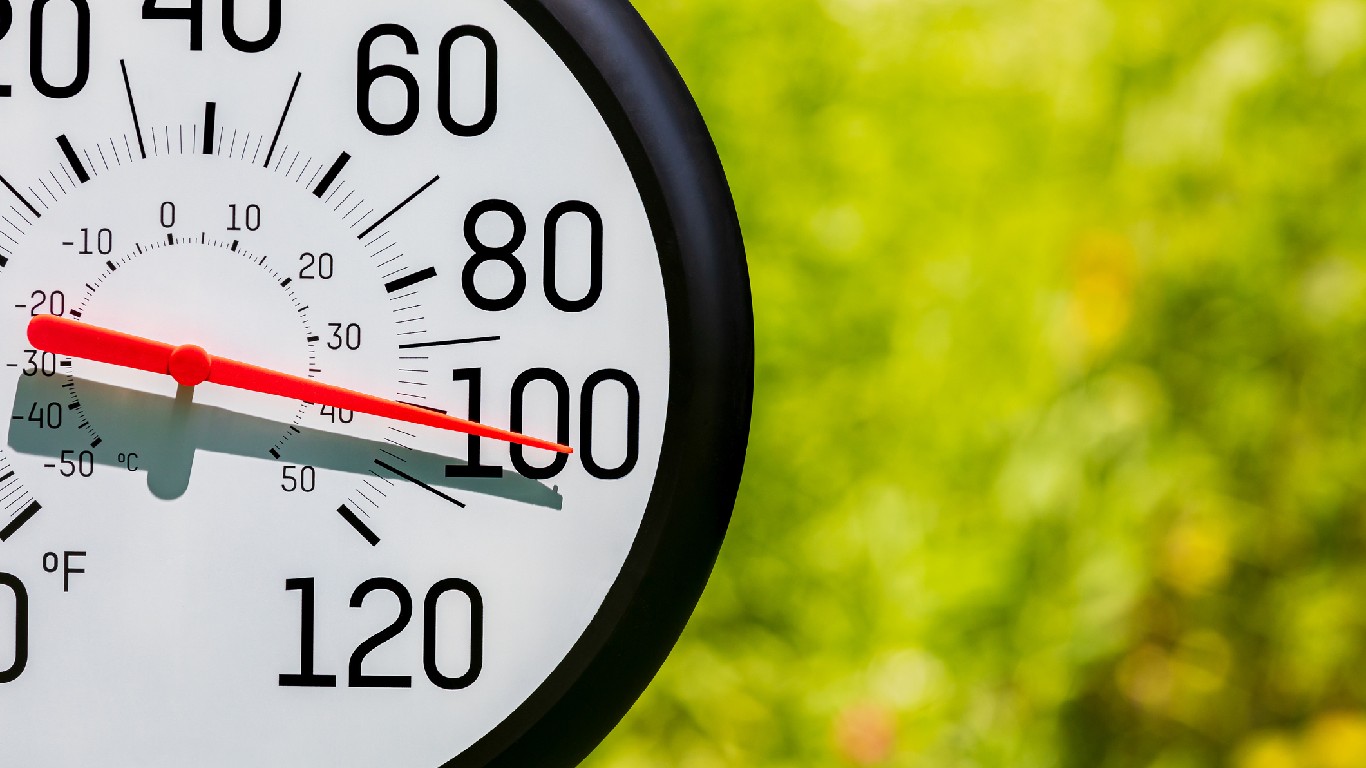
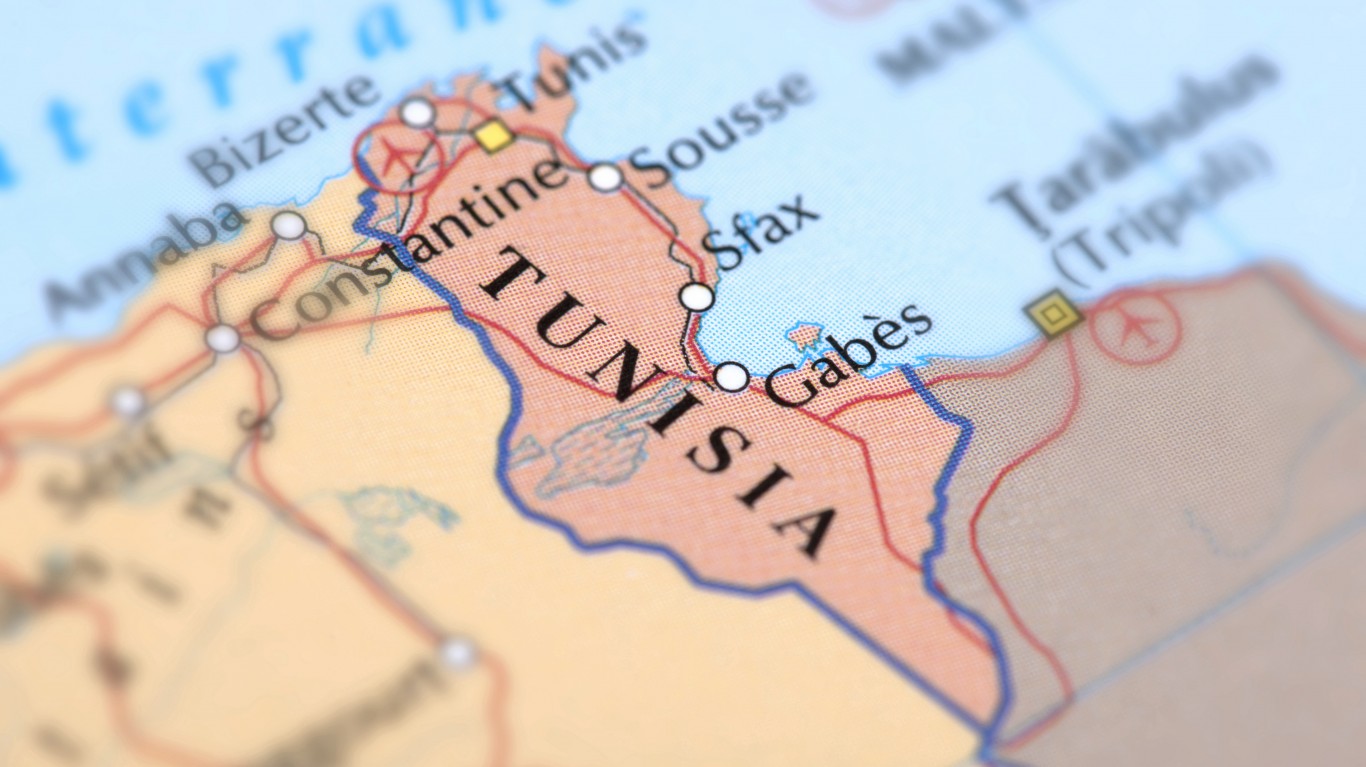
The hottest place in the world right now is the city of Gabes in Tunisia. It is over 121 degrees Fahrenheit (49.4 Celsius) and isn’t expected to cool much soon. At this temperature, the population is on the edge of the heat levels humans can stand.

Gabes sits on the Gulf of Gabes on the eastern edge of the country. The Gulf is part of the Mediterranean Sea. It is also near the center of the country, about equidistant from Algeria and Libya. The northern sections of these two countries routinely have temperatures that range up about 110 degrees, extremely hot, but not usually extremely dangerous.

At 121 degrees, the temperature in the city is above the record highs that were earlier set in June, July and August. Typically, the average high in the city during these months is 90 degrees. Over the course of the three months, historically there is little or no rain.

Gabes is an example of a string of record high temperatures set in India, Pakistan, Kuwait, Iran, Iraq and Saudi Arabia. Among these countries, in the summer months, 100-degree days are no longer extraordinary. Scientists forecast that, over time, these temperatures will only rise.

[nativounit]
As temperatures rise above 110 degrees and stay there for several days, heat exhaustion is not unusual. It is characterized by dehydration. Heatstroke, which is much more dangerous, becomes more common. Gabes has been used to study what happens as core body temperature rises above 103 degrees, the primary symptom of heatstroke.

Heatstroke quickly causes a rapid heartbeat, dizziness and sometimes nausea and confusion. In some cases, people can have seizures. In fewer cases, people die.

Gabes rapidly has become a test of how an entire city’s population can be affected by temperatures that are nearly unimaginable. It has a population of 160,000. What happens to health care under these circumstances? What happens to the economy? This year those questions will start to be answered.
[recirclink id=726979]
[wallst_email_signup]


Photo of Douglas A. McIntyre
About the Author Douglas A. McIntyre →

Douglas A. McIntyre is the co-founder, chief executive officer and editor in chief of 24/7 Wall St. and 24/7 Tempo. He has held these jobs since 2006.

McIntyre has written thousands of articles for 24/7 Wall St. He is an expert on corporate finance, the automotive industry, media companies and international finance. He has edited articles on national demographics, sports, personal income and travel.

His work has been quoted or mentioned in The New York Times, The Wall Street Journal, Los Angeles Times, The Washington Post, NBC News, Time, The New Yorker, HuffPost USA Today, Business Insider, Yahoo, AOL, MarketWatch, The Atlantic, Bloomberg, New York Post, Chicago Tribune, Forbes, The Guardian and many other major publications. McIntyre has been a guest on CNBC, the BBC and television and radio stations across the country.

A magna cum laude graduate of Harvard College, McIntyre also was president of The Harvard Advocate. Founded in 1866, the Advocate is the oldest college publication in the United States.

TheStreet.com, Comps.com and Edgar Online are some of the public companies for which McIntyre served on the board of directors. He was a Vicinity Corporation board member when the company was sold to Microsoft in 2002. He served on the audit committees of some of these companies.

McIntyre has been the CEO of FutureSource, a provider of trading terminals and news to commodities and futures traders. He was president of Switchboard, the online phone directory company. He served as chairman and CEO of On2 Technologies, the video compression company that provided video compression software for Adobe’s Flash. Google bought On2 in 2009.

Continue Reading

Top Gaining Stocks

CBOE Vol: 1,568,143
PSKY Vol: 12,285,993
STX Vol: 7,378,346
ORCL Vol: 26,317,675
DDOG Vol: 6,247,779

Top Losing Stocks

LKQ
LKQ Vol: 4,367,433
CLX Vol: 13,260,523
SYK Vol: 4,519,455
MHK Vol: 1,859,865
AMGN Vol: 3,818,618