


Most applications of artificial intelligence (AI) and machine learning technology provide only data to physicians, leaving the doctors to form a judgment on how to proceed. Because AI doesn’t actually perform any procedure or prescribe a course of medication, the software that diagnoses health problems does not have to pass a randomized clinical trial as do devices such as insulin pumps or new medications.
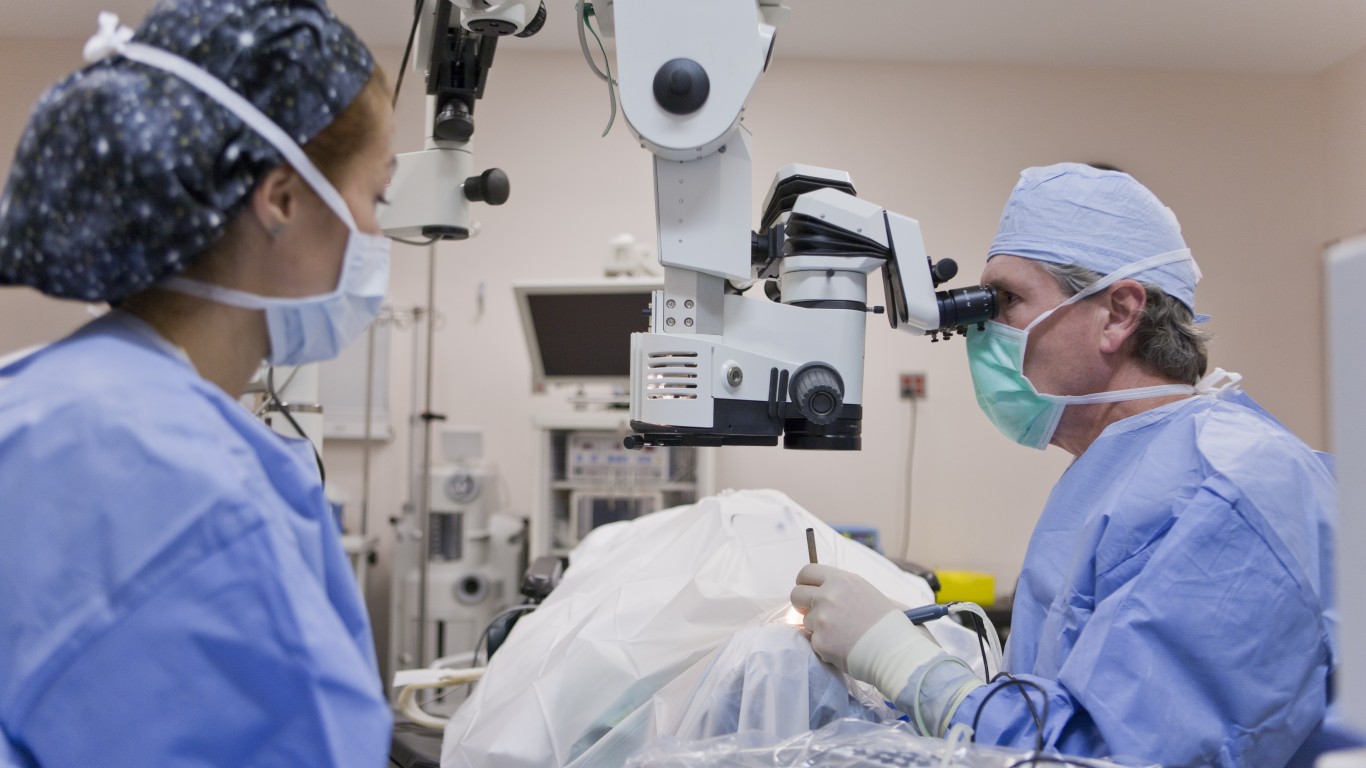
A new study published Monday at JAMA Network discusses a trial including 68 patients undergoing elective noncardiac surgery under general anesthesia. The object of the trial was to determine if a predictive early warning system for possible hypotension (low blood pressure) during the surgery might reduce the time-weighted average of hypotension episodes during the surgery.
In other words, not only would the device and its software keep track of the patient’s mean average blood pressure, but it would sound an alarm if an 85% or greater risk of a patient’s blood pressure falling below 65 mm of mercury (Hg) was possible in the next 15 minutes. The device also encouraged the anesthesiologist to take preemptive action.
Patients in the control group were connected to the same AI device and software, but only routine pulse and blood pressure data were displayed. That means that the anesthesiologist had no early warning about a hypotension event and could take no action to prevent the event.
Among patients fully connected to the device and software, the median time-weighted average of hypotension was 0.1 mm Hg, compared to an average of 0.44 mm Hg in the control group. In the control group, the median time of hypotension per patient was 32.7 minutes, while it was just 8.0 minutes among the other patients. Most important, perhaps, two patients in the control group died from serious adverse events, while no patients connected to the AI device and software died.
[nativounit]
The algorithm used by the device was developed by different researchers who had trained the software on thousands of waveform features to identify a possible hypotension event 15 minutes before it occurs during surgery. The devices used were a Flotrac IQ sensor with the early warning software installed and a HemoSphere monitor. The devices are made by Edwards Lifesciences, and Edwards also had five of eight researchers among the developers of the algorithm. The study itself was conducted in the Netherlands at Amsterdam University Medical Centers.
In an editorial at JAMA Network, associate editor Derek Angus wrote:
The final model predicts the likelihood of future hypotension via measurement of multiple variables characterizing dynamic interactions between left ventricular contractility, preload, and afterload. Although clinicians can look at arterial pulse pressure waveforms and, in combination with other patient features, make educated guesses about the possibility of upcoming episodes of hypotension, the likelihood is high that an AI algorithm could make more accurate predictions.
Among the past decade’s biggest health news stories were the development of immunotherapies for cancer and a treatment for cystic fibrosis. AI is off to a good start in the new decade.
[recirclink id=646089]
[wallst_email_signup]









 Top Gaining Stocks
 Top Losing Stocks