


 Two pieces of information came into the market today, both about the trouble housing situation. The foreclosure filings and the interest rates on 30-year fixed rate mortgages affect the housing market in different but disturbing ways.
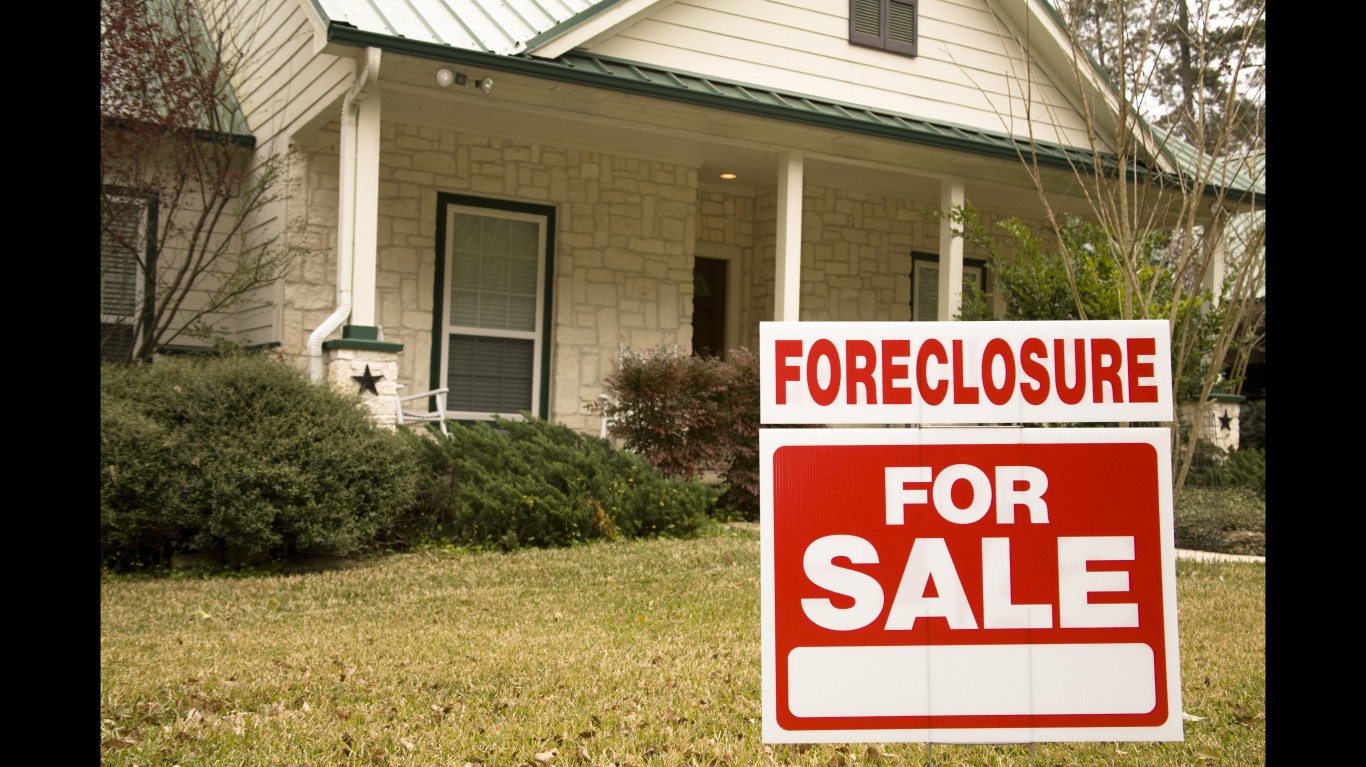
RealtyTrac released its monthly data on the state of foreclosures. They rose 7% in July from June to 360,149. The service said that one in every 355 housing units in America received a foreclosure filing last month, a clinical way to say that an unbelievable number of people are losing their homes.
Nevada, still probably the gambling capital of the world, fittingly was first in foreclosure rates for the 35th consecutive month. Foreclosures in the state are six times the national average.
A review of the litany of causes for the increase in foreclosures is useless at this point. It is sufficient to say that unemployment and a plague of mortgages worth much more than the homes that they finance are the most intractable reasons.
The difficultly of owning a home may only be surpassed by trying to buy one. Interest rates on 30 year fixed-rate mortgages rose to 5.28% this week. The first week in April the rate was 4.78%. Most of the increase is due to interest increases due to government borrowing. The Treasury has fouled its own nest by putting enough debt into the market so that it undermines the ability of potential homeowners to buy in the current, crippled market.
The “cash for clunkers” program and its initial success have caused every industry imaginable to ask for an analogous program. Home builders want to get subsidies for buyers of new homes. Sears (SHLD) probably wants the government to hand out checks to people who buy appliances. Retail chains are as bad off as any group of businesses in the country. Special government payments for clothing and jewelry would change that. Credits for buying PCs and digital cameras would probably save a lot of tech companies from losses.
The government has decided not to get into the tax rebate or purchase credit business, at least beyond the car industry. A great deal of the stimulus money has been invested in programs that will create energy infrastructure, broadband, and schools. That capital will take time to leach into the economy, and this delay will certainly slow GDP growth short-term.
The housing market really needs its stimulus now. There are broad tracts of houses in big cities that are barely occupied and new housing developments that have never had a single resident. Home prices may be at historic lows, but if buyers cannot get reasonably-priced mortgages, that will not matter.
The Administration began with its program to help slow the foreclosure rate by adjusting the monthly payments of worthy homeowners. This concept failed because many people with lower payments could still not afford them and others who got better terms were still unwilling to stay in homes with underwater mortgages.
The best way to make housing affordable now is to make home loans affordable. That may mean that low interest rates have to be underwritten by the government. That is not the same as giving the borrower cash at signing. It is an arrangement, rather, that keeps monthly payments permanently lower than they would be if the borrower had to pay the going interest rate today.
It would be good, both economically and psychologically for the country, if the car industry is resurrected. But, housing is a much, much larger problem and it is still going unaddressed.
Douglas A. McIntyre






 Top Gaining Stocks
 Top Losing Stocks