


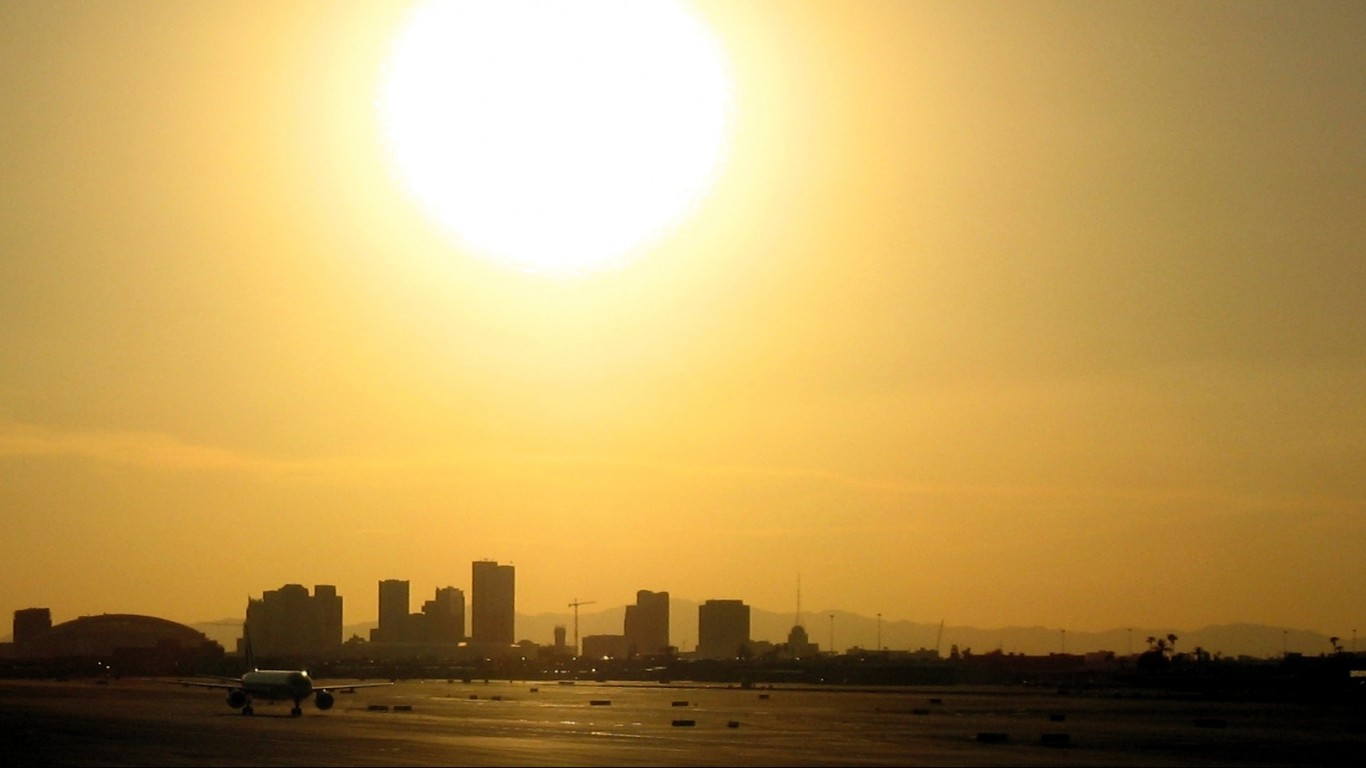
Phoenix probably will set the temperature record for August 20. The heat is supposed to top out at 113. Since June 24, the daily high has topped 100, and it only missed by one degree on the two previous days. Since June 1, the metro area’s temps have fallen below 100 on just eight days, and only once below 95.
Americans spent a total of $27.28 billion on air conditioning in 2015, according to U.S. Energy Information Administration (EIA) data. On average, that worked out to $265 per U.S. household for the year. In the hot and dry climate of Arizona, air conditioning costs $319 a year, on average, second only to the hot and humid regions of the country where households spent a whopping $525 each to cool their homes.
The record-breaking temperatures in Phoenix are part of a package that has included record-high temperatures in each of the past five years. According to data from the National Oceanic and Atmospheric Administration (NOAA) and the National Aeronautics and Space Administration (NASA), 2019 is on a pace to become the third hottest year ever.
[nativounit]
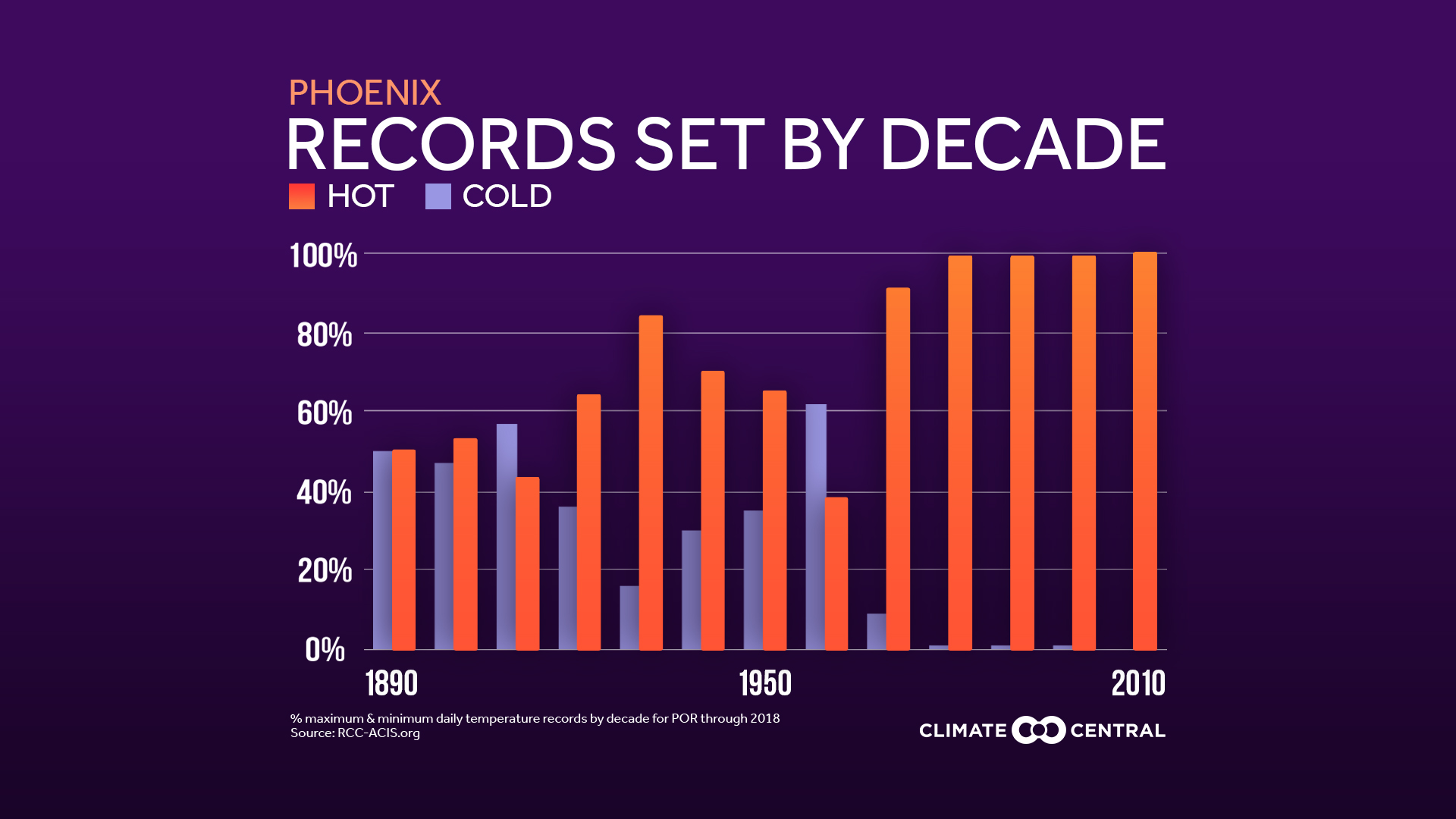
Phoenix daytime temperatures have set record highs far more often than they have record lows in each of the past five decades. The following chart from independent research group Climate Central tells the story.
The future looks even hotter for Phoenix. According to a report last week from the Union of Concerned Scientists, Phoenix’s historical average number of days from April through October with a heat index of 105 or more is 16 (the heat index is a non-standardized measure of the combination of heat and humidity). In a scenario where no action is taken to mitigate emissions that trap heat in the atmosphere, by late in the 21st century, Phoenix will experience 126 days with the heat index at 105 or higher. If action is taken now to hold the global temperature increase to 2°C (about 3.7°F), Phoenix will still see 57 days when the heat index exceeds 105.
Phoenix is not the only part of the country being affected by rising temperatures. These are the places where weather is getting worse because of climate change.
While Phoenix is perhaps an extreme example, virtually every U.S. city will feel the effects of rising temperatures. In results of a study published in February in Nature Communications, climate researchers Matthew C. Fitzpatrick and Robert R. Dunn estimate that by 2080, the climate in some 540 U.S. cities will be most like the current climate about 250 miles to the south of each city. Phoenix, for example, will feel most like Esperanza, Mexico, where current winter temperatures are 12.4°F warmer and humidity is 44.2% drier.
If you want to see what the climate will be like in your city in 2080, the interactive map application that accompanied Fitzpatrick’s and Dunn’s study shows what you are in for. Currently, these are the 50 hottest cities in America.
[wallst_email_signup]








 Top Gaining Stocks
 Top Losing Stocks