A Bet Against Europe Is A Bet Against Global Economy

Photo of Douglas A. McIntyre
By Douglas A. McIntyre Updated Published
This post may contain links from our sponsors and affiliates, and Flywheel Publishing may receive compensation for actions taken through them.

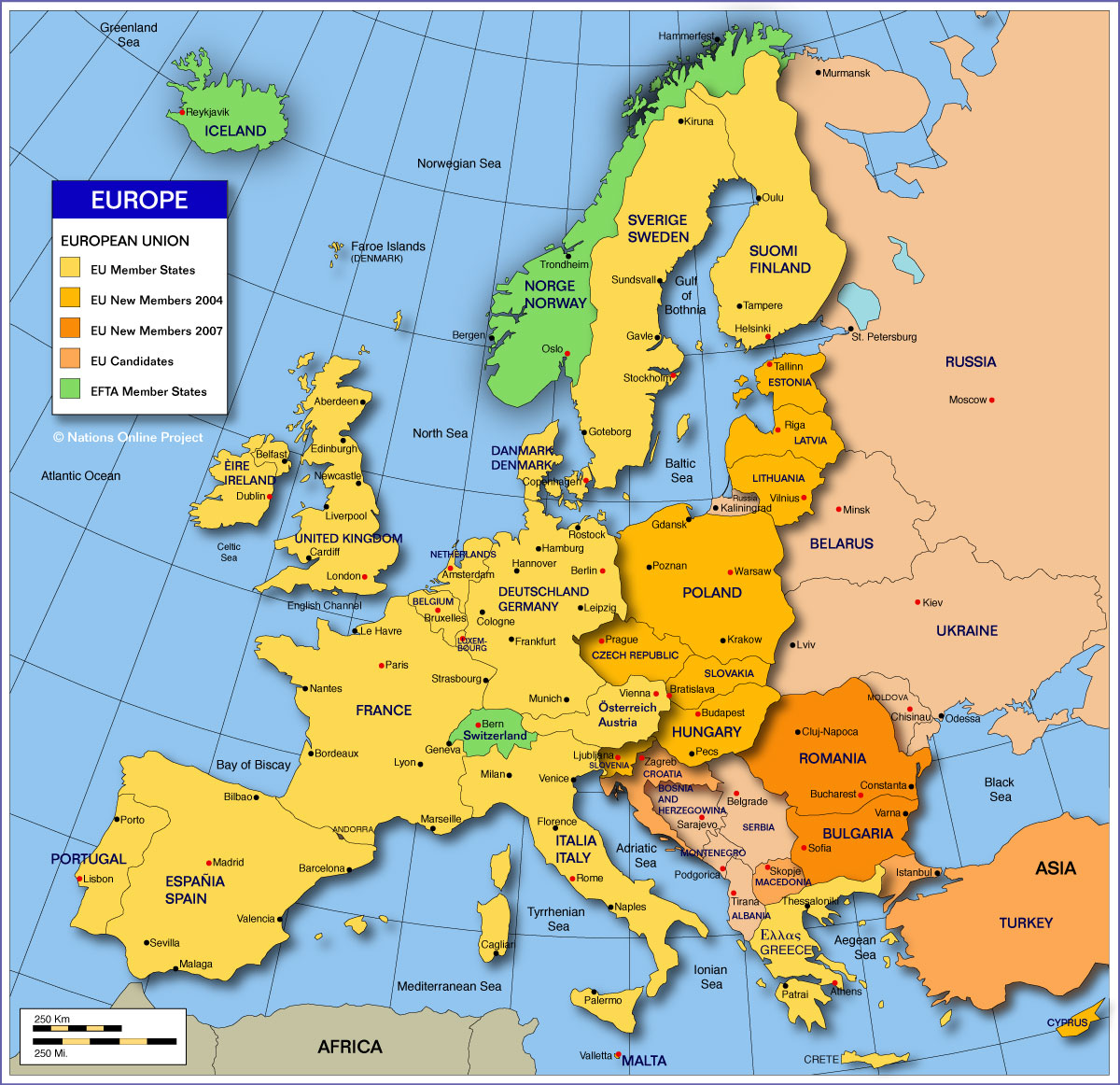
Several sources report that credit default swaps on the debt of some EU nations has reached record levels. The cost to insure against default of Ireland and Spain’s debt rose particularly high. This is not supposed to happen. Aid packages are supposed to make it certain that these countries will get proper financial support from their neighbors and to a lesser extent the IMF

There are some compelling arguments that where the European economy goes the world’s will follow. There are cases that say this is not true. Europe cannot be viewed as a whole, these troubling theories say. Problems in Greece do not mean trouble in Germany or France. These two healthy nations could flee the alliance and revert to their own currencies. That would leave the weaker nations on their own to be savaged by global institutional investors. Borrowing costs for these stragglers would go so high that default would be likely. Some investors and banks would take huge losses. Those may not be enough to cause a new credit crisis.

Some believe Europe is not the important region that it used to be. That is a false view. The EU is still larger than the US in GDP. China, America, and other large exporters would be deeply wounded financially by a slowing in the already weak economies in the region. New austerity measures and taxes might need to be pressed harder in nations which face defaults. Much of the region could be thrown back into deep recession.

The focus of global capital markets has oddly fallen on the debt of two regions. One is the strongest paper in the world–America’s. The other is the paper of the troubled EU countries. Investors are worried that Congress will not raise the debt cap which would put the US into a technical default on its sovereign paper. The other could crush the prospects of some large part of Europe. Europe’s problems are real. America’s are not, at least for the time being. That means the attention of the debt markets will turn to Europe again soon.

The idea of decoupled national economies has been a popular one for some time. It may always have been a hollow theory. It certainly is now. Europe is the large domino at the beginning of a line that could fall. The region has too many financial and trade ties to the rest of the world.

Douglas A. McIntyre

Photo of Douglas A. McIntyre
About the Author Douglas A. McIntyre →

Douglas A. McIntyre is the co-founder, chief executive officer and editor in chief of 24/7 Wall St. and 24/7 Tempo. He has held these jobs since 2006.

McIntyre has written thousands of articles for 24/7 Wall St. He is an expert on corporate finance, the automotive industry, media companies and international finance. He has edited articles on national demographics, sports, personal income and travel.

His work has been quoted or mentioned in The New York Times, The Wall Street Journal, Los Angeles Times, The Washington Post, NBC News, Time, The New Yorker, HuffPost USA Today, Business Insider, Yahoo, AOL, MarketWatch, The Atlantic, Bloomberg, New York Post, Chicago Tribune, Forbes, The Guardian and many other major publications. McIntyre has been a guest on CNBC, the BBC and television and radio stations across the country.

A magna cum laude graduate of Harvard College, McIntyre also was president of The Harvard Advocate. Founded in 1866, the Advocate is the oldest college publication in the United States.

TheStreet.com, Comps.com and Edgar Online are some of the public companies for which McIntyre served on the board of directors. He was a Vicinity Corporation board member when the company was sold to Microsoft in 2002. He served on the audit committees of some of these companies.

McIntyre has been the CEO of FutureSource, a provider of trading terminals and news to commodities and futures traders. He was president of Switchboard, the online phone directory company. He served as chairman and CEO of On2 Technologies, the video compression company that provided video compression software for Adobe’s Flash. Google bought On2 in 2009.

Featured Reads

Our top personal finance-related articles today. Your wallet will thank you later.

Continue Reading

Top Gaining Stocks

CBOE Vol: 1,568,143
PSKY Vol: 12,285,993
STX Vol: 7,378,346
ORCL Vol: 26,317,675
DDOG Vol: 6,247,779

Top Losing Stocks

LKQ
LKQ Vol: 4,367,433
CLX Vol: 13,260,523
SYK Vol: 4,519,455
MHK Vol: 1,859,865
AMGN Vol: 3,818,618




