


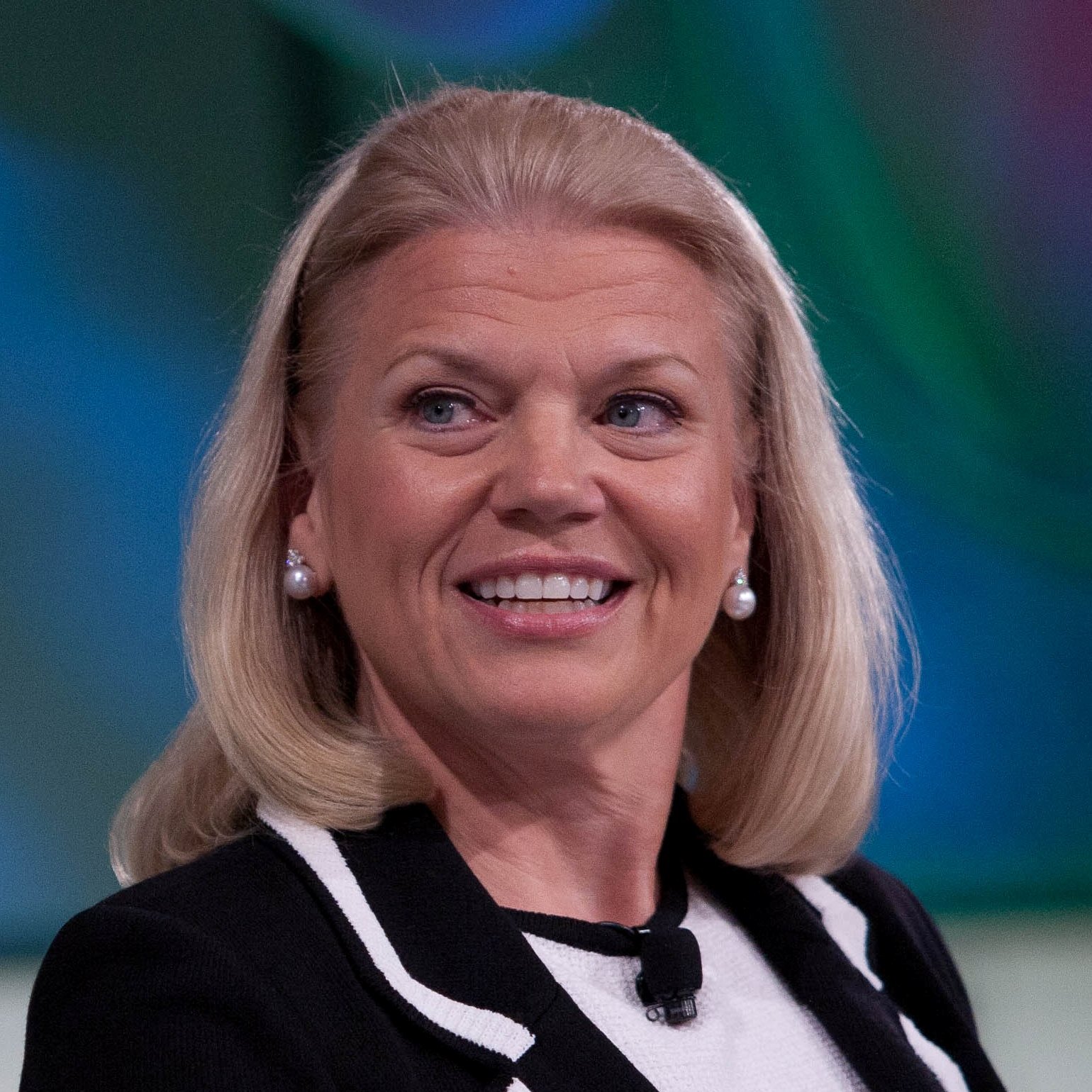
IBM (NYSE: IBM) posted its 21st consecutive quarter of falling revenue, a breathtakingly poor performance. IBM’s board should do now what it should have done long ago: replace CEO Ginni Rometty. Her turnaround promises proved empty again. Much of the fault for her ongoing, unsuccessful tenure sits with IBM’s blue chip board.
IBM’s revenue dropped 5% year over the previous year to $19.3 billion. Net income dropped 7% to $2.3 billion. Rometty’s comments about the quarter are a virtual carbon copy of what she has said for several quarters:
[nativounit]
“In the second quarter, we strengthened our position as the enterprise cloud leader and added more of the world’s leading companies to the IBM Cloud. We continue to innovate, adding regtech capabilities to our portfolio of Watson offerings; developing solutions based on emerging technologies such as Blockchain; and reinventing the IBM mainframe by enabling clients to encrypt all data, all the time.”
Revenue from the division that Rometty boasts about most often, which is called Strategic Imperatives, rose only 5% to $8.8 billion. IBM still refuses to break out the results from its Watson products and services, even though the brand has virtually become the face of the company.
Revenue at all five IBM divisions fell, the company reported:
Cognitive Solutions (includes solutions software and transaction processing software) — revenues of $4.6 billion, down 2.5 percent (down 1.4 percent adjusting for currency). Pre-tax income increased at a double-digit rate.
Global Business Services (includes consulting, global process services and application management) — revenues of $4.1 billion, down 3.7 percent (down 1.7 percent adjusting for currency). Strategic imperatives grew 8 percent led by the cloud and mobile practices.
Technology Services & Cloud Platforms (includes infrastructure services, technical support services and integration software) — revenues of $8.4 billion, down 5.1 percent (down 3.6 percent adjusting for currency). Strategic imperatives, driven by hybrid cloud services, grew 20 percent.
Systems (includes systems hardware and operating systems software) — revenues of $1.7 billion, down 10.4 percent (down 9.6 percent adjusting for currency).
Global Financing (includes financing and used equipment sales) — revenues of $415 million, down 2.2 percent (down 1.7 percent adjusting for currency).
Perhaps the most important sign of IBM’s failure is its share performance compared to other huge tech companies, all of which are leaders in the cloud. In the last five years, IBM’s shares are down 21% to $152. Amazon, which owns cloud industry leader AWS, is up 331% to $1,024. Microsoft’s shares are up 146% to $73.
IBM’s lead director has to take the primary responsibility for Rometty’s ongoing employment. Michael L. Eskew, the retired chief of UPS (NYSE: UPS) holds that position and has been a member of the board since 2005. Other prominent directors include W. James McNerney, Jr., the retired head of Boeing (NYSE: BA), who has been a director since 2009, and Kenneth I. Chenault, the head of American Express (NYSE: AXP), and a director since 1998.
Rometty is the architect of IBM’s disaster but the board continues to be her protector.
[wallst_email_signup]








 Top Gaining Stocks
 Top Losing Stocks