


By David Callaway, Callaway Climate Insights
New explorations in Guyana and Argentina are a sign the oil companies may be shifting to upstream projects and moving some operations overseas.
By Michael Molinski
(About the author: Michael Molinski is an economist, content strategist and author. He has worked for Fidelity, Charles Schwab and Wells Fargo, and previously as a foreign correspondent and editor for Bloomberg News and MarketWatch. He is the author of Investing in Latin America: Best Stocks, Best Funds (Bloomberg Press, 1999), and Small Business in Paradise (Nolo, 2007). Currently, he is a senior economist at Trendline Economics.)
HOUSTON (Callaway Climate Insights) — If you blink you might miss it, but there’s a tiny mention on page 39 of ExxonMobil’s (XOM) 2019 annual report of financial data that says it has begun production in Argentina’s Vaca Muerta shale deposit and offshore in Guyana’s Stabroek oilfield.
It’s not much right now, a total of just 1,300 barrels per day (kbd) between the two countries, but in 2018 the amounts were zero. And at a time when oil prices are plummeting, negotiations between the Saudis and Russians are driving volatility off the charts, and demand for oil in the U.S. is scarce, those small amounts in South America could prove to be the future of not only Exxon (XOM) but also of Chevron (CVX), Royal Dutch Shell (RDS.A), BP (BP), Hess (HES), Halliburton (HAL), Sinopec (SHI) and others.
It’s no small accident that Guyana and Argentina have some of the worst environmental rankings on the planet, where oil spills, water poisoning from fracking, and greenhouse gas emissions are less likely to be noticed. The Environmental Performance Index currently ranks Guyana with the worst environmental record in South America, with a score of 128 (lower is better), and Argentina at 74. At 74, Argentina isn’t bad but it’s a far cry from the lower EPI rankings of neighbor countries Peru, Colombia, Uruguay, Brazil and Venezuela. And it’s certainly far worse than leading environmental countries Switzerland, France and Denmark.
For its part, Exxon defends its environmental policies in South America. “Not only do we comply with all applicable environmental laws and regulations and seek to go beyond these where practical, we apply international standards where laws and regulations do not exist,” the company said in a statement.
The new explorations are a sign the oil companies may be shifting to more upstream projects (extractions) and moving some of their operations overseas. For Exxon, which currently has low exposure to upstream production compared with downstream, it may mean a slight increase over the coming years. Chevron already maintains strong exposure to upstream exploration.
The mere presence of major oil companies involved in Latin America harks back to the days when the U.S. was toppling governments and propping up our own U.S. puppet governments in search of commodities like copper (Chile), bananas (Central America) and oil (Venezuela). There remains a lot of resistance by local residents who don’t want the U.S. meddling in their internal affairs, be it in politics or the environment.
You remember Guyana. The former Dutch colony which borders Venezuela to its west and Brazil to the south, where in 1978, 918 people followed Rev. Jim Jones and “drank the Kool-Aid” and died in a single day in the infamous Jonestown Massacre. It remains one of the poorest countries in Latin America, where 35% of the people live below the poverty line. It’s a mix of descendants of slaves from Africa, who mingled with Native Americans and European colonists over the centuries.
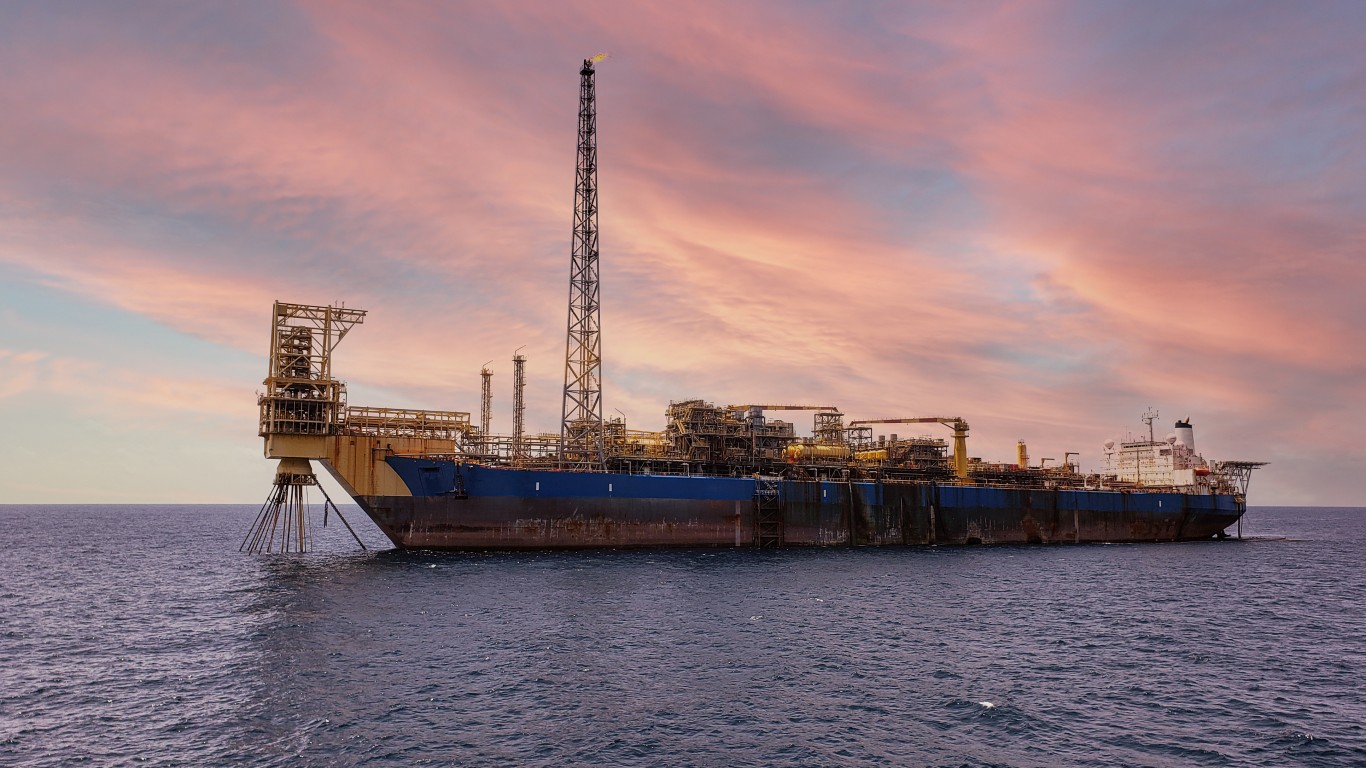
Guyana had no oil until Exxon arrived in 2015 and announced its first offshore oil discovery. Since then, Exxon has made 16 oil discoveries off the coast of Guyana, with only one well, the Liza, which began production in December. Exxon operates the Stabroek, Canje and Kaietur blocks offshore, with minority partners Hess and China’s CNOOC.
Exxon estimates all of its Guyana holdings have an estimated recoverable base of more than 8 billion oil-equivalent barrels.
“With recent high-quality finds at Tripletail and Mako contributing to our recoverable resources, our investments will continue to provide benefits for the people of Guyana,” said Mike Cousins, senior vice president of exploration and new ventures at ExxonMobil.
Under the terms of the agreement, Guyana would get 52% of revenue from recovered resources. But some critics have accused Exxon of manipulating Guyana officials, and rushing a contract to extend its lease in 2015. Three days after the lease was signed, Exxon announced its first discovery.
Exxon’s presence in Argentina remains small compared with other majors like Argentina’s former national oil company YPF, BP’s Pan American Energy, PlusPetrol, China’s Sinopec, Chevron, Brazil’s Petrobras and Shell. Yet Exxon’s presence is growing, mainly because of the company’s unconventional upstream investments in shale in the Vaca Muerta basin.
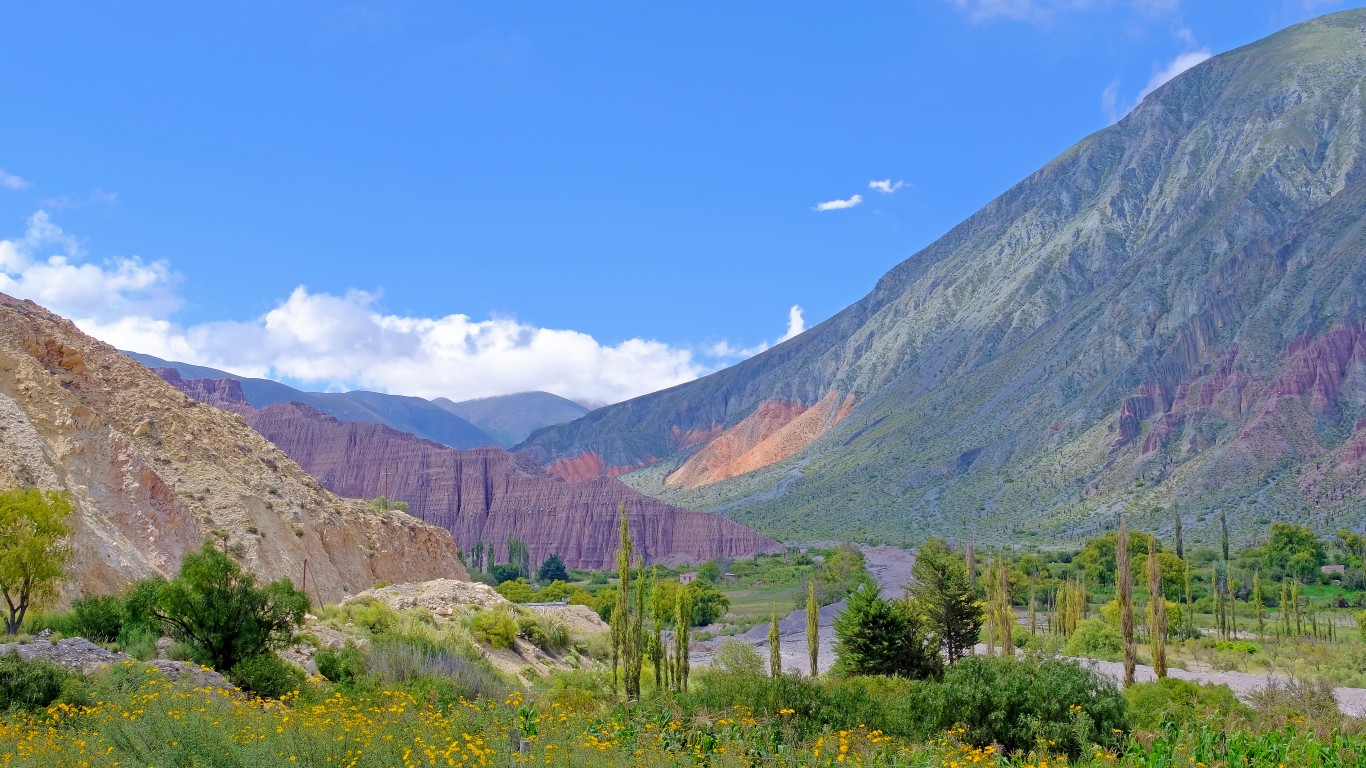
The Vaca Muerta shale deposit, Spanish for “dead cow,” is believed to be one the largest in the world in terms of recoverable resources, rivaling those of the Permian Basin in the U.S. and other shale deposits in China and Russia. But getting to that shale can be difficult, both technologically and politically.
Argentina is an entirely different story from Guyana. Argentina was well on its way 100 years ago to being the only developed country in Latin America, when it suffered a series of economic recessions or depressions, which it was never quite able to recover from. The Vaca Muerta was discovered in 2010, and immediately there was a flurry of interest from major oil companies around the globe. It was heralded as a savior for Argentinians.
But politics got in the way, and several oil companies complained about the government’s insistence on natural gas and oil price controls. Eventually concessions were granted to foreign oil companies, and with the change in government in 2016 several oil companies ramped up their exploration. Getting shale oil and natural gas out of the ground continued to be costly and problematic. So when the government changed hands again on Dec. 10 to Alberto Fernandez, a Peronist who claimed that there’s no point of having oil riches if “you have to let multinationals come and take it away,” several oil companies packed up and left. Schlumberger (SLB) was one of those, which sold its stake to Shell and Equinor.
Exxon and Chevron, though, are not going anywhere. In fact, with the coronavirus pandemic affecting not only Argentina but the entire world, Fernandez appears to have had a change of heart, and critics say he may be open again to multinational oil companies developing further the Vaca Muerta shale.
Chevron and Exxon both expanded their respective shale holdings in Argentina this year, with Chevron acquiring an additional 15% stake in the El Trapial block, and Exxon buying Total Austral’s 3.5% stake in the Sierra Chata block, giving Exxon a majority stake.
Exxon and its fully-owned subsidiary XTO Energy have plans to invest another $520 million over five years, with 24 horizontal wells across Vaca Muerta and the Mulichinco formation.






 Top Gaining Stocks
 Top Losing Stocks