


By David Callaway, Callaway Climate Insights
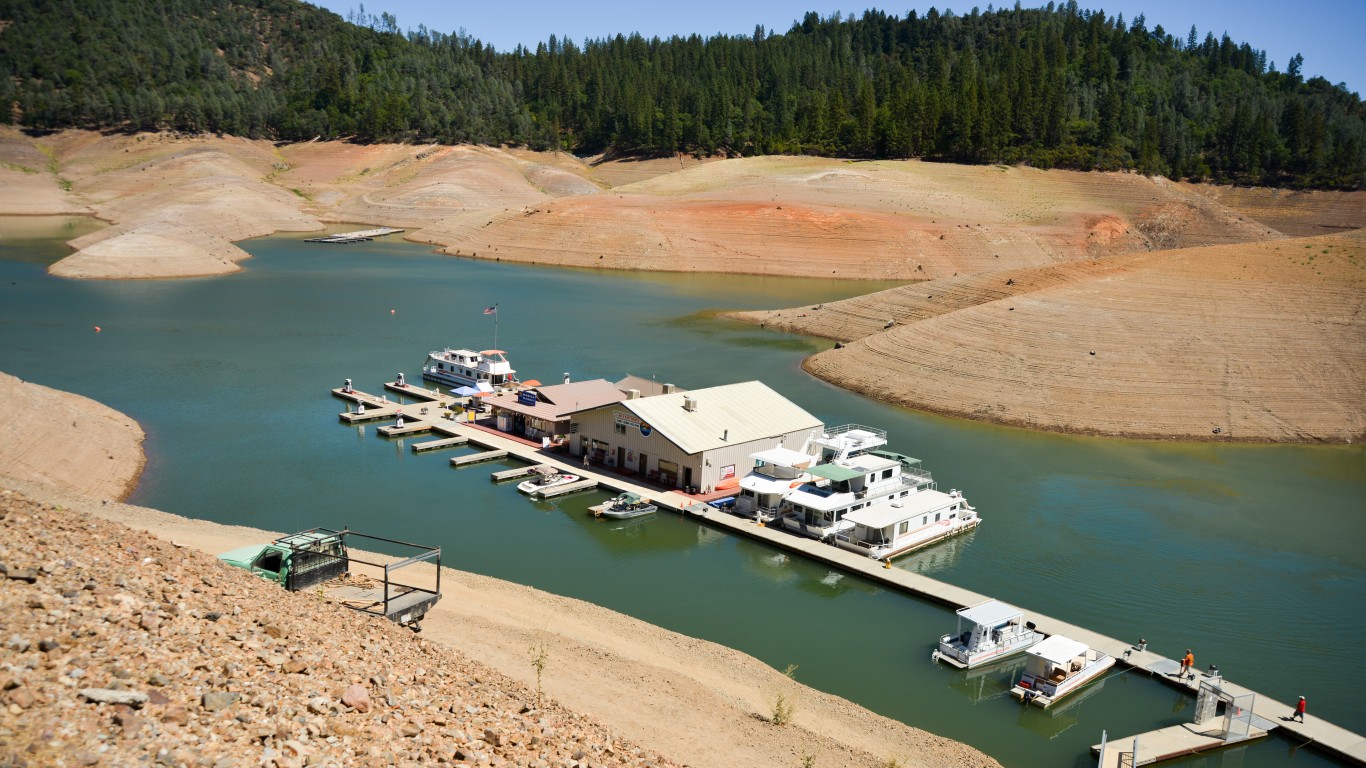
Here in California, water is as hot a topic as wildfires or Covid. A five-year drought a decade ago created the conditions for wildfires today, and lack of rain this year is threatening more fires as late as Christmas.
Next week, investors will be able to trade our water risk as the CME (Chicago Mercantile Exchange) begins offering water futures, the first U.S. derivatives contracts tied to the life-sustaining resource. The futures are based on the Nasdaq Veles California Water Index (NQH2O), which began trading two years ago and which has doubled year-to-date. See a chart of the index here.
California uses more than four times the water as any other state, mostly for agriculture. But its susceptibility to droughts, like the one we’re seeing right now, make the transparency of a water price quite valuable to farmers and investors alike. Similar water-trading products have been launched in Southern Africa and Australia, though not without controversy. And there are a host of water-related ETFs.
As with any scarce resource, the possibility to trade it becomes attractive. But given that wars have been fought over water rights, I expect a backlash to the commodification of something so valuable. Next week’s futures launch kicks off a new era for something we’ve always regarded as free.
The story of pricing water is just beginning.
More insights below. . . .
. . . . Between $100 trillion and $150 trillion in new climate investing will be required before 2050 for the world to transition to a low-carbon economy in accordance with the Paris Agreement, according to a new report by the Global Financial Markets Association and the Boston Consulting Group. Given the $40 trillion or so in ESG investments over the past eight years, the money part of the equation looks doable. The key is quickly and correctly putting a price on carbon that works on a grand scale, somewhere in the range of $40 to $80 per metric ton. With financial regulators and central banks lining up behind a carbon pricing mechanism, expect that to be a major talking point in this weekend’s climate summit in the UK, and an action item for early 2021. . . .
. . . . Speaking of water, anyone interested in the developing border tensions between China and India will want to read this piece by Lou del Bello, a former Bloomberg journalist who has started a climate newsletter in Delhi. It’s a fascinating look at how the one-upmanship between the two nations has spilled over into a battle about a dam in a remote area on the Bramahputra river called the Great Bend. And it delves into what climate solutions look like between the two nations when they can’t stand each other. . . .
. . . . Hannon Armstrong (HASI) and ENGIE North America yesterday announced a deal to invest $172 million in a series of commercial solar and solar storage projects across the U.S. Some of the financing will come from Morgan Stanley (MS), with which Hannon said it has expanded its relationship after the investment bank became the first U.S. bank on Wall Street to commit to disclosing greenhouse gas emissions from its portfolio companies. An example of the benefits the big banks can earn from moving toward carbon accounting principles and emissions reductions. . . .
. . . . On the other side of the transition spectrum, Royal Dutch Shell (RDS.A) has seen a wave of resignations among its top clean energy executives ahead of an important strategy announcement early next year. The Financial Times reports the rift is over the pace of change — or lack thereof — in the new energy strategy. Strategy disagreements are common in every company, but it’s rare to see dissension such as this in the top ranks of an oil major. It seems clear that the pressure on these companies to transition from oil and gas to renewable energy is being exerted from within as well as from the outside. . . .
. . . . This week marks the 50th anniversary of the Environmental Protection Agency, which former President Richard Nixon set up to combat rising air and water pollution. President Donald Trump’s EPA celebrated by rejecting pleas to set tougher standards on soot. Continuing his scorched earth policy on the environment, Trump’s EPA declined to toughen rules put in place in 2012 under former President Barack Obama, saying they were sufficient. This, despite claims by scientists that reducing the levels of particulate matter in the air just a little could save thousands of lives, particularly in minority neighborhoods near industrial sites. Earlier this year, the EPA ended limits on methane leaks, allowing oil and gas companies to determine for themselves how much it was safe to leak into the air . . . .
News briefs: Raise a beer to fight climate change
UK snack food manufacturer Walkers, which holds more than half the British crips market, has added a process it says will cut CO₂ emissions from its manufacturing process by 70%. Read more.
Editor’s picks:
- Gates calls for climate leadership, $35 billion in funding
- How a climate ‘stress test’ could foresee collapsing banks
- Great Barrier Reef has deteriorated to ‘critical’ level











 Top Gaining Stocks
 Top Losing Stocks