


By David Callaway, Callaway Climate Insights
Locked in our homes, counting the days until a Covid vaccine, many of us could be forgiven for missing the big climate picture of 2020. But a quick look at the numbers makes clear we will emerge into a much more dangerous world next year.
The U.S. is on track to record as many as 20 billion-dollar disasters this year, including a doubling of the land burned by wildfires, 30 hurricanes, and even a derecho, according to the National Oceanic and Atmospheric Administration (NOAA) and Climate Central. That’s more than three times the average of past years and well past the record of 16, set three years ago. Around the world, things are just as bad, with the Arctic Circle having its warmest year in modern times.
Against this threat, the nations of the world held a massive Zoom call over the weekend, the highlight of which was a coal pledge by Pakistan. That’s right. Pakistan.
The real action in the coming year will be in China and the U.S., perhaps India, and certainly the EU. But we’ll never get past the diplomatic phase of this without real help from the banks and asset managers, and of course, companies themselves. Companies like Unilever (UL), which pledged this week to let shareholders vote on its climate strategies every three years, and to update them each year. Amazingly, it’s one of the first major conglomerates to do this. But it won’t be the last.
Take a look at the clean energy chart down lower in this newsletter. Investors are making money on climate solutions, and looking for more. Chief executives and government leaders can’t ignore this trend any longer.
. . . . As the EU agreed late last week to its aggressive plan to reduce carbon emissions 55% by 2030, carbon prices hit a record high on the EU Emissions Trading System of €31 ($37.69), passing levels they haven’t seen since before the Great Financial Crisis of 2007-08. The market has now more than doubled since its March low this year when emissions plunged because of Covid. Central bankers have said a price above $40 is generally needed to have any meaningful effect on emissions reduction as the more expensive it is for companies to have to buy offsets for their pollution, the more they will reduce emissions. Suggestions this is a one-way bet are, in our opinion, as off-base as the old Internet 1.0 predictions. But one thing that is clear is that the market is going to get a lot busier in 2021. . . .
. . . . Mike Bloomberg, who has been generally quiet since the presidential election last month, stepped forward on Monday, asking President-elect Joe Biden in a column for his news service to mandate corporate climate disclosures on Day 1 of his presidency. Bloomberg held out the Task Force on Climate-related Financial Disclosures (TCFD), which he chairs, as the gold standard, and asked Biden to invite G-20 leaders to join right away in endorsing them. Along with re-joining the Paris Agreement and declaring a climate emergency, mandating standard disclosures is one of the three main acts Biden could take on his first day to earn his climate creds. No doubt Bloomberg will have his ear on climate the next four years so it’s a good bet if this doesn’t happen on Day 1 it will come soon afterward. . . .
. . . . Pete Buttigieg’s appointment to Biden’s team as transportation secretary today immediately cements him as one of the president-elect’s top climate advisers, with a portfolio that will include everything from the country’s auto and airline emissions standards to the transition to electric vehicles. Of the Democratic candidates last year, his climate plan was not the most progressive, but it contained several creative ideas, including how to incorporate climate solutions into the military. He favored tax credits for EVs, a carbon tax, a ban on fracking, and a national jobs displacement fund, among other things. Most important, at 37, he may still be influential in 2050. A refreshing addition to an otherwise Biden old-timer’s team. . . .
. . . . Electric vehicle makers are often big on hype, and the claim by San Diego-based Aptera Motors that its first “never-charge solar vehicles” can go 1,000 miles without re-charging was taken with a grain of salt by most car reviewers. But that didn’t phase potential buyers, who swamped the company with pre-orders for its three-wheeled vehicles Paradigm and Paradigm+ models over the past week, selling out in less than 24 hours, according to the company. The new models, which buyers can to some extent design themselves, are scheduled to beginning shipping in 2021 and 2022. See the company’s statement here. The shakeout in this nascent market — when it comes — will be led by consumer demand. So any indication of what’s hot will be key for investors in cutting through the hype. . . .
. . . . President Trump may be on the way out, but political aversion to fighting climate change in his party is alive and well in Congress, where 50 members sent a letter last week to the Federal Reserve asking the central bank to refrain from adding climate scenarios to stress testing for banks. Arguing “a lack of historical data on the relationship between changing weather patterns and financial stress,” the members the Fed risked “de-banking” several important industries, such as fossil fuels. “Politicizing access to capital and choking off industries that millions of Americans rely on is unacceptable,” they wrote. The letter follows efforts by the government to prohibit banks from refusing financing to entire industries and restricting retirement plans from considering environmental, social, and governance practices in their strategies. As the fight for climate solutions moves to Wall Street and financial regulation, the definition of fiduciary duty is becoming an important battle ground.
And the potential for bad practices becomes as important as the worry about systemic climate risk. . . .
When two icons clash: Greta challenges Jacinda to do more on climate
. . . . There are global leaders, and then there’s Greta Thunberg. The Swedish teenager, unafraid to tweak powerful governments, prime ministers and presidents, directed her considerable, sustainable ire this week toward New Zealand’s Jacinda Ardern, a prime minister used to being on the popular side of international politics, writes Peter Bale from Auckland. Ardern made headlines a few weeks ago by adding her country to the list of those proclaiming a climate emergency, but has been slow to outline concrete steps for reducing greenhouse gas emissions. The prime minister, lauded for keeping Covid at bay in her country in 2020, suddenly found herself on Greta’s naughty list because of the lack of sufficient reduction announcements. Ardern defended herself from Greta’s tweet, but the ensuing fracas should serve as a reminder to other leaders that they are being watched. . . .
Ringing in the cheer as ESG stocks head for record year
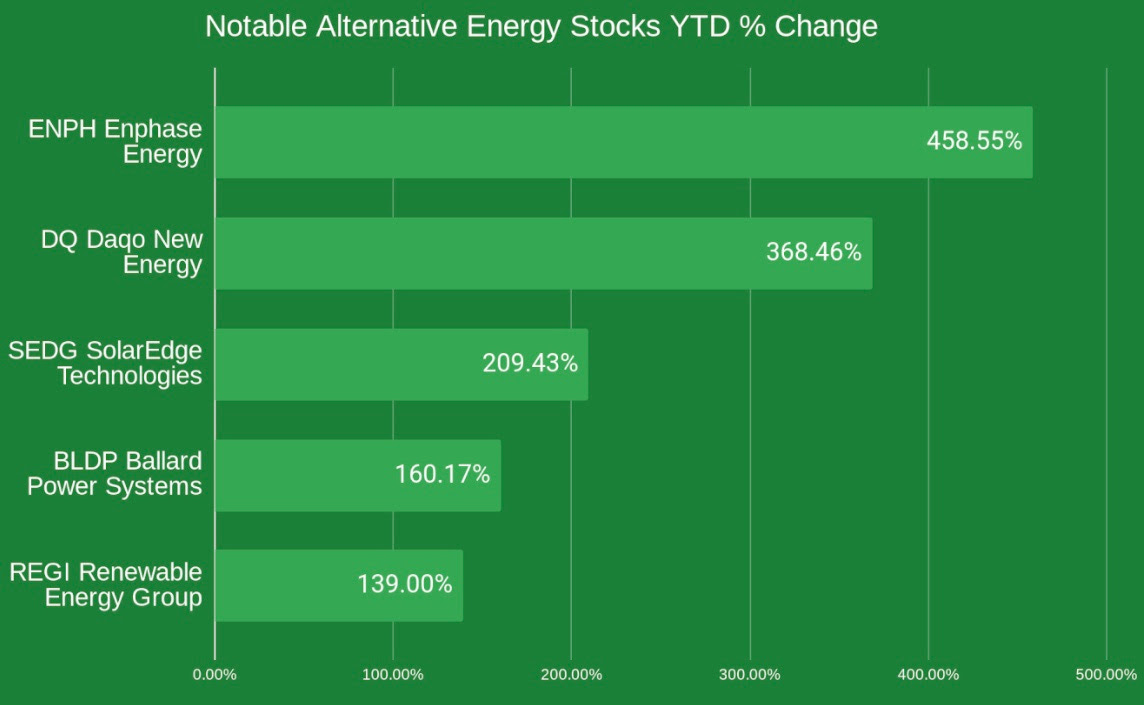
Source: CCI analysis, Google Finance data.









 Top Gaining Stocks
 Top Losing Stocks