


By David Callaway, Callaway Climate Insights
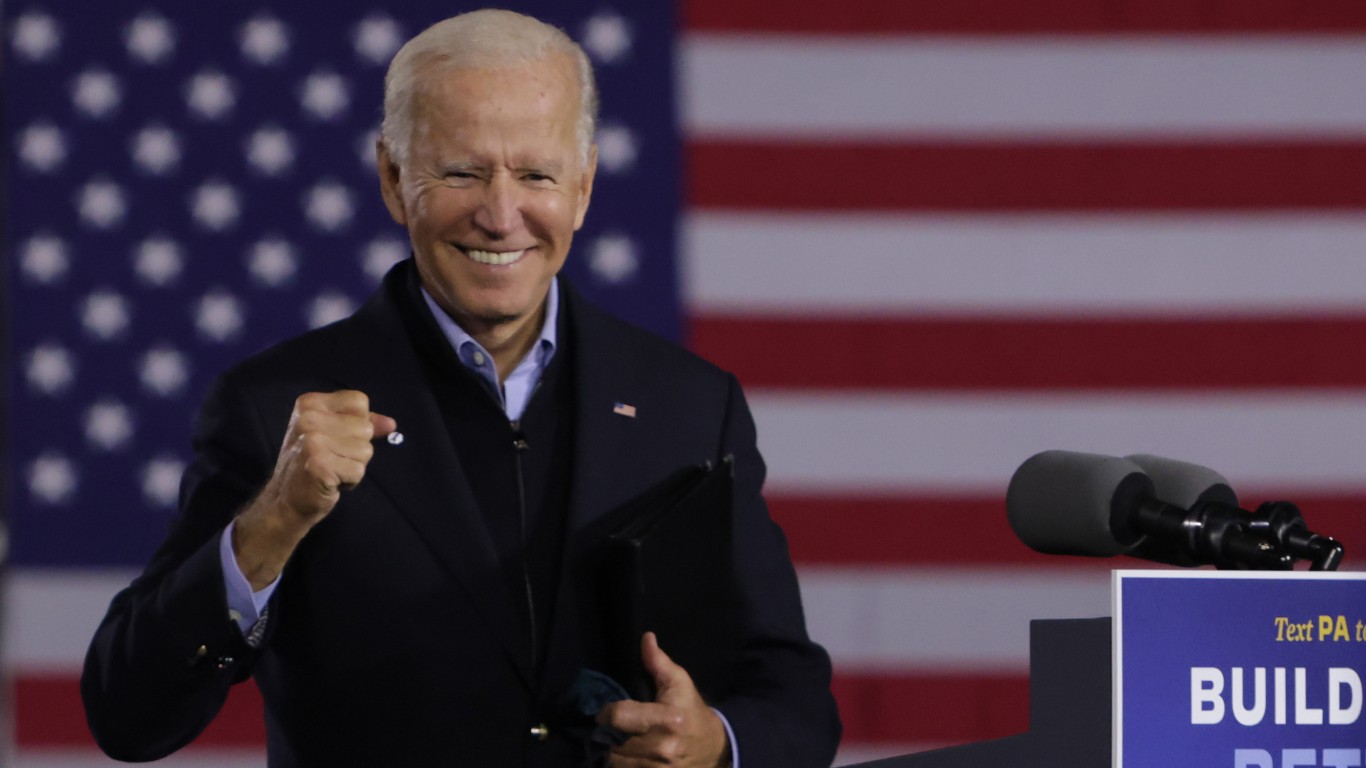
Even with the unprecedented speed of the Biden administration’s climate campaign in the past few weeks, and the increasing sense that 2030 has become the new 2050 in terms of corporate and government climate pledges, there has been no game changer yet to mark 2021 as a historic catalyst in the fight against global warming.
There’s little doubt it must be a carbon price.
While pundits have labeled the idea politically unfeasible — given the makeup of the U.S. Senate and the fact that a similar cap-and-trade program was killed a decade ago — the pressure on Biden from financial regulators, CEOs, and other international governments is growing by the day.
Carbon prices in Europe, as measured by the EU Emissions Trading System, are up 60% since Biden was elected, including 13% in the past week, rising above €38 ($45) a metric ton Thursday as companies rush to buy offsetting allowances for their expected carbon emissions.
As we pointed out last week, some traders think the price could go to €50 or €100, though central bankers think current fair value lies somewhere in the €40s. Markets do tend to swing, as we’ve learned again the last few weeks.
A carbon price, tax, fee, or whatever you want to call it is indeed a political minefield for Biden. But in a few weeks, months maybe, as the world awaits a bombshell ahead of the COP26 climate summit in November, the pressure to swing for the fences will become too much to resist. The next news we can expect is a presidential committee established to study the prospect, which will buy time to create a case.
As if investors need one. The rising price of time left is already enough.
More insights below. . . .
EU notebook: Europe’s new fashion trend — less is more
. . . . The collapse of trendy British retailer Topshop last year was hailed as one of the largest corporate failures of the Covid pandemic, but it also highlights a key need for consumers to fight climate change, writes Vish Gain from Dublin. In a region renowned for fast fashion, glitzy shows and trend-setting styles, the specter of carbon waste looms large as an industry contemplates its economic recovery.
It’s easy to conjure up images of coal plants, airplane trails and meat factories when trying to visualize the world’s worst climate offenders. But you might just be wearing the problem on your sleeve. The $2.5 trillion global fashion industry is responsible for 10% of the world’s carbon emissions — more than aviation and shipping combined. According to a recent report, fashion production has doubled since the early 2000s and is expected to grow in volume from 62 million tons in 2015 to 102 million tons by 2030, representing $3.3 trillion in value. . . .
Climate-friendly corporations and the ghost of Milton Friedman
. . . . Why do some companies who care about climate change perform just as well as polluting companies? Maybe it’s lack of regulation, writes Mark Hulbert. Citing a fascination new study that goes to the heart of the latest corporate debate about Milton Friedman’s famous dictum that companies are only in business to make money, Hulbert looks at results that show in a world without strict regulation, some companies perform better because their workers are willing to make sacrifices for the public good, not just profit.
This new study sheds an entirely new light on the famous argument advanced more than 50 years ago by the late economist (and Nobel laureate) Milton Friedman. He railed against the then-nascent CSR movement by insisting that “there is one and only one social responsibility of business — to use its resources and engage in activities designed to increase its profits so long as it stays within the rules of the game.”
This new study instead shows that there is no inherent contradiction between being profit maximizing and pursuing climate friendly policies. On the contrary, according to the professors, “it is precisely the profit-maximization by a self-interested [businessperson] advocated by Friedman” that can in certain circumstances lead a firm to become more socially responsible. . . .
ZEUS: ESG and the GameStop effect
. . . . Millennials. Digital money. Social trading campaigns. Fighting injustice. Is ESG the ultimate meme trade? As investor funds pour into environmental, social and governance-themed funds and stocks, David Callaway asks whether the sector is at risk from a trading bubble. Among the latest ESG indexes to be announced, even GameStop (GME) was included as a play. There’s no doubt that the climate solutions theme is just beginning, but given Wall Street’s exuberance, we can expect plenty of bumps along the way. . . .
‘No more blah, blah,’ as France gets sued for climate inaction
. . . . As the U.S. Supreme Court weighs a landmark case against 26 oil companies from the city of Baltimore, France has joined the legal climate mix from the other side, as a defendant. A Paris court has found the French state guilty of failing to address the climate crisis and not keeping its promises to tackle greenhouse gas emissions. Billed as the “affair of the century,” reports The Guardian, the case was brought by four French environmental groups after a petition signed by 2.3 million people. “No more blah blah,” said Jean-François Julliard, the executive director of Greenpeace France, one of the plaintiffs, adding that the judgment would be used to push the French state to act against the climate emergency. The groups say the state is exceeding its carbon budgets and is not moving quickly enough to renovate buildings to make them energy-efficient or to develop renewable energy. The move is an international example of the increasing use of the courts to push companies — and countries — into acting faster. France is among Europe’s most strident advocates for climate solutions and international cooperation, so expect other countries to soon be targeted. . . .
. . . . In a billboard-sized signal that the rest of the car industry has gotten the message that the climate-change train is leaving the station under the new Biden administration, Toyota, Fiat Chrysler and several other major automakers say they will no longer try to block California from setting its own fuel-economy standards. The announcement this week comes a couple of months after General Motors (GM) — almost immediately after President Joe Biden was elected — said it would do the same in withdrawing its support for the Trump administration’s efforts to strip California of its ability to set its own fuel efficiency standards. A handful of other automakers, including Ford (F), Honda (HMC), BMW, and Volkswagen, decided back in September to stick with their California commitments despite Trump’s actions, perhaps foreseeing what was to come. With this type of pickup, California’s standards could soon set an example for other states as well. . . .
. . . . First suggestion when you’re hosting the world’s largest climate summit later this year: Don’t approve plans for a new coal mine. That’s the latest scandal Boris Johnson’s UK government finds itself in — among so many — after agreeing to plans for a new coal mine in Cumbria, in the northwest of England ahead of its COP26 summit in Glasgow in November. No. 10 Downing St. mentioned something about not interfering in local council matters as its defense, and changed the subject. But each day, the story of the West Cumbria Coal Mine grows legs, as they say in my profession. In reality, the move reflects the delicate balance between providing energy while transitioning to more renewable forms of it — in this case, for export to Europe and to produce local steel. California also faces the issue as it wonders whether to increase gas usage to prevent blackouts next summer. But in the forum of public opinion, this is what they call in England a dog’s breakfast. Expect the decision to be overturned within weeks. . . .











 Top Gaining Stocks
 Top Losing Stocks