


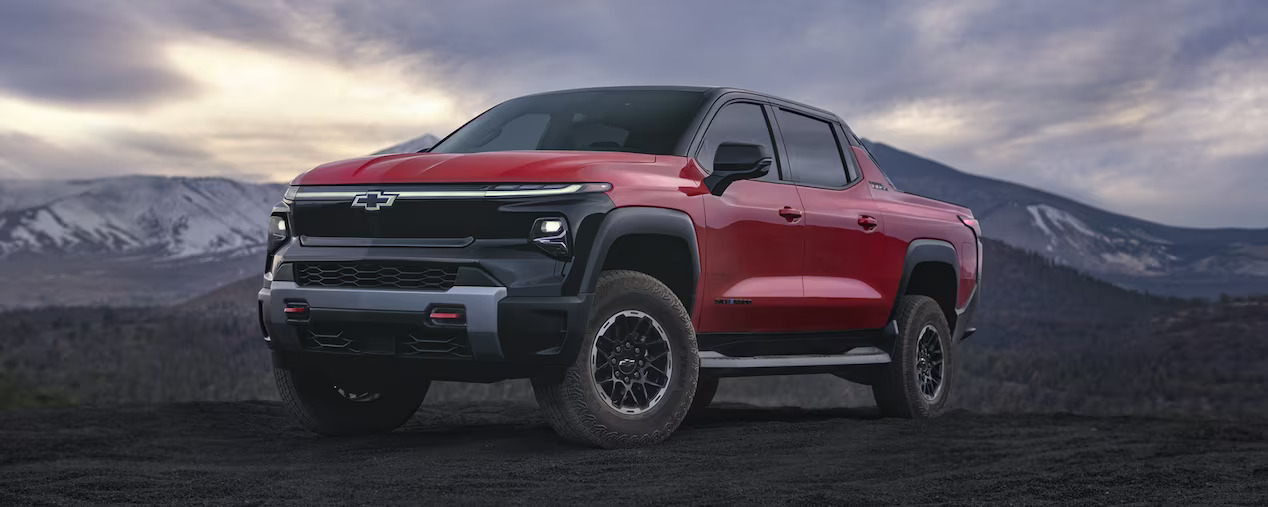
Ford’s earnings statement looked like it has for years. Pickups and commercial trucks fueled sales. The F-150 is, after all, the largest-selling vehicle in America and makes up over a third of Ford’s total unit sales in the United States. Missing is what never existed. Sales of electric vehicles (EVs) were virtually nil. Ford, which is losing tons of money on EV development and marketing, said the number of people who wanted its EVs was small and will be in the immediate future. (These are America’s 17 favorite pickups.)
[in-text-ad]
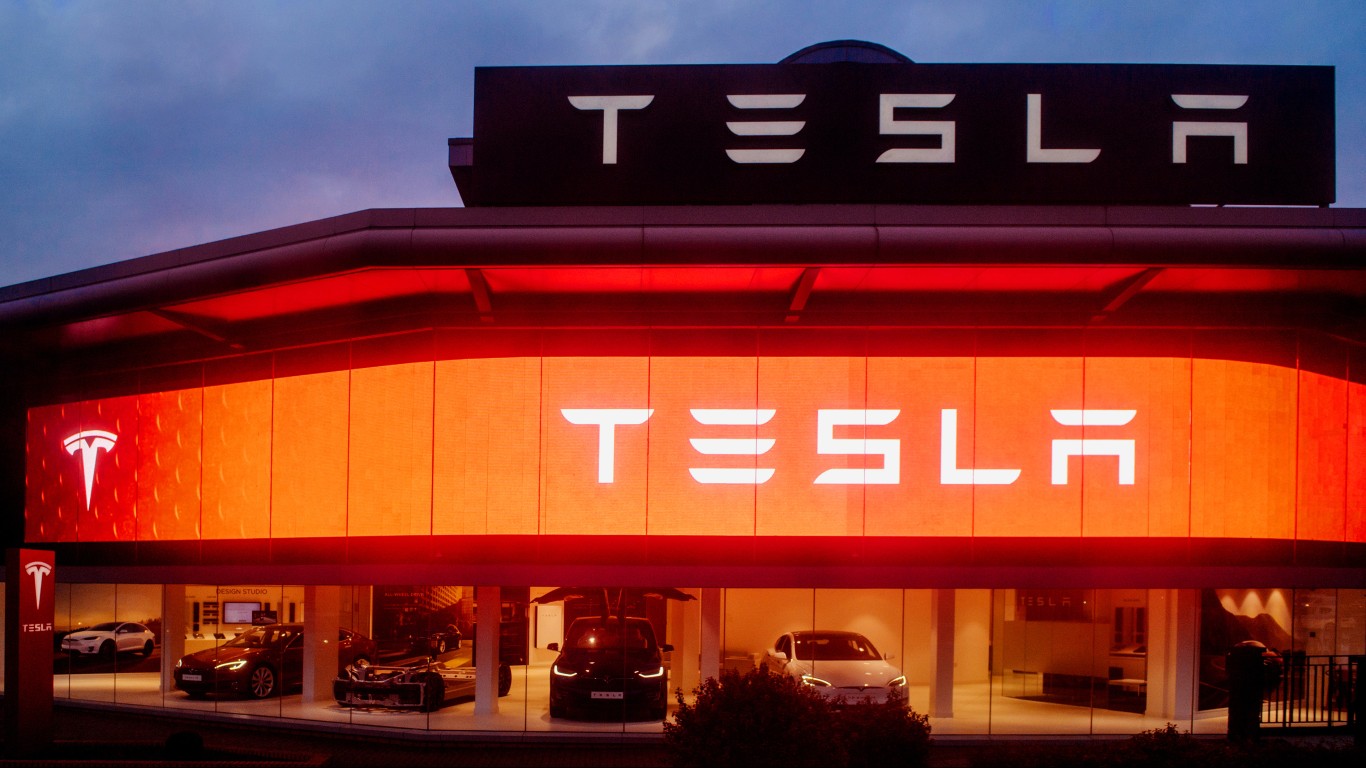
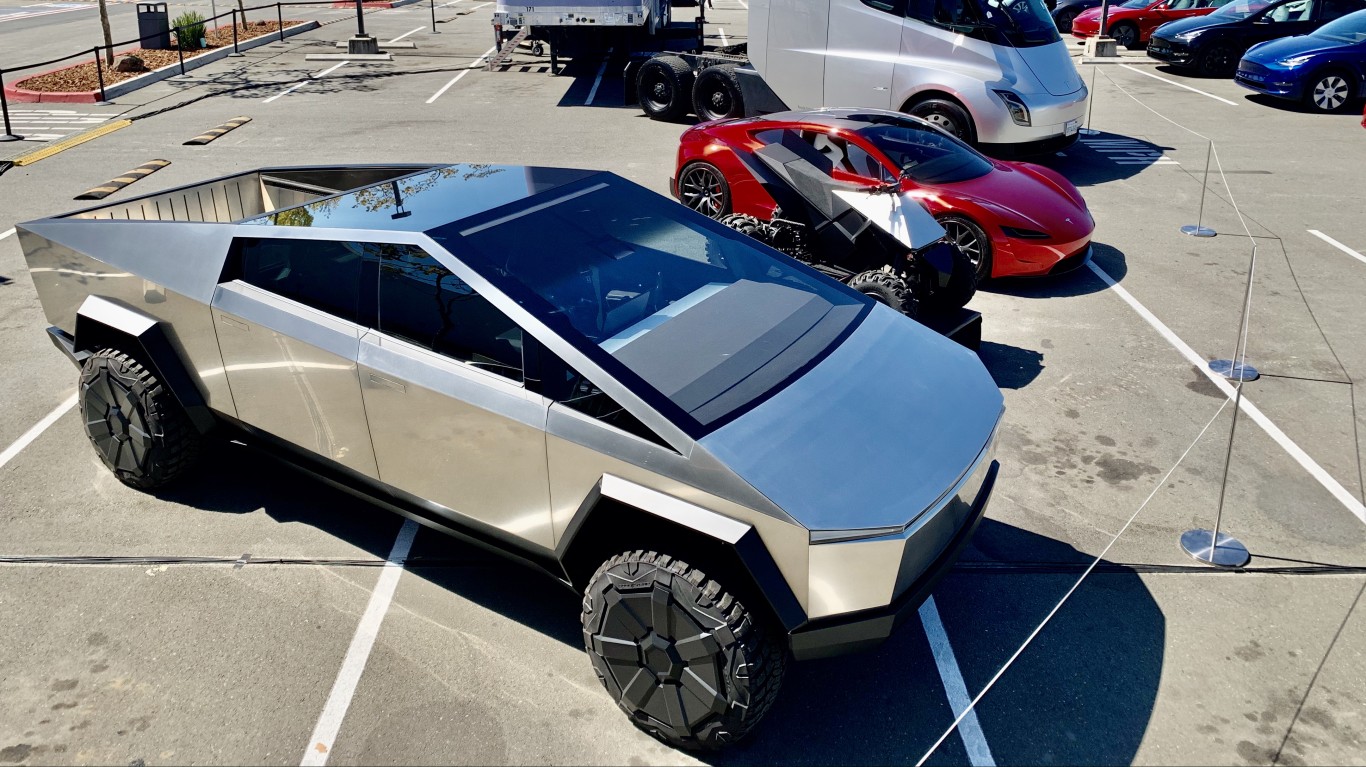
Part of Ford’s argument for EV sales weakness was a lack of demand. It is an odd statement, given that Tesla sold 466,000 vehicles in the most recent quarter. In other words, there is a demand for EVs, but Tesla has no U.S. competition. Tesla is about to launch its Cybertruck, which will compete directly with the Ford flagship EV, the F-150 Lightning. That may make Ford’s EV dilemma worse. Tesla says there is a nearly five-year wait for the Cybertruck. That almost certainly will shrink because not everyone in the waiting line will buy one.
[nativounit]
Ford earned $0.72 per share in the quarter, up from $0.68 in the same quarter a year ago. Automotive revenue came in at $42.4 billion, up an impressive 12%. Ford’s EV division had a loss before interest and taxes (EBIT) of $1.1 billion, on top of the $700 million it lost in the same quarter of last year. The Wall Street Journal reported, “The automaker also pushed back its EV production goals, saying it will now produce 600,000 EVs annually by the end of 2024, backing off from a previous timeline of doing so by the end of this year.” Ford CEO Jim Farley said the market was still unsettled and would be until demand across the industry shows who had won market share and who had not.
[wallst_email_signup]
Ford’s statements made it clear how poor its EV sales will be in 2023. It increased its pretax profit forecast to a range of $11 billion to $12 billion from its earlier forecast of $9 billion to $11 billion. Based on Ford’s history, truck sales have to be the engine of that.
[recirclink id=1202368]
Ford is trapped now. It has invested billions of dollars in its move into an EV-dominated future. However, the future is further off than Ford expected, Tesla’s lead remains massive and Ford has to compete with every major car company in the world to catch up.
Ford EV Dream Crumbles


© Shattered (CC BY-SA 2.0) by Bill Burris

Douglas A. McIntyre is the co-founder, chief executive officer and editor in chief of 24/7 Wall St. and 24/7 Tempo. He has held these jobs since 2006.
McIntyre has written thousands of articles for 24/7 Wall St. He is an expert on corporate finance, the automotive industry, media companies and international finance. He has edited articles on national demographics, sports, personal income and travel.
His work has been quoted or mentioned in The New York Times, The Wall Street Journal, Los Angeles Times, The Washington Post, NBC News, Time, The New Yorker, HuffPost USA Today, Business Insider, Yahoo, AOL, MarketWatch, The Atlantic, Bloomberg, New York Post, Chicago Tribune, Forbes, The Guardian and many other major publications. McIntyre has been a guest on CNBC, the BBC and television and radio stations across the country.
A magna cum laude graduate of Harvard College, McIntyre also was president of The Harvard Advocate. Founded in 1866, the Advocate is the oldest college publication in the United States.
TheStreet.com, Comps.com and Edgar Online are some of the public companies for which McIntyre served on the board of directors. He was a Vicinity Corporation board member when the company was sold to Microsoft in 2002. He served on the audit committees of some of these companies.
McIntyre has been the CEO of FutureSource, a provider of trading terminals and news to commodities and futures traders. He was president of Switchboard, the online phone directory company. He served as chairman and CEO of On2 Technologies, the video compression company that provided video compression software for Adobe’s Flash. Google bought On2 in 2009.




 Top Gaining Stocks
 Top Losing Stocks