


Many of the most prominent companies in the history of the United States have suffered periods where their business model failed, or the product line became archaic and out of vogue. In addition, countless other reasons forced many blue-chip companies either to be removed from a major index or to face the worst-case scenario of bankruptcy and going out of business.
To name just a few that are famous in the Wall Street graveyard:
- Blockbuster
- Borders
- Compaq
- Kodak
- Pier 1 Imports
- Pan Am
- Polaroid
- Radio Shack
In addition, there are legacy American companies like AT&T (NYSE: T | T Price Prediction) and General Electric Company (NYSE: GE), which survived expulsion from the Dow Jones Industrials, cut their dividend, and both suffered from mismanagement of their very complex businesses and crushing debt loads. While down, they have fought back and are in better shape today.
One company investors should be very wary of today is one of the world’s biggest aerospace and defense providers. While it can remain at or near the top of the industry, the going could get rough over the next year.
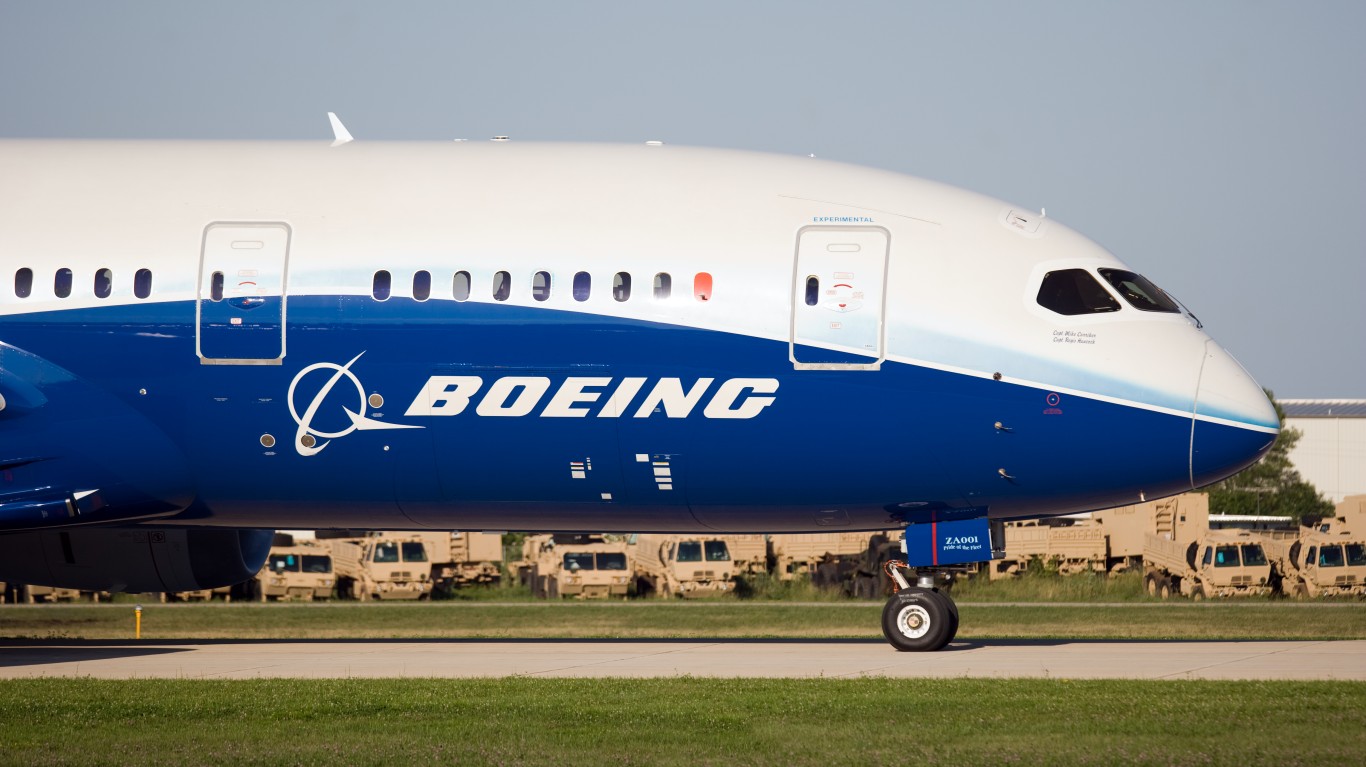
Founded in 1916 by William Boeing in Seattle, Washington, The Boeing Company (NYSE: BA) designs, manufactures, and sells airplanes, rotorcraft, rockets, satellites, telecommunications equipment, and missiles worldwide. It also provides leasing and product support services.
While a legendary participant in an industry that has skyrocketed over the last 100+ years, we have seven reasons to avoid the shares.
Recent safety issues loom huge on the stock
In January of this year, a door flew off a Boeing 737 and detached from an Alaska Airlines flight at 16,000 feet. Aviation experts said a misalignment of pads and pins may have caused the malfunction. While no one was seriously injured, the incident was a significant news story.
737 Max problems also led to the aircraft being grounded before
Two crashes of the aircraft in 2018 and 2019 in Ethiopia and Indonesia caused the deaths of 346 people, and the 737 MAX was grounded between March 2019 and December 2020.
The Justice Department opened a criminal investigation

The Wall Street Journal reported recently that investigators have contacted Alaska Airlines passengers and crew on the January 5th flight, on which the door blew off. The Department of Justice is investigating whether Boeing has complied with the terms of the 2021 settlement after the two aforementioned deadly crashes.
Given recent issues, the stock is a likely “Value Trap”

Often, when companies have problems affecting the stock price, value investors swoop in to buy shares that, based on analyst estimates, may seem cheap compared to historical valuations. Trading at a rich 26 times estimated 2025 earnings and looking at 10% growth in revenue, given the potential negatives, the stock looks fully valued at current levels.
Design problems continue to cloud the future

While the company’s order backlog remains solid as growing air travel demand has strengthened around the world, the potential for punitive action by the Justice Department remains a headwind that most investors should want to avoid. Many airline executives have been frustrated with Boeing over continued design issues, but few are in a postion to cancel orders on the books.
The Federal Aviation Administration (FAA) is taking action on Boeing
According to published reports, while existing 737 Max 9s were allowed to continue to fly after the door issue, the FAA is restricting the company’s production of the aircraft. In January, the FAA grounded the entire fleet of 171 planes, and if another incident should occur, it would likely ground them all again.
Some people are scared to fly on the planes
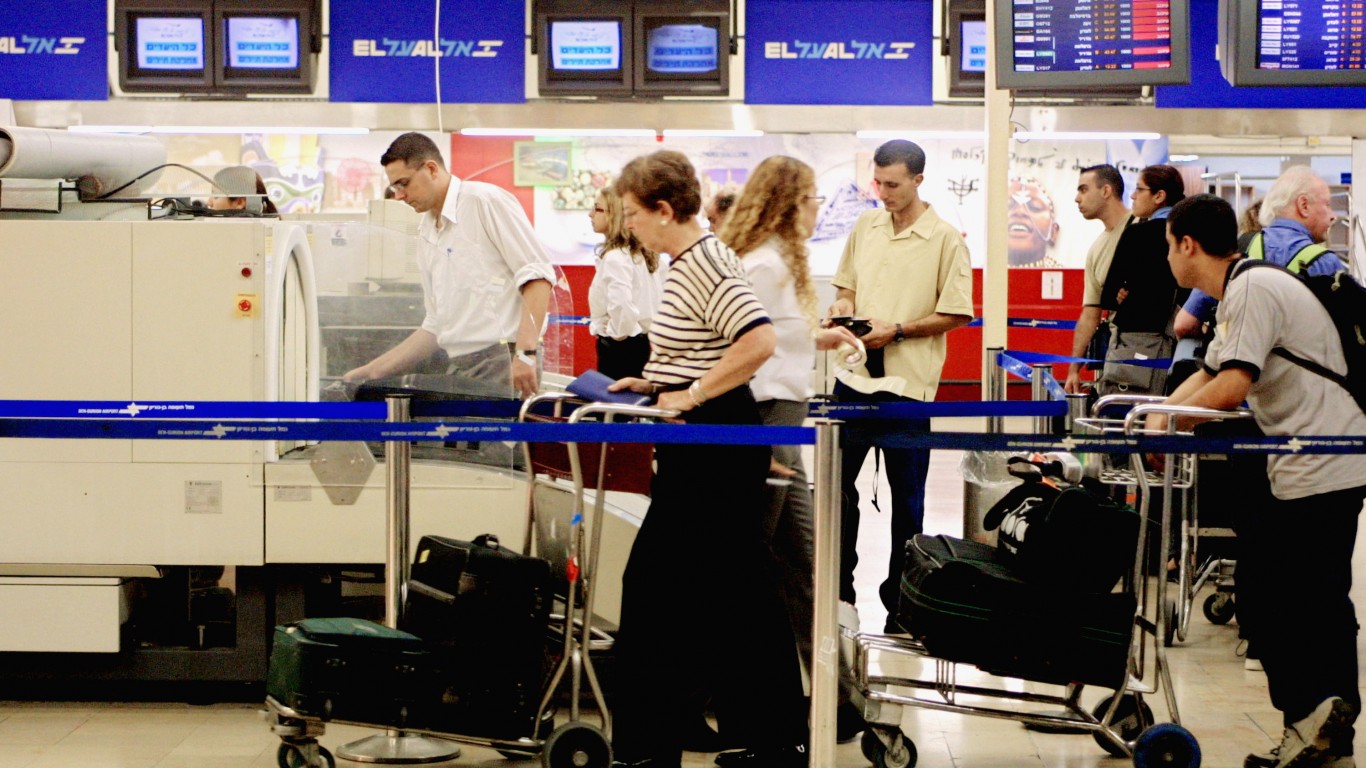
While commercial aviation is one of the safest means of travel in the world, many people were frightened by the January incident, and some have been very outspoken about their intention not to fly on the Boeing aircraft. With the FAA clearing the aircraft to fly back in late January after the grounding, they are maintaining the plane is safe.
The Boeing Company has been an American institution for well over a century, and it’s a solid bet that, like after the crashes in 2018 and 2019, the company will emerge from the door issue unscathed at some juncture down the road.
Again, with the stock down over 30% from the 52-week high, the shares may seem tempting, but with the stock paying no dividend to shareholders, there is no payment to wait for a turnaround in the share price. For now, it makes sense to pass on the stock and look for an even better entry point as more time passes and the recent issues fade.










 Top Gaining Stocks
 Top Losing Stocks