



Investors love dividend stocks because they provide dependable income and a great opportunity for solid total return. Total return includes interest, capital gains, dividends, and distributions realized over time. In other words, the total return on an investment or portfolio consists of income and stock appreciation.
At 247 Wall St., we consistently emphasize the potential of total return to our readers, as it is one of the most effective ways to enhance the prospects of overall investing success. Once again, total return is the collective increase in a stock’s value plus dividends.
Most dividend investors seek solid passive income streams of quality dividend stocks. Passive income is a steady stream of unearned income that doesn’t require active traditional work. Shared ideas for earning passive income include investments, real estate, or side hustles.
We screened our 24/7 Wall St. passive income stocks research database, looking for the stocks from companies that are indeed the ‘best of the best.’ These stocks have solid profits and margins, dominate their specific industry, pay big and dependable dividends, are well-run at the top, and have strong upside potential. Six companies checked all of the boxes and are the gold standard for passive dividend investors.
The Coca-Cola Company
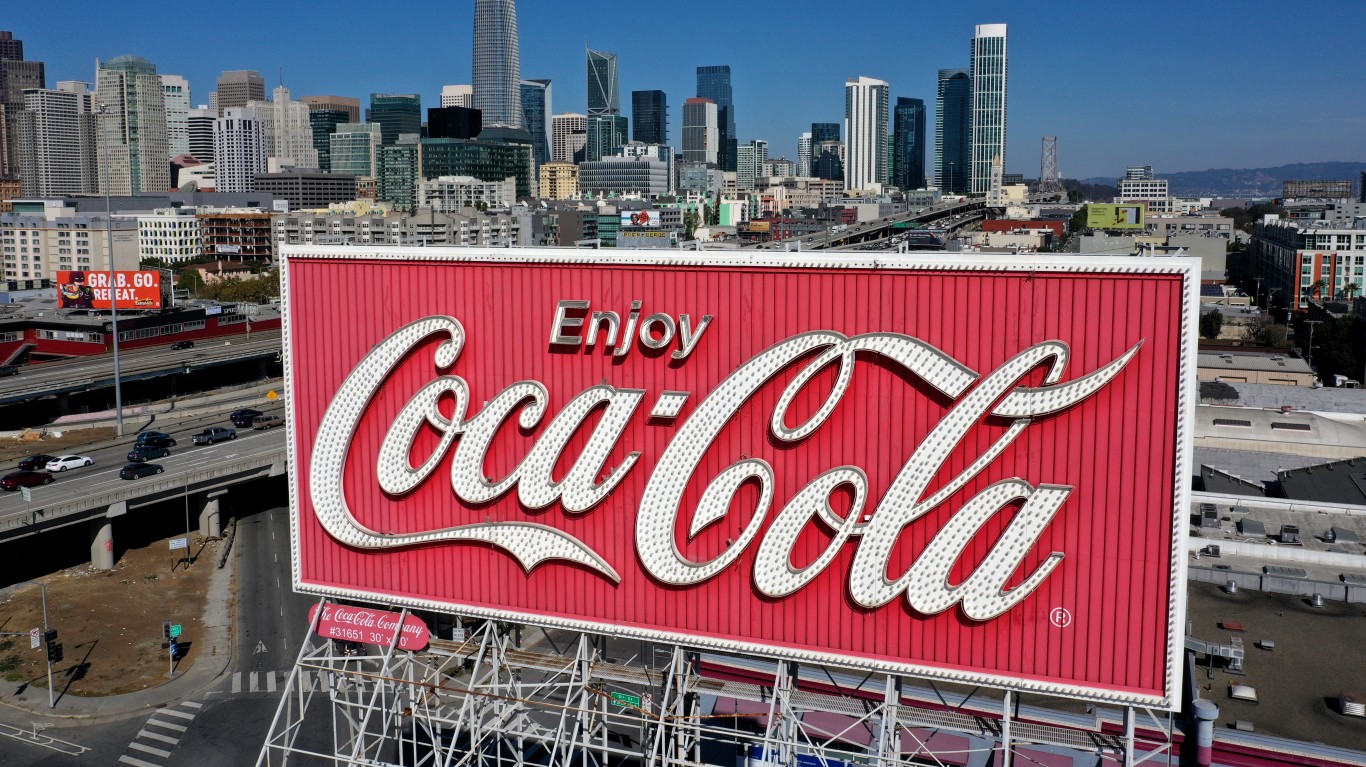
Coke products are sold in over 200 countries worldwide, with consumers drinking more than 1.8 billion company beverage servings each day.
This company remains a top Warren Buffet holding as he owns a massive 400 million shares, 9.3% of the float and 6.4% of the portfolio. The Coca-Cola Company (NYSE: KO | KO Price Prediction) is the world’s largest beverage company, offering consumers more than 500 sparkling and still brands.
Led by Coca-Cola, one of the world’s most valuable and recognizable brands, the Company’s portfolio features 20 billion-dollar brands, including:
- Diet Coke
- Fanta
- Sprite
- Coca-Cola Zero
- Vitaminwater
- Powerade
- Minute Maid
- Simply
- Georgia
- Del Valle
Globally, they are the No. 1 provider of sparkling beverages, ready-to-drink coffees, and juice drinks.
Through the world’s most extensive beverage distribution system, consumers in more than 200 countries enjoy the company’s beverages at a rate of more than 1.9 billion servings a day. It’s also important to remember that the company owns almost 20% % of Monster Beverage (NASDAQ: MNST), which continues to deliver big numbers.
Investors are paid a very dependable 3.29% dividend.
Exxon Mobil
ExxonMobil manages an industry-leading portfolio of resources and is one of the largest integrated fuels, lubricants, and chemical companies in the world.
This mega-cap integrated energy giant is always a solid idea for passive income investors and pays a strong 3.14% dividend. Exxon Mobil Corporation (NYSE: XOM) explores and produces crude oil and natural gas in the United States and internationally.
It operates through four business silos:
- Upstream
- Energy Products
- Chemical Products
- Specialty Products
The Upstream segment explores and produces crude oil and natural gas.
The Energy Products segment offers fuels, aromatics, catalysts, and licensing services.
Its products are sold under these brands:
- Exxon
- Esso
- Mobil
The Chemical Products segment manufactures and markets petrochemicals, including olefins, polyolefins, and intermediates.
The Specialty Products segment offers performance products, including lubricants, basestocks, waxes, synthetics, elastomers, and resins.
The company also manufactures, trades, transports, and sells crude oil, natural gas, petroleum products, petrochemicals, and other specialty products and pursues lower-emission business opportunities, including carbon capture and storage, hydrogen, lower-emission fuels, and lithium.
In a staggering deal announced last fall, Exxon Mobil is purchasing oil shale giant Pioneer Natural Resources (NYSE: PXD) for $59.5 billion in an all-stock purchase. The deal will create the largest U.S. oil field producer and guarantee a decade of low-cost production. The deal is expected to close in this quarter.
Home Depot
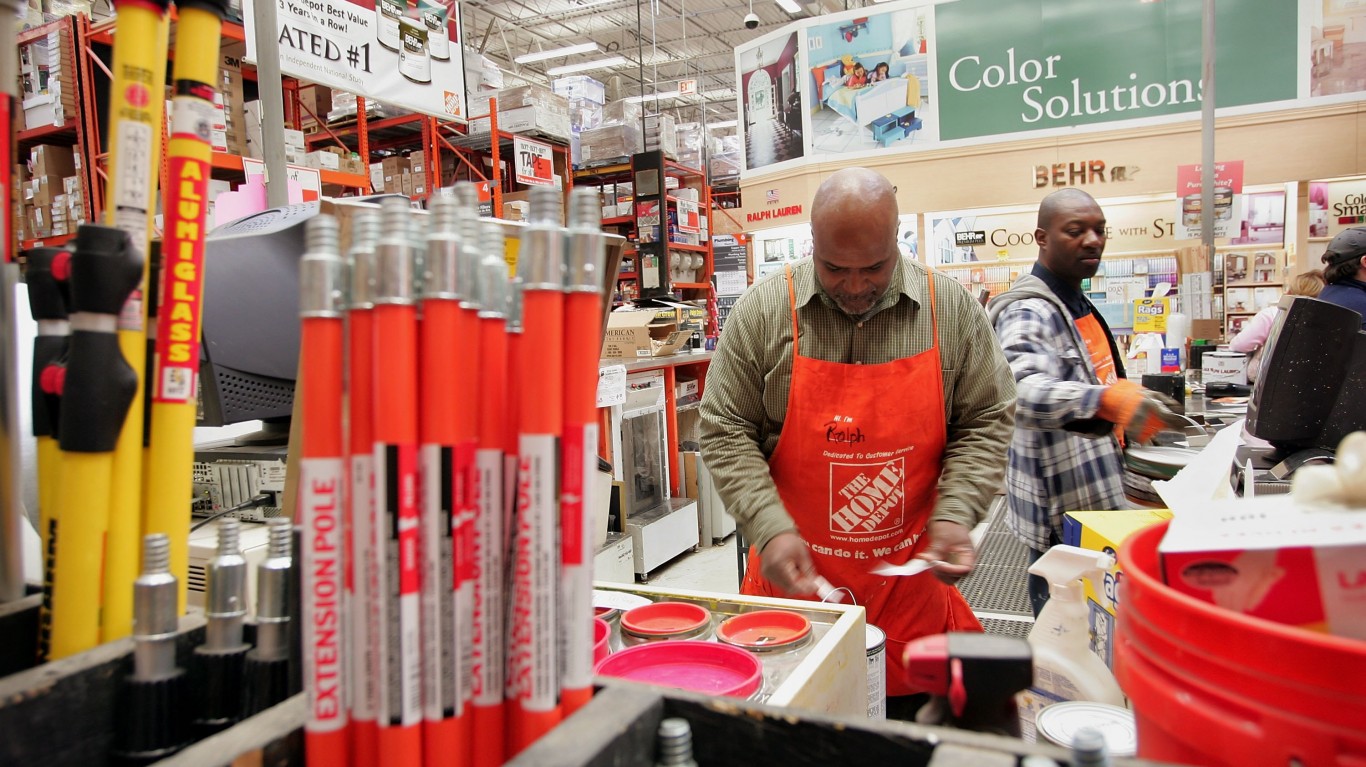
Home Depot is the largest home improvement retailer in the United States.
With the potential for a second-half 2024 recession and still-high mortgage interest rates and home prices, people will likely stay put, and this is the top retailer to own now, which pays a solid 2.59% dividend. The Home Depot, Inc. (NYSE: HD) operates as a home improvement retailer. It sells various:
- Building materials
- Home improvement products
- Lawn and garden products
- Décor products
- Facilities maintenance, repair, and operations products
Home Depot’s offerings extend beyond products. The company also provides a wide range of installation services for:
- Flooring
- Water heaters
- Baths
- Garage doors
- Cabinets
- Cabinet makeovers
- Countertops
- Sheds
- Furnaces
- Central air systems
- Windows
It further enhances its customer experience with tool and equipment rental services. This diverse portfolio of products and services positions Home Depot for potential growth and resilience in the market.
Home Depot primarily serves:
- Homeowners and professional renovators/remodelers
- General contractors
- Maintenance professionals
- Handypersons
- Property managers
- Building service contractors
- Specialty tradespeople, such as electricians, plumbers, and painters
It also sells its products through websites, including homedepot.com, homedepot.ca, and homedepot.com.mx; blinds.com, an online site for custom window coverings; and thecompanystore.com, an online site for textiles and décor products, as well as through The Home Depot stores.
Philip Morris International
Philip Morris International Inc. is an American multinational tobacco company, with products sold in over 180 countries.
This company has continued to grow its global market share and pays a fat 5.61% divided. Philip Morris International Inc. (NYSE: PM) is one of the largest international cigarette producers, with a share of 28% of the global cigarette/heated tobacco market.
Key combustible brands include:
- Marlboro
- Parliament
- L&M
The company is commercializing IQOS, a heat-not-burn product, in over 40 markets, which could drive earnings in the future. Most on Wall Street believe Philip Morris International offers superior underlying growth prospects, both near-term and long-term.
The share price has been weak lately as investors have questioned the growth potential of its reduced-risk products. All sales are outside the United States.
Merck
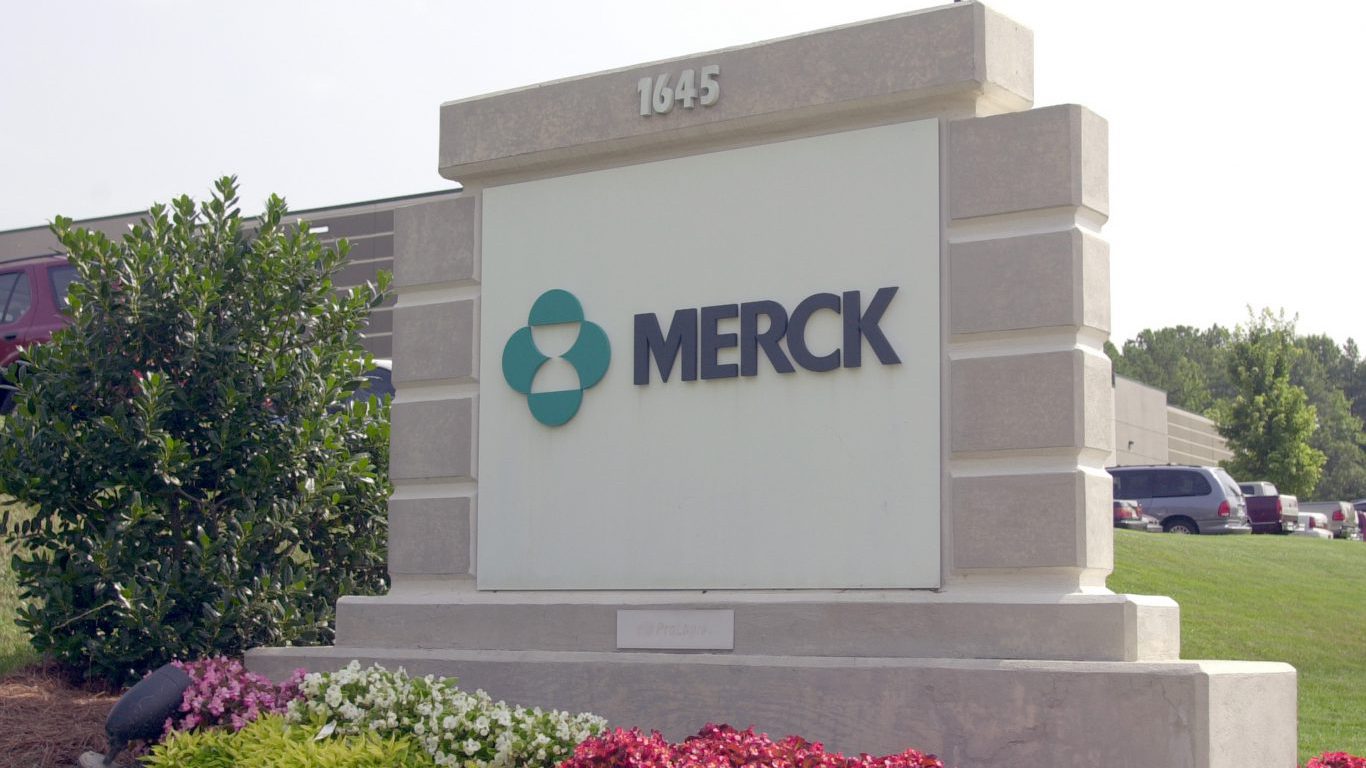
Merck develops and produces medicines, vaccines, biologic therapies and animal health products.
This company, a steadfast healthcare stock for conservative investors, offers a reliable 3.08% dividend. Merck & Co. Inc. (NYSE: MRK) is a healthcare company with a global presence, operating through two segments: Pharmaceutical and Animal Health.
The Pharmaceutical segment offers human health pharmaceutical products in:
- Oncology
- Hospital acute care
- Immunology
- Neuroscience
- Virology
- Cardiovascular
- Diabetes
- Vaccine products, such as preventive pediatric, adolescent, and adult vaccines
The Animal Health segment discovers, develops, manufactures, and markets veterinary pharmaceuticals, vaccines, health management solutions and services, and digitally connected identification, traceability, and monitoring products.
Merck serves:
- Drug wholesalers
- Retailers
- Hospitals
- Government agencies
- Managed health care providers, such as health maintenance organizations
- Pharmacy benefit managers, and other institutions
- Physicians
- Physician distributors
- Veterinarians
- Animal producers
The company collaborates with AstraZeneca PLC (NYSE: AZN), Bayer AG, Eisai Co., Ltd., Ridgeback Biotherapeutics, and Gilead Sciences, Inc. (NASDAQ: GILD) to jointly develop and commercialize long-acting treatments for HIV.
Procter & Gamble
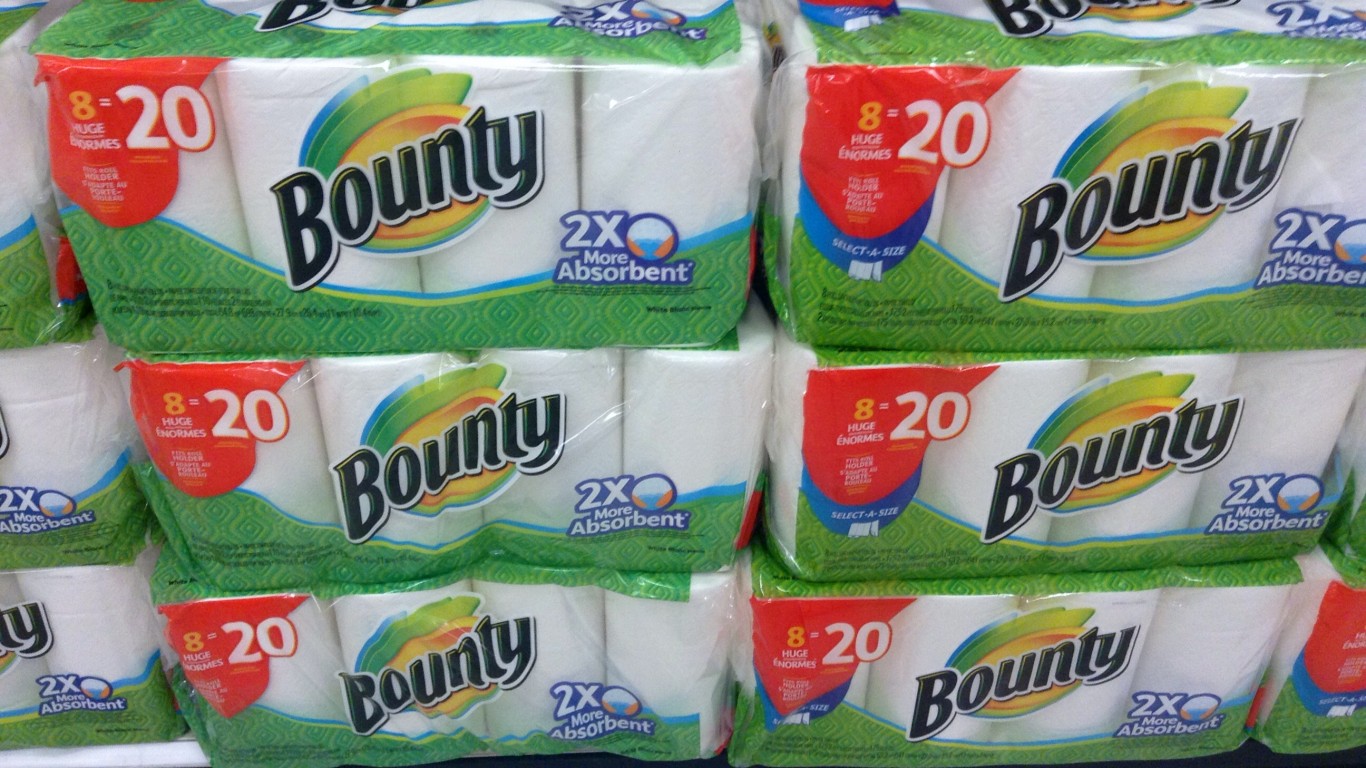
Proctor & Gamble was founded more than 185 years ago as a soap and candle company.
Procter & Gamble (NYSE: PG) is one of the world’s largest consumer products companies. It offers substantial dividends and has very recognizable products.
Proctor and Gamble operate under five segments:
- Beauty,
- Grooming
- Health Care
- Fabric & Home Care
- Baby & Family Care
Brands include:
- Pampers
- Tide
- Bounty
- Charmin
- Gillette
- Oral B
- Crest
- Olay
- Pantene
- Head & Shoulders
- Ariel
- Gain
- Always
- Tampax
- Downy
- Dawn
P&G sells its products through mass merchandisers, e-commerce, grocery stores, membership club stores, drug stores, department stores, distributors, wholesalers, baby stores, specialty beauty stores, high-frequency stores, and pharmacies.
The company has been innovative in its product development process and uses that to help ensure future growth and cash flow. This should provide investors with years of steady growth and dividends.
Shareholders are paid a very dependable 2.35% dividend.









 Top Gaining Stocks
 Top Losing Stocks