


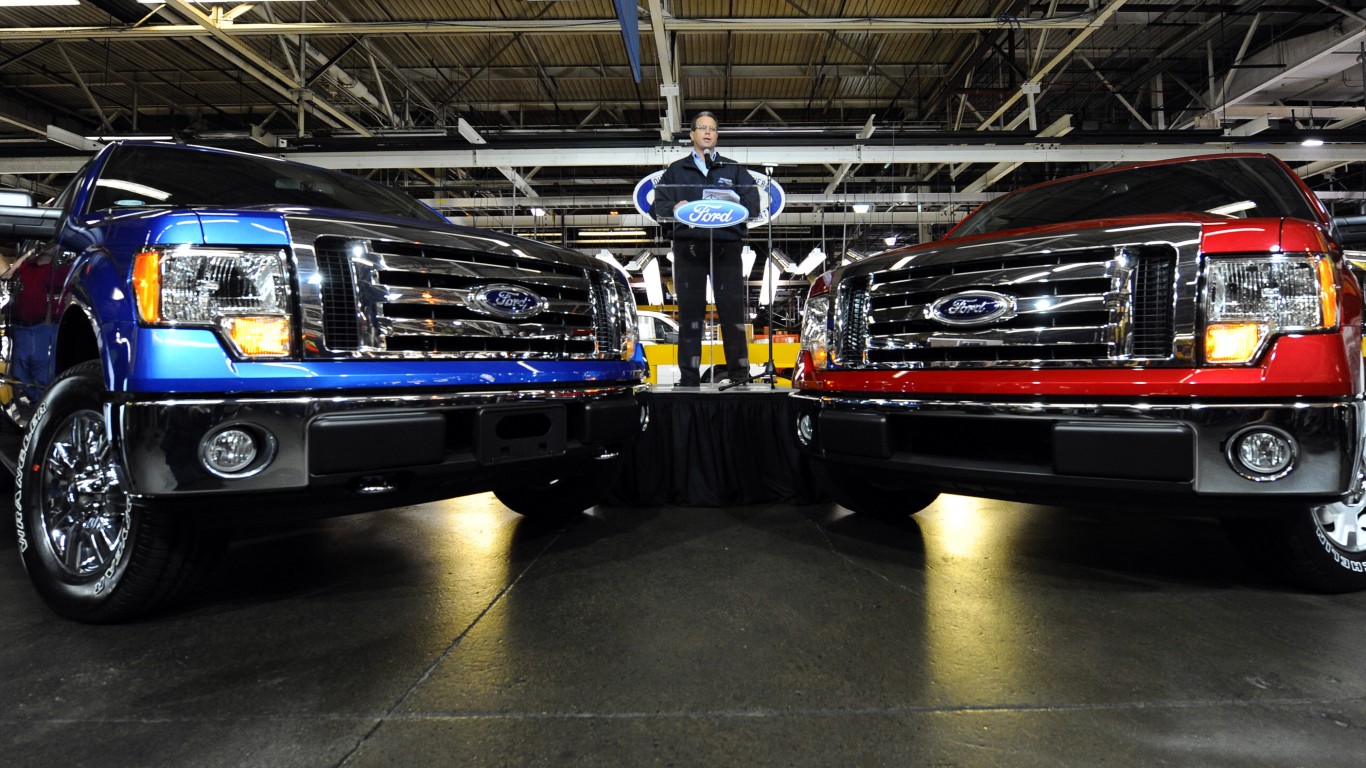
Ford Motor Company, founded by Henry Ford in 1903, continues to be controlled by the Ford family, which holds 40% of the shareholder voting power via Class B shares. William Clay Ford Jr., the chairman or executive chairman since 1999, runs the company. Ford’s non-family board members have a fiduciary duty to the balance of the company’s shareholders, which they have failed to discharge. Ford’s results have been astonishingly poor compared to other global auto manufacturers based on several critical metrics. Investors have paid a steep price.
The lack of care for other shareholders and the number of strategic errors at Ford are severe enough that independent board members should insist Bill Ford step down as chairman. On paper, it will be challenging to do. Had Ford not been anointed by his family, he would never have been in charge of Ford. He was not qualified, nor would he have been chosen to be CEO of any other very large public corporation, automaker or otherwise. Ford board members Alexandra Ford English and Henry Ford III, neither of whom would qualify for their positions at even modest-sized public companies, should be forced to step down as well. The family has placed them there as part of its approach to controlling Ford. Ford’s board then should begin a global search process to hire a CEO with a track record that the shareholders of a company of Ford’s size and brand should expect. Ironically, the decision would improve the fortunes of the Ford family.
Ford has several competitors, but the two that have been its rivals for the most extended periods and are also among the world’s largest car companies are General Motors, the No. 1 car company in America by unit sales, and Toyota Motors, the No.1 car company in the world based on the same metric.
Over the last two years, Ford’s stock price has fallen 8%. Over the same period, the S&P 500 was 23% higher, GM’s shares were up 20%, and Toyota’s rose 34%. Over the period since early 1999, when Bill Ford took over, Ford’s shares have gone down 52%. Toyota is higher by 159%. Ford’s market capitalization now is $50 billion. GM’s is $52 billion. Toyota’s is $305 billion. The struggling Tesla is worth $623 billion. The destruction of Ford’s shareholder value is staggering. Ford did have dividends over part of this period, but so did Toyota.
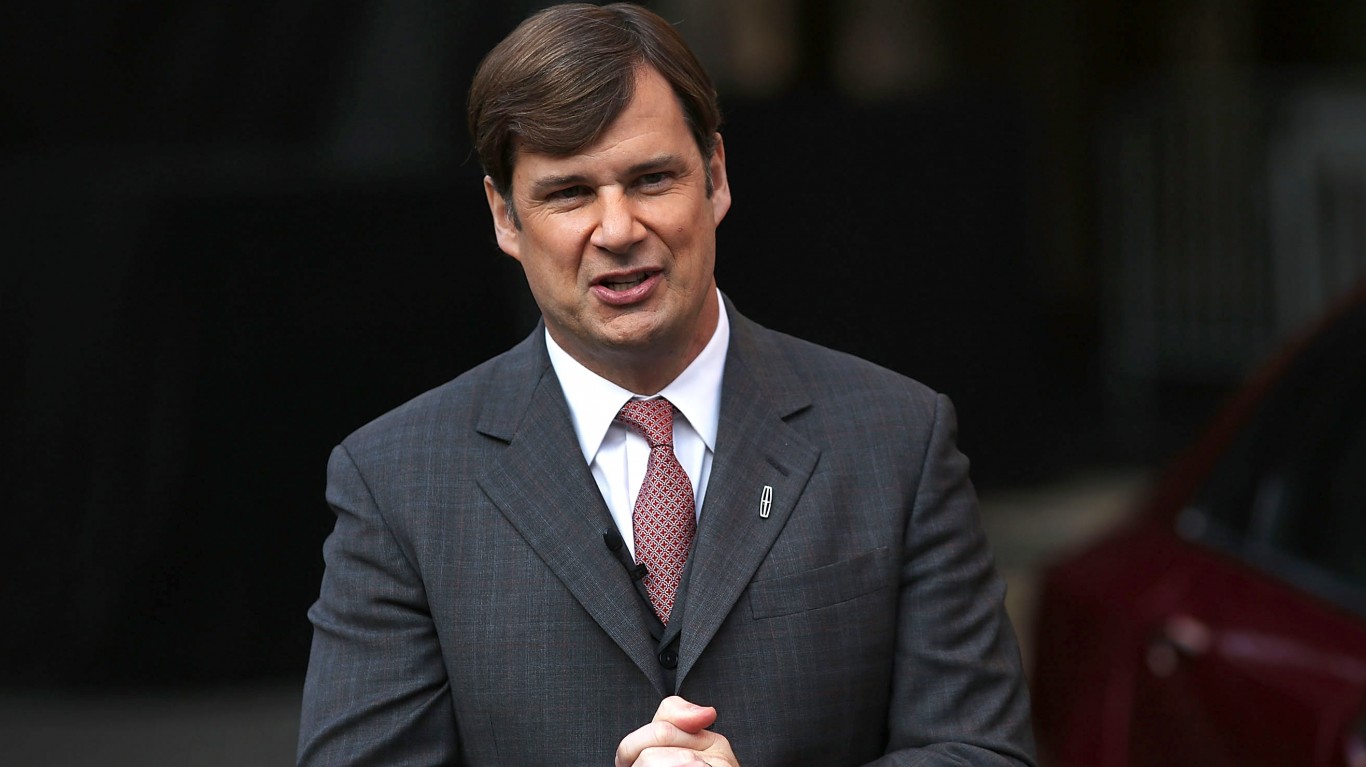
Bill Ford has been an inferior judge of CEOs. However, as a practical matter, he has been acting as CEO since 1999 due to the family’s shareholdings. Ford has had six CEOs since Bill Ford became Chairman, including Ford himself. His title changed to Executive Chairman (now Chair) in 2006. Only one of these, Alan Mulally, held the job for over four years. Alan Mulally, regarded as Ford’s best CEO in decades, served from 2006 to 2014. Almost every aspect of Ford’s operations has worsened since October 1, 2020, when current CEO Jim Farley became the most recent CEO.
Among the profound problems at Ford:
In June 2021, Ford announced it would invest $30 billion in its EV business in the five years ending 2025. That investment has been a disaster. According to CNN, Ford lost $135,000 on every EV the company sold in the first quarter of 2024. By contrast, Tesla made a gross profit of $7,000 per car in the first quarter, according to comments by money manager David Baron.
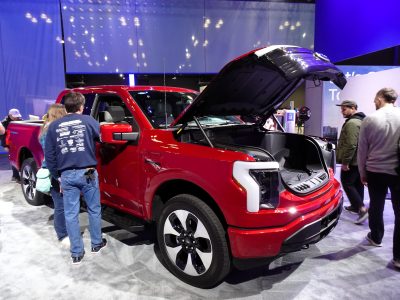
Bill Ford’s comments showed how little research his company had before launching the F-150 Lighting. The F-150 has been America’s top-selling vehicle in the US for 42 years. The Lightning was to be Ford’s golden ticket into the EV market. He told the Detroit News, “To put this in perspective … it is probably the most important launch of my career. … This has been a personal journey of mine since I joined the company 43 years ago.” Lightning sales are only a few thousand a month. Ford recently slashed production. A company that should have as much car market research experience as any other in the world bet billions of dollars and the brand equity of its most important product on a failure. Ford’s pricing of the F-150 Lighting has also been a disaster; at one point, it changed four times in one year.”
Ford failed to see that the road from gas-powered cars to EVs ran across the bridge of hybrids. Toyota, which was criticized for not jumping into the EV industry more aggressively, was proven right when it focused heavily on a hybrid model line.
The tragedy of Ford’s EV story is that it should never have happened. Ford had access to inexpensive capital, brands, R&D, dealer networks, and production facilities to have beaten Tesla as its own game very early in the commercial development of EVs a decade ago. Since that did not happen, among other things, the Ford family’s net worth has been pegged as low as $2 billion. Elon Musk, founder of Tesla, is at $180 billion. Imagine what would happened to Ford’s other shareholders if a world-class CEO had run Ford.
According to CNBC and The Detroit Free Press, Ford’s poor quality issues cost the company billions of dollars. The Free Press called them “self-inflicted.” The Free Press added, “They are the No. 1 problem at Ford right now. And it’s the worst in the industry when it comes to recalls and warranty work,” said John McElroy, a longtime industry observer. Very few categories in the car industry show careless and lackadaisical management more than high company-wide warranty costs. Ford’s reliability problem is a public relations nightmare. It has received well below average grades in the carefully followed Consumer Reports ratings, which is among the most respected sources for this aspect of the auto industry, for three years. Ford Authority wrote about this trend, “It’s more of the same for Ford.” Ford’s dealer service network also receives atrocious scores. The National Highway Traffic Safety Administration recently announced it had started investigating Ford’s BlueCruise driver-assistance feature.
Bill Ford made $20,613,100 last year and over $17 million in each of the two prior years. This compensation level is highly unusual for a public corporation that also has a CEO. Jim Farley made $26,470,033. Together, Ford and Farley have made over $125 million over the three years that ended 2023. It is inappropriate for Ford to be paid this sum when the company claims he is not the person who runs the company. Almost as egregious, Alexandra Ford English and Henry Ford III were each paid over $350,000 to be on the board last year. They each serve on the powerful Finance Committee, which Bill Ford chairs. The proxy says the two “…provide fresh perspectives and valuable insights while continuing the Ford family’s more than 120 years of active involvement with and stewardship of the Company.” Neither of the younger Fords is qualified to serve on a Fortune 20 board. The fact that they have board seats shows that Ford will continue to be overseen by people who would not qualify to hold those jobs elsewhere.
The most terrible part of Ford’s governance process and practice is that several board members know better. John C. May has been Chairman of Deere & Company. John B. Veihmeyer was Chairman and Chief Executive Officer of KPMG, LLP. Most responsible is John L. Thornton, Ford’s lead independent director and chairman of Barrick Gold Corporation. He was a co-president of Goldman Sachs. Thornton has been a Ford board member since 1996, so he voted to put Bill Ford into his position.
Based on history, either Alexandra Ford English or Henry Ford III will become Chairman or Executive Chairman shortly, probably in the next decade. Ford’s board, which includes several former large company CEOs and financiers, can almost certainly do nothing about it.







 Top Gaining Stocks
 Top Losing Stocks