


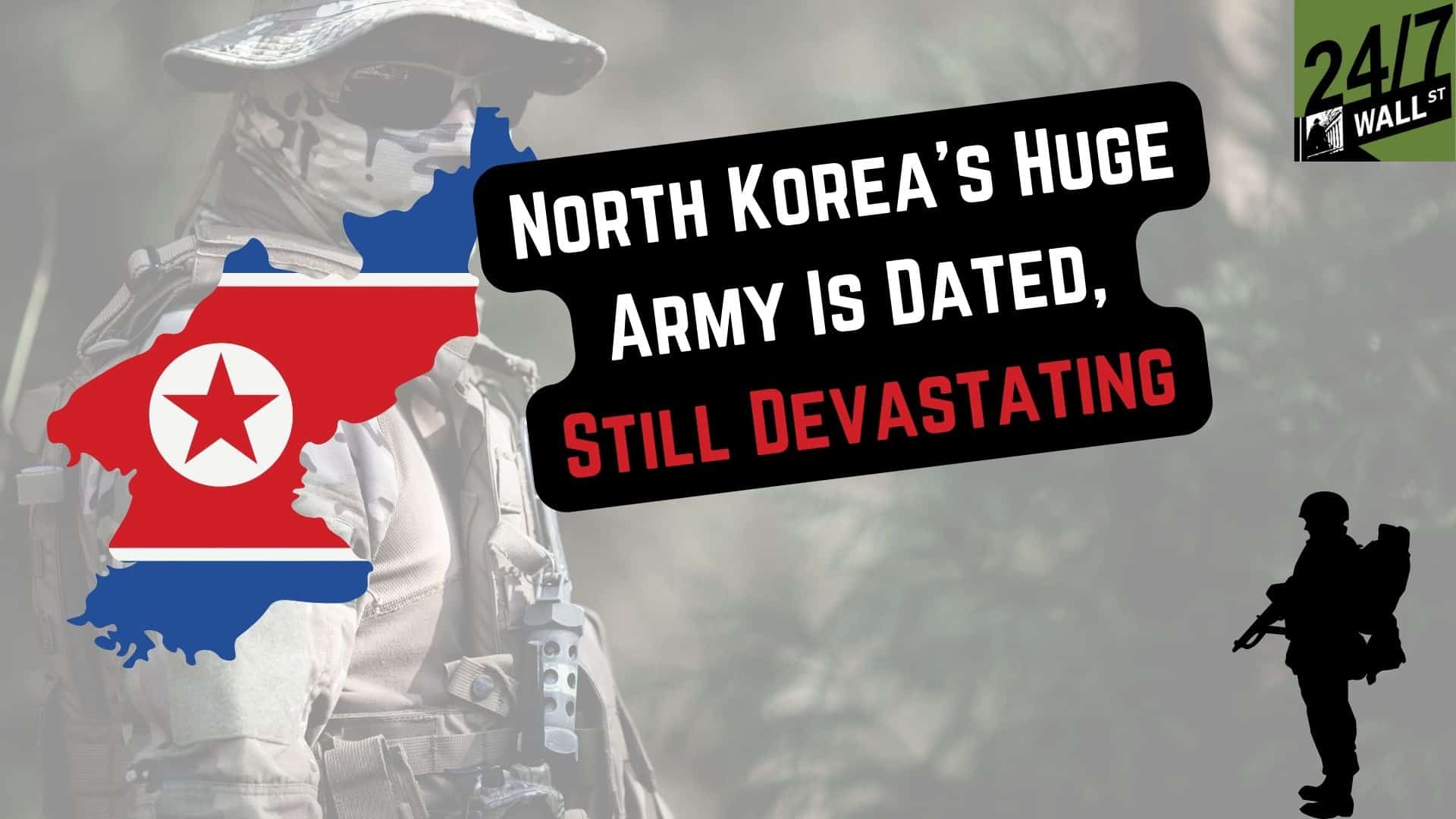
Key Points:
- North Korea has a large standing army
- Indirect methods or warfare are valuable, not decisive
- Also: Analyst just named The Next Nvidia
Austin Smith and Michael Muir discuss the relevance of North Korea’s large standing army in modern warfare. Despite the technological advancements that have shifted the dynamics of conflict, Muir emphasizes the continued importance of having troops on the ground to hold positions. The unique geography of Korea, with its mountainous terrain and densely populated areas, adds to the complexity of potential conflict. While technology such as drones and missiles plays a crucial role, boots on the ground remain essential for occupying territories. The conversation also touches on the influence of third-party nations like Russia in the context of a Korean conflict.
Transcript:
Talk about that because that’s such an interesting dynamic.
And I’m thinking a lot about Russia, Ukraine here.
And does a standing army matter as much as it used to?
You can completely understand why it would be valuable to have a population that is full of reservists and who have military experience.
But what we’ve seen in Ukraine and Russia has that sort of dispelled the value that one might see in a standing army and we’re now in a new era of warfare that’s largely asymmetrical and technologically based.
Is that fair to say or no?
I think that’s a good point but I would be wary of overstating the importance of I guess what you would call sort of indirect methods of warfare.
The idea of winning a war entirely in the air has been bandied about since the 1920s, but it’s never happened.
You still need boots to occupy the ground, ultimately.
That may change in the next 50 or so years, but I still think that you still need to be able to hold the positions that your aircraft and your artillery soften up.
But I think one of the really key aspects of Korea and a Korean conflict is really simple geography.
Korea is not a big country.
I think most people are aware of that.
It’s about equivalent of Minnesota in size, but 70% of Korea’s surface is mountains.
So you have tens of millions of people crammed into relatively small areas, which is why North Korean artillery is such a major threat.
Interesting.
So is it fair to say then is to summarize that technology and technological advantages, be it drones or radar missiles, can be a huge they can make a huge difference on defense or offense, but they’re not conclusive.
At the end of the day, you still need boots on the ground, which is your point.
So we might find ourselves in a situation where, let’s say, South Korea is a lot more capable of defending themselves or even being defensive.
offensive with North Korea, but the large standing military that North Korea has would make it challenging for South Korea to occupy.
Is that fair?
Yes.
But I think the other aspect of a potential Korean conflict is the sort of third parties, if you will.
So the security pact between North Korea and Russia.










 Top Gaining Stocks
 Top Losing Stocks