



24/7 Wall St. Insights
- Chinese EV maker Nio Inc. (NYSE: NIO | NIO Price Prediction) faces many challenges, but they all contribute to one overwhelming problem: a lack of profitability.
- Yet, Wall Street sees huge upside for the stock in the coming year.
- Also: Discover 2 dividend legends to hold forever.
Not that long ago, advances in battery and charging technology began making electric vehicles (EVs) a viable option for a wider range of consumers. In a world facing climate change concerns, as well as high oil and fuel prices, EVs were supposed to be the next big thing. The major automakers sunk millions of dollars into EV investments, and a rash of startups popped up worldwide. Tesla had early success, but soon more models from more makers flooded the market. Consumer reluctance started to melt. Then, unexpectedly, demand began to wane this past year.
EV makers began to struggle, some resorting to price cuts they could little afford in an attempt to hold on to scraps of market share. Many startups, including Fisker and Lordstown, failed. Despite a promising start, one of those struggling companies is Nio Inc. (NYSE: NIO). It does still have its proponents, but the question for investors now is whether the stock will soar or go down the drain. What should worry them?
Why Invest in Nio?

Are Nio’s shares poised for a turnaround?
Nio stock is down about 58% from its 2018 initial public offering (IPO) share price. Though shares once traded for near $67 apiece, they were last seen changing hands a little over $4 apiece.
The company calls itself a pioneer and a leading company in the premium smart electric vehicle market, with a mission to shape a joyful lifestyle. It differentiates itself through continuous technological breakthroughs and innovations, such as industry-leading battery-swapping and proprietary assisted and intelligent driving technologies. Nio has won many awards for its designs, technology, and cybersecurity.
The company does not offer a dividend. The stock underperformed the S&P 500 in 2023, ending the year down about 7%. The question remains whether the shares are poised for a rebound.
Nio, the Company
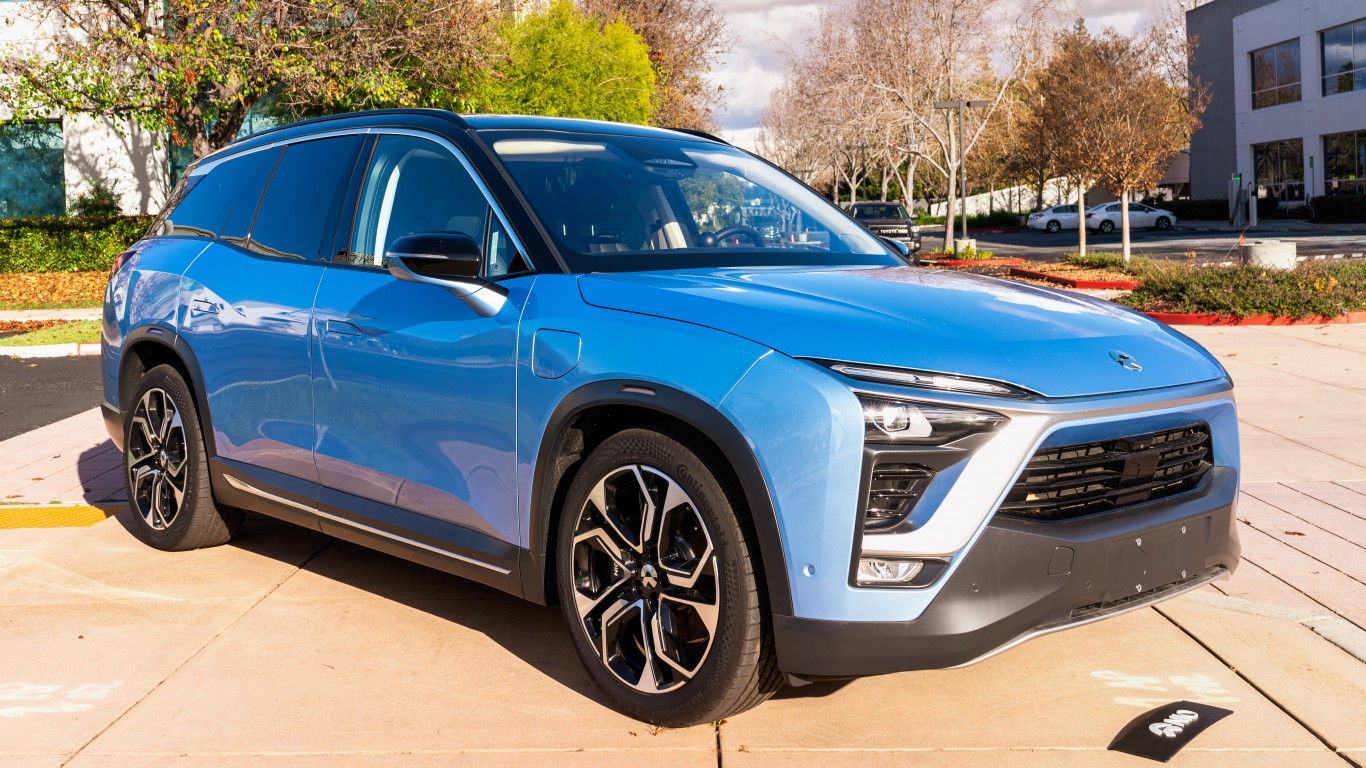
A Shanghai-based maker of EVs and battery-swap station operator.
Nio designs, develops, manufactures, and sells smart electric vehicles in China, including five- and six-seater SUVs and sedans. In addition, Nio provides:
- Repair, maintenance, and bodywork services through its service centers and authorized third-party service centers
- Statutory and third-party liability insurance, and vehicle damage insurance through third-party insurers
- Repair and routine maintenance
- Roadside assistance
- Courtesy vehicle services
- Data packages
- Auto financing and financial leasing services
Furthermore, it offers a used vehicle inspection, evaluation, acquisition, and sales service.
The company also offers power solutions. These include:
- Power Home, a home charging solution
- Power Swap, a battery-swapping service
- Power Charger and Destination Charger
- Power Mobile, a mobile charging service through charging vans
- Power Map, an application that provides access to a network of public chargers and their real-time information
- One Click for Power valet service
The company also is involved in the provision of energy and service packages to its users; design and technology development activities; manufacture of e-powertrains, battery packs, and components; and sales and after-sales management activities.
Nio is headquartered in Shanghai, China. The company was founded in 2014 as NextEV and changed its name in 2017. In 2018, American depositary shares of the company began trading on the New York Stock Exchange. The company competes with or is similar to BYD, Li Auto Inc. (NASDAQ: LI), Tesla Inc. (NASDAQ: TSLA), and XPeng Inc. (NYSE: XPEV).
The company has been developing semiconductors and an operating system, aiming to become a vertically integrated EV brand. It plans to launch a competitor to the Tesla Model Y soon. And earlier in the year, it announced a chief financial officer transition.
The Problem With Nio

Supply chain issues and trade barriers contribute to a lack of profitability.
The main concern for Nio and its investors is the lack of profitability. The carmaker regularly posts quarterly net losses and is not expected to turn a profit until 2027, or by some estimates in 2029. There is no single reason for this that Nio can easily fix.
The company is trying to compete in a crowded EV market at a time of macroeconomic uncertainty. Besides the pricing war in its market, it has grappled with supply chain constraints and weather-related disruptions. Costs and operating expenses are increasing as it tries to develop new vehicles, expand its battery-swapping network, and open stores in Europe. Trade wars and barriers between China and Europe and the United States hamper efforts to expand beyond its home market.
Given its fiscal results, Nio’s efforts so far to push back on these challenges have been underwhelming.
Where Is Nio Stock Headed?

What does Wall Street expect?
The share price is about 54% lower than at the beginning of the year. In that time, the S&P 500 is up more than 18%. Note that the $7.68 consensus price target represents over 93% upside in the next 52 weeks, even if it is less than the 52-week high of $10.91. Just three of eight analysts who cover the stock recommend buying shares.
Institutional investors hold more than 12% of shares. BlackRock and State Street have notable stakes. Almost 2 million shares, or about 9% of the float, are held short.











 Top Gaining Stocks
 Top Losing Stocks