



The “buy the dip” financial news teleprompter readers and the 35-year-old portfolio managers who have never seen a market crash are pounding the table that stocks are still going to the moon after two years of enormous gains for the major indices. Market veterans and “hey boomer” professionals have seen this show before. In 1987, the Dow Jones industrial average plunged a stunning 22% in one day. Today, an equivalent drop in the venerable index would be almost 9,650 points.
A market crash, though devastating, is workable if you are in your 40s and making peak money. However, for baby boomers who have enjoyed unprecedented gains over the past 40 years, being overweight to the stock market now is like picking up nickels in front of a bulldozer, and it could be a fatal shock to their retirement savings. Look at this data we dug up on the internet on the effect of major market crashes. The recovery time can be much longer than recessions or regular bear markets, sometimes taking decades:
- The 1929 crash lasted until 1932, and the Dow did not fully recover until November 1954.
- The dot-com stock correction/crash in March 2000 took 13 years to recover fully.
- The Panic of 1907 took the stock market 20 years to return to its pre-crash level.
Baby boomers are getting older fast

The youngest baby boomers turned 60 this year, while the oldest are closing in on 80 in 2026. Kiyosaki suggests moving out of S&P 500 index funds and overpriced stocks as he sees the biggest crash in history coming. He is focused and concentrating on hard assets like gold and silver, which are a solid hedge against today’s sticky inflation, and, while it may seem like a leap of faith, buying some Bitcoin because, like gold, there is a finite amount, as Bitcoin volume is capped at 21 million by mathematical algorithms.
Gold and silver mining stocks

Kiyosaki suggests that baby boomers consider gold-mining stocks or exchange-traded funds that hold the precious metal. Here is an idea to consider.
Newmont
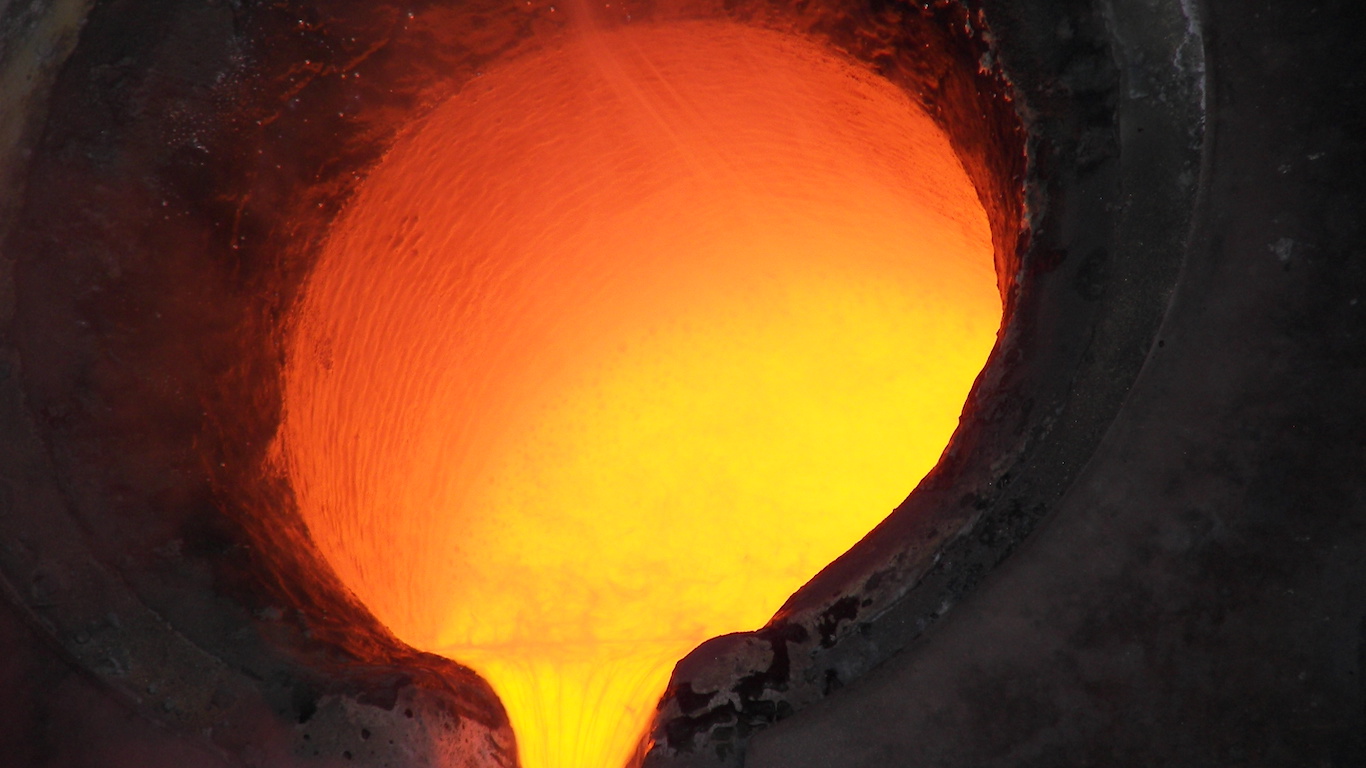
Newmont is the world’s largest gold-mining entity.
This is the largest mining company, yielding a solid 2.50%, and is a timely buy for more conservative investors. Newmont Corp. (NYSE: NEM | NEM Price Prediction) is a gold-mining giant that produces gold.
It operates through the following geographical segments:
- North America
- South America
- Nevada
- Australia
- Africa
The North American segment consists primarily of:
- Carlin, phoenix, Twin Creeks, and Long Canyon in the state of Nevada
- Cripple Creek and Victor in the state of Colorado
The South American segment consists primarily of Yanacocha in Peru and Merian in Suriname.
The Australia segment consists mainly of Australia’s Boddington, Tanami, and Kalgoorlie.
The Africa segment consists primarily of Ahafo and Akyem in Ghana.
Gold Exchange-Traded Funds

The SPDR Gold Shares is the World’s largest gold-backed ETF.
The SPDR Gold Shares ETF (NYSE: GLD) is one of the best pure plays on Gold for investors. The trust that sponsors the fund holds physical gold bullion and some cash. Each share represents one-tenth of an ounce of the price of gold. However, the fund does not pay a dividend.
Real Estate Investment Trust Stocks

Real estate investment trusts (REITs) are companies that own and operate income-producing real estate.
Kiyosaki also suggests owning real estate to generate solid passive income streams. While buying real estate for short-term or long-term rentals can be expensive, quality REITs that pay sizable dividends make sense.
Essex Property Trust

Essex Property Trust is a fully integrated, self-administered REIT.
This stock has been on a solid run but is an outstanding way for investors looking to add another inflation-busting real estate position that pays a hefty 3.27% dividend. Essex Property Trust Inc. (NYSE: ESS), an S&P 500 company, is a fully integrated REIT that acquires, develops, redevelops, and manages multifamily residential properties in selected West Coast markets.
Essex currently owns interests in 252 apartment communities, comprising approximately 62,000 apartment homes.
Mid-America Apartment Communities

Mid-America Apartment Communities is an investment-grade REIT, with a solid business model.
Paying a solid 3.85% dividend is another solid way to participate in apartment rental passive income. Mid-American Apartment Communities Inc. (NYSE: MAA) is a REIT focused on delivering full-cycle and superior investment performance for shareholders through the ownership, management, acquisition, and development and redevelopment of quality apartment communities.
The company owns these complexes primarily in the Southeast, Southwest, and Mid-Atlantic regions of the United States.
As of June 30, 2024, Mid-America Apartment Communities owned 103,614 apartment units, including communities currently in development, in 16 states and the District of Columbia.
Four Ultra-High-Yield Stocks Will Pay a Landslide of Monthly Dividends













 Top Gaining Stocks
 Top Losing Stocks