


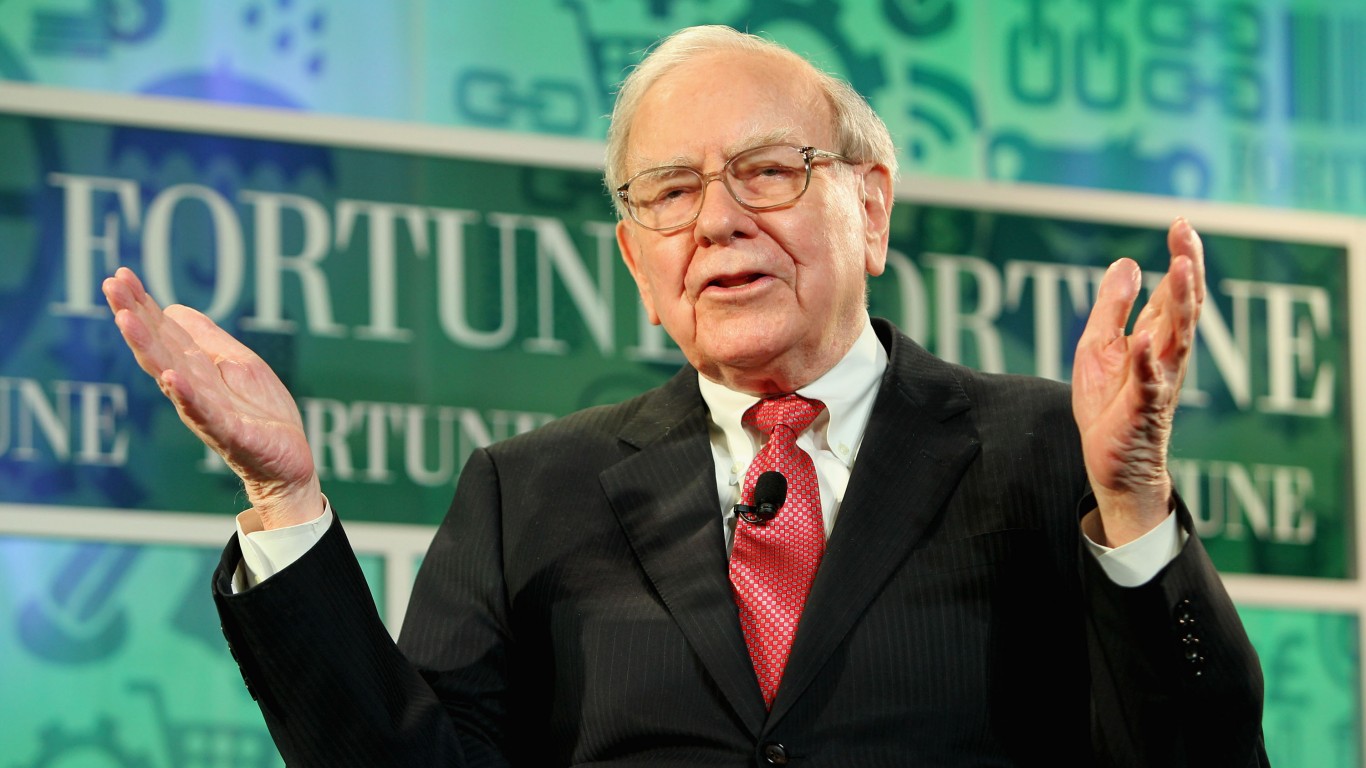
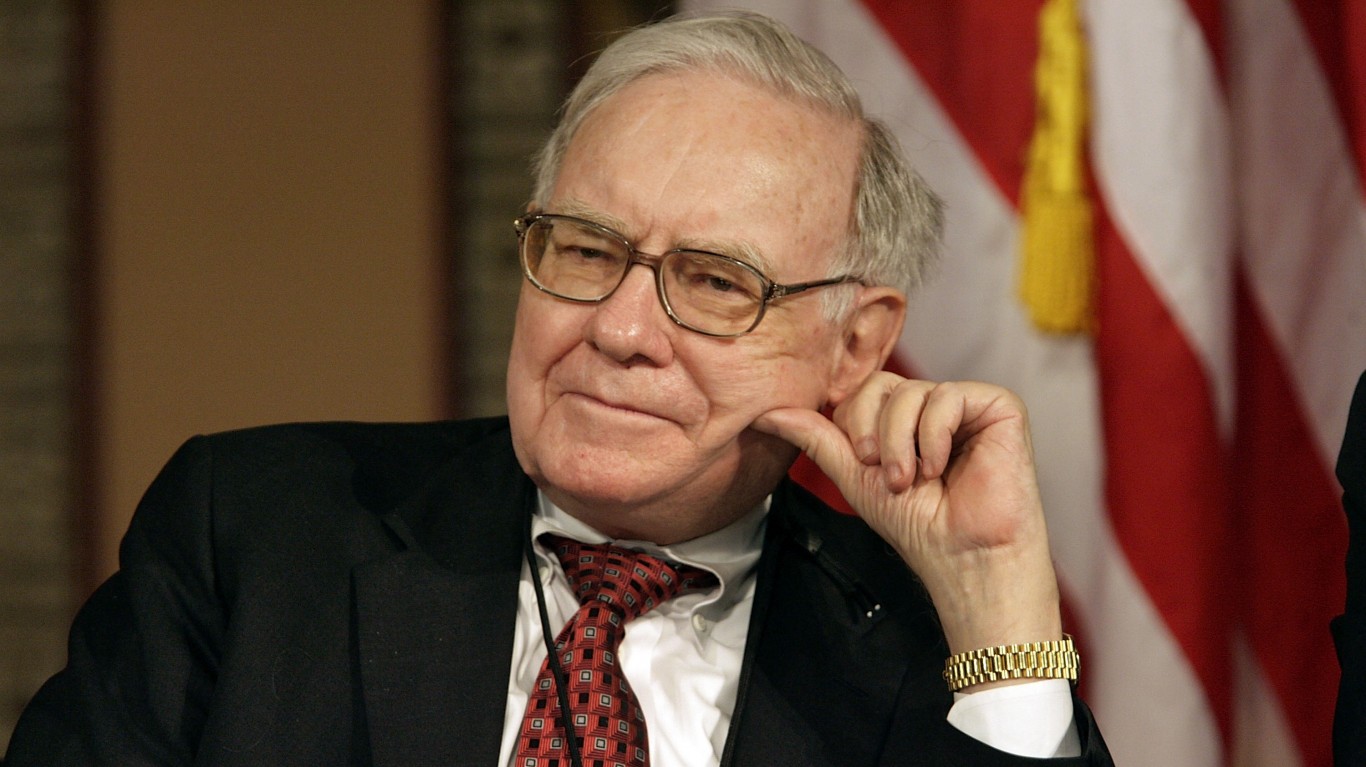
Warren Buffett sends his shareholder letter to Berkshire Hathaway shareholders yearly as part of his State of the Union financial proclamation. In it, he discusses everything from the moves at his investment goliath to the history of the U.S. political system and almost everything else under the sun. He proclaims that he still prefers stocks over cash despite upping his holdings in short-term T-bills to a staggering $334 billion.
The last time cash was more than 30% of Berkshire Hathaway’s holdings was in 2008. That was right before the global financial crisis that came within a few weeks of crumbling the entire financial system, both in the United States and globally. With the S&P 500 trading at a rich 22.2 times forward earnings versus the five-year and 10-year average of 19.8 and 18.3 times earnings, is that light at the end of the tunnel the train wreck Buffett sees coming?
According to published reports, the U.S. Treasury must refinance a gigantic $9 trillion of debt by 2026. Some on Wall Street feel that rates will have to be increased to lure buyers worldwide and domestically for that refunding, and the stock market could get hit hard at some point this year as the cost of capital increases. Is Buffett raising his cash position to do what he always does when the market implodes? Search through the debris for bargains as he did in 2009. Remember, he plowed capital into Goldman Sachs Group Inc. (NYSE: GS | GS Price Prediction) and Bank of America Corp. (NYSE: BAC) back then.
Investor and portfolio manager Jack Roshi argues that the S&P 500 currently trades at 2.5 times the U.S. gross domestic product. He notes that this level has preceded every sizable market correction since the 1950s. This makes one wonder if that is the same data that concerns Buffett. If so, what should investors do now to front-run what could be a 10% to 15% or larger correction later this year?
Buffett discusses the insurance business in this year’s shareholder letter, including some interesting Japanese investments and other items. Here are three ways to follow the Berkshire Hathaway and Warren Buffett path.
Why do we cover Buffett and Berkshire Hathaway stocks?
There are few investors with the results and the reputation Mr. Buffett has garnered over the past 50 years. While investing has changed over the previous half-century, buying good companies with products and services renowned worldwide while paying dividends will always stay in style.
With a 15-year track record of covering Buffett and Berkshire Hathaway at 24/7 Wall St., we like to keep our readers abreast of the financial powerhouse’s latest news. Many of our readers own the shares or are considering a purchase, so it’s good to keep them updated regularly.
Berkshire Hathaway B-Shares
Berkshire Hathaway is known for its value investing strategy, which involves buying companies with an intrinsic value higher than their market price.
The B-shares make sense for most investors, with the A-shares trading at a staggering $718,750 apiece. Berkshire Hathaway Inc. (NYSE: BRK.B) and its subsidiaries are engaged in diverse business activities. These include insurance and reinsurance, utilities and energy, freight rail transportation, manufacturing, services, and retailing.
The company’s segments include Insurance, railroad (BNSF), Berkshire Hathaway Energy (BHE), Pilot Travel Centers (Pilot), manufacturing, McLane Company (McLane), and Service and retailing.
The Insurance segment includes GEICO, Berkshire Hathaway Primary Group, and Berkshire Hathaway Reinsurance Group.
The BNSF segment includes the operation of railroad systems in North America through Burlington Northern Santa Fe, LLC.
The BHE segment offers regulated electric and gas utilities.
The Manufacturing segment manufactures various industrial, consumer, and building products. The McLane segment engages in wholesale distribution of groceries and non-food items.
The Pilot segment is an operator of travel centers in North America and a marketer of wholesale fuel.
This is how Google explains the Berkshire Hathaway B shares:
Berkshire Hathaway Class B shares represent a smaller ownership stake in the company than Class A shares. Each B share has significantly less voting power (1/10,000th of a Class A share) but allows investors to buy a piece of Berkshire Hathaway at a much lower price per share, making it more accessible to smaller investors; both classes receive the same dividend per share.
SPDR Bloomberg 1-3 Month T-Bill ETF

A Treasury bill (T-bill) is a short-term U.S. government debt obligation backed by the U.S. Department of the Treasury.
Here is our favorite idea for those looking to invest in the very short end of the U.S. Treasury market, like Buffett, with virtually no risk. SPDR Bloomberg 1-3 Month T-Bill ETF (NYSE: BIL) seeks to provide investment results that, before fees and expenses, generally correspond to the price and yield performance of an index that tracks the 1 to 3 month sector of the U.S. Treasury bill market.
The fund pays a monthly dividend that currently stands at 4.93%. With a tiny 0.14% expense ratio and daily liquidity, it is by far the most straightforward vehicle for owning U.S. T-bills.
Franklin FTSE Japan ETF
This fund provides access to the Japanese stock market. It allows investors to gain precise exposure to Japan at a low cost.
For those who read Buffett’s 2025 letter to shareholders, note that some of the top Japanese financial companies Berkshire Hathaway owns are in this exchange-traded fund. Franklin FTSE Japan ETF (NYSE: FLJP) seeks to provide investment results that closely correspond to the performance of the FTSE Japan RIC Capped. The fund invests at least 80% of its assets in the component securities of the underlying index. That index is designed to measure the performance of Japanese large- and mid-capitalization stocks.
This is an outstanding investment idea with a solid 4.43% dividend and a tiny 0.09% expense ratio.
Bank of America Says Stocks Could Drop 40%: 5 Safe Large-Cap Dividend Stocks That Will Survive





 Top Gaining Stocks
 Top Losing Stocks