


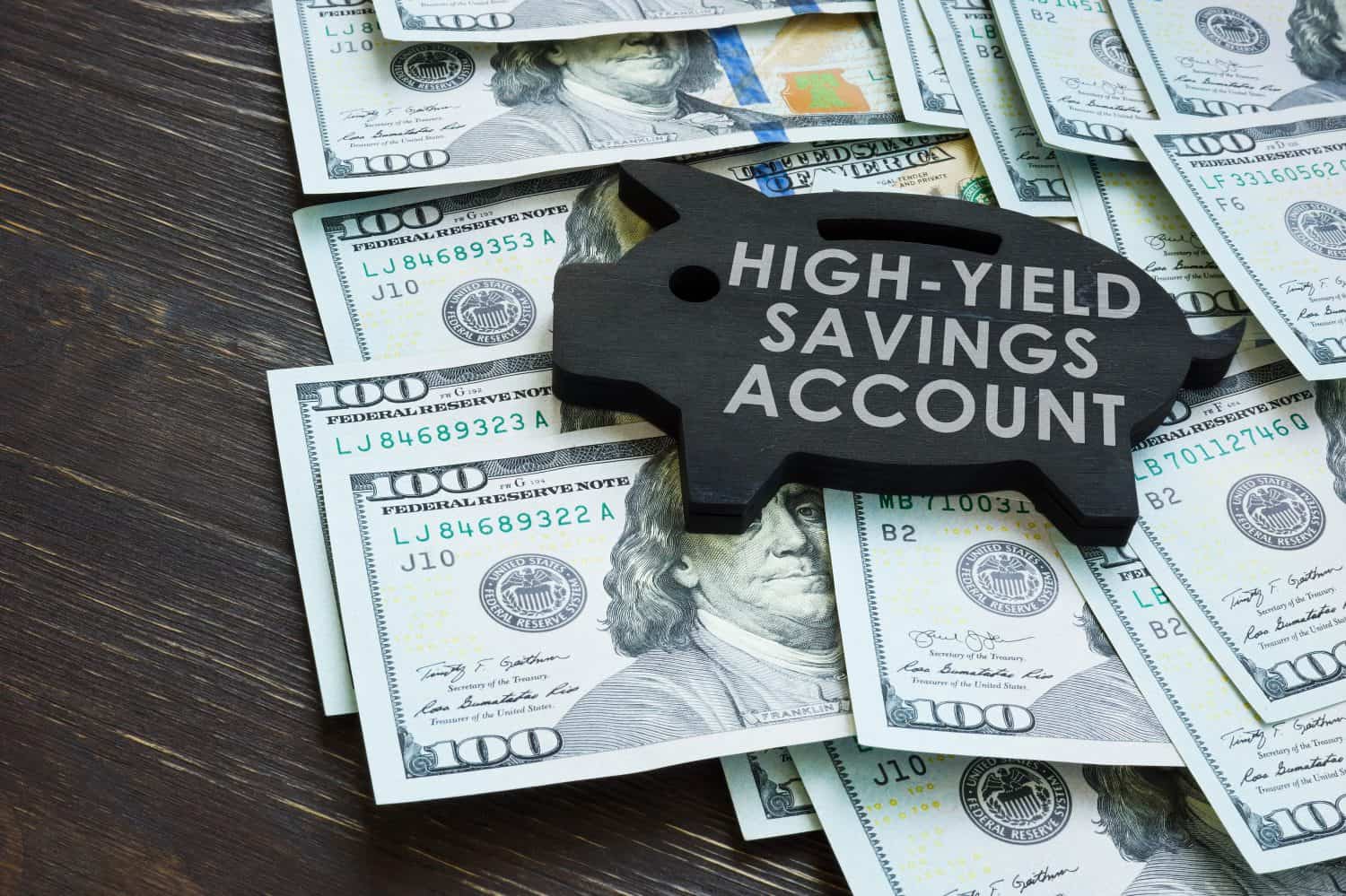
I was talking with a friend of mine the other day who mentioned that she was going to put her tax refund into her high-yield savings account.
I told her it was a good idea for two reasons.
First, it happens that high-yield savings accounts are paying generously these days. And thanks to the Fed’s recent decision to pause interest rate cuts, there’s still plenty of opportunity to take advantage of today’s great rates.
But also, I happen to know that this friend of mine is saving for a new car she desperately needs. So a high-yield savings account is the perfect place to store that money until she’s ready to start scheduling test drives.
If you have money in a high-yield savings account, you should be asking whether you have too much, too little, or just the right amount. And while the answer depends on you, there are some general guidelines you should follow.
How to know if you’re hitting the mark
It’s easy to see why you’d be eager to keep putting money into a high-yield savings account. You can earn interest without having to take on the stress that comes with investing in the stock market.
But as a general rule, it’s best to use a high-yield savings account as a place to keep your emergency fund, and as a place to stash money you’re setting aside for near-term financial goals. You don’t want to use a high-yield savings account to save money for long-term goals, like retirement, college, or another far-off life event.
Here’s why. You might earn around 4% on the money you have in the bank. And that’s based on today’s rates, which are notably high. But a stock portfolio might give you more like an annual 9% or 10% return.
When you’re saving for emergencies or short-term goals and can’t afford to take on risk, a 4% return is a nice payday. But over time, you’re likely to do better with a stock portfolio.
Also, in the context of something like retirement, you need your savings to outpace inflation, since the money you save today won’t have the same buying power in 15, 25, or 35 years (or whenever you retire). A high-yield savings account probably won’t get you to your goal in that regard.
How to calculate how much money to keep in a high-yield savings account
If you’re not sure how much money your high-yield savings account should have, figure out how much you need to save for your immediate goals and decide how much money your emergency fund should have.
Say you’re hoping to buy a house for about $300,000 and want to make a 20% down payment. In that case, it wouldn’t be inappropriate at all to keep $60,000 in a high-yield savings account.
Let’s also say your essential monthly bills come to $5,000, and you want a six-month emergency fund. That brings you to $30,000.
So all told, if you have $95,000 in the bank, you’re in good shape. That wouldn’t be an excessive amount of money to have, because you’re covering your home down payment, emergency fund, and a little extra (perhaps for a vacation or something else).
On the other hand, keeping $230,000 in a high-yield savings account in this situation doesn’t make sense.
If you were a friend of mine, I’d tell you to perhaps keep $100,000 in savings as a cushion, but put the remaining $130,000 into a brokerage account with different investments. Those could be individual stocks, S&P 500 ETFs, or another asset you feel comfortable with.
And if you’re not so secure in choosing investments because you’ve never done it before, sit down with a financial advisor. Not only can they help you decide how much money to keep in savings, but they can set up an investment portfolio that’s designed to protect you from excessive losses while helping you meet your goals.
Remember, though, that while keeping too much money in savings isn’t great, you don’t want too little money, either. If you don’t have a three-month emergency fund, there’s probably not enough money in your savings account. That’s something you should try to remedy so you’re not left scrambling if you lose your job or get stuck with an unplanned expense.












 Top Gaining Stocks
 Top Losing Stocks