


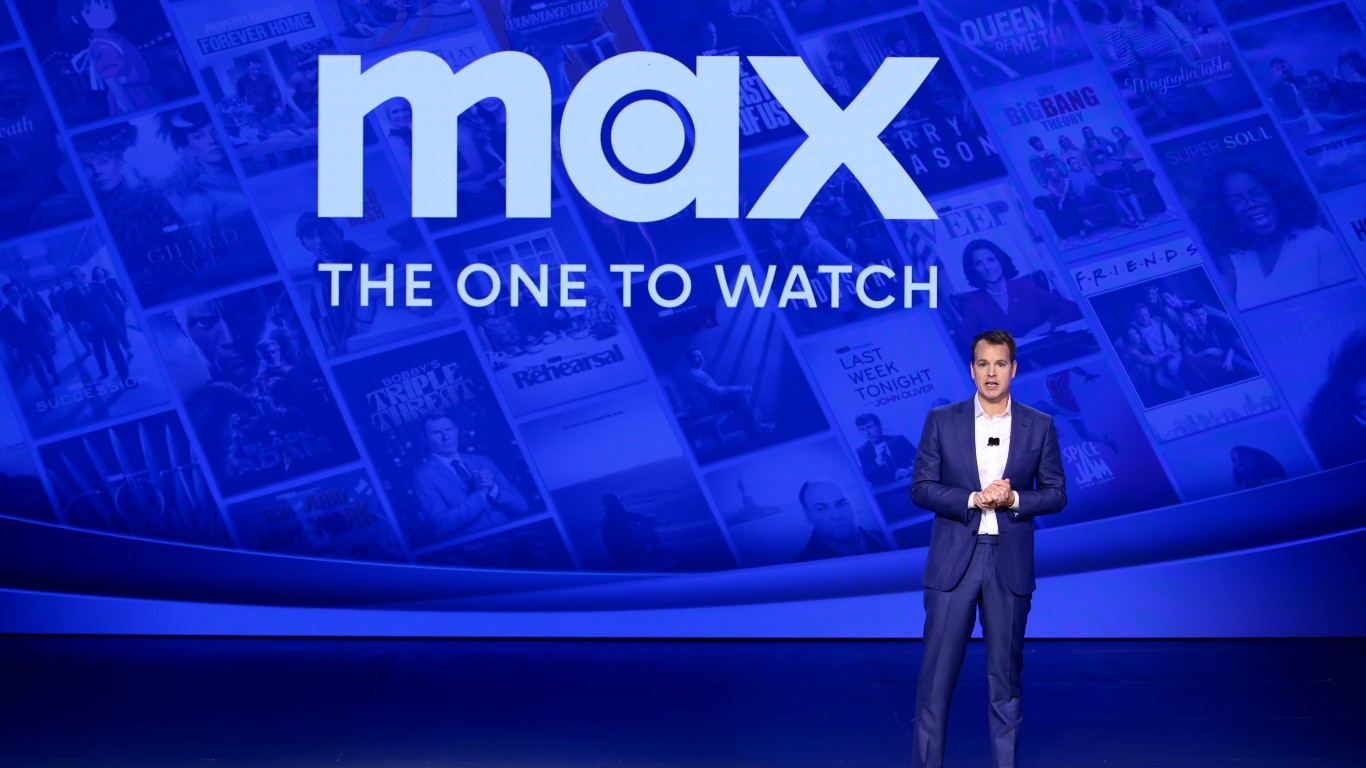
Warner Bros. Discovery (NASDAQ:WBD | WBD Price Prediction) finally announced Monday it would formally split into two publicly traded companies by mid-2026: WBD Streaming & Studios and WBD Global Networks
This seismic restructuring aims to untangle WBD’s diverse assets by separating its high-growth streaming and studio operations from its declining cable networks. The effort would be to unlock value and sharpen the focus of the two entities.
However, WBD’s troubled history, uncertain growth prospects, complex valuation, and the distinct trajectories of the new entities raise critical questions for investors. It also calls into question whether either new stock would be worth investing in. Shares of WBD fell 3% on the news.
When Less Is More
Just three years after the merger of Discovery and AT&T‘s (NYSE:T) WarnerMedia, WBD has been a cautionary tale of ambition gone awry. The $43 billion deal saddled the company with $38 billion in debt, a heavy burden exacerbated by a collapsing cable TV market and fierce streaming competition.
WBD’s stock has plummeted nearly 60% since the merger, reflecting investor skepticism about its ability to integrate assets and deliver synergies. WBD started and then killed CNN’s nascent streaming service (though it announced a new service to launch later this year), failing to renew NBA rights for Turner Sports, and widespread layoffs further eroded confidence.
The Max platform, despite reaching 122.3 million subscribers by the first quarter, up 4.5% from Q4, struggles with inconsistent branding — it went from HBO Max to Max and will go back to HBO Max again this summer — and content that hasn’t fully resonated with audiences. These challenges highlight a company caught between a fading legacy business and a streaming venture yet to prove its dominance.
Is There Anything of Value to Buy?
Growth prospects for the two new entities diverge sharply. WBD Streaming & Studios, housing HBO’s premium content, Warner Bros. Pictures, and DC Studios, is positioned for dynamic revenue and profit growth. With HBO Max in 77 markets and plans for 2026 expansions, the division aims for $3 billion in annual adjusted EBITDA.
Its focus on high-quality programming and a robust IP library (such as Barbie and House of the Dragon) makes it a contender in the streaming wars, though it faces giants like Netflix (NASDAQ:NFLX) and Disney (NYSE:DIS).
Conversely, WBD Global Networks, burdened with most of the $38 billion debt, faces a grim outlook. Cable networks like CNN and TNT suffer from cord-cutting and declining ad revenue, with limited growth potential despite healthy cash flows. The networks’ 20% stake in the streaming business offers some upside, but its legacy model is a drag.
Valuation is a complex puzzle with ongoing losses, suggesting it is no bargain. WBD’s enterprise value-to-EBITDA ratio, around 7.5x, reflects its debt load and mixed profitability. The split aims to clarify valuation by isolating the high-growth streaming business, which could command a premium multiple (15-20x EBITDA) due to its scalable model and IP strength. Global Networks, however, risks a low multiple (4-6x EBITDA) given its declining revenue and debt burden.
Analysts like Arbor Financial Services‘ Peter Jankovskis note the split could help investors better assess each entity’s worth by simplifying WBD’s hodgepodge structure. Yet, critics like Madison and Wall‘s Brian Wieser argue the split is financial engineering that may not address core operational weaknesses, potentially hampering both companies until the deal closes. “It could make them worse,” he said.
Both, One, or None?
Investing in either entity requires caution. WBD Streaming & Studios is the more attractive bet, with its growth-oriented assets and Zaslav’s focus on scaling HBO Max. Its IP-driven model and global reach could appeal to investors seeking exposure to streaming’s upside, though competition and execution risks loom.
However, it’s significant debt portion and reliance on subscriber growth temper enthusiasm.
WBD Global Networks, despite stable cash flows, is less compelling. Its debt load and shrinking cable market make it a value trap unless it pivots to digital extensions like Discovery+ or secures a buyer like Comcast’s (NASDAQ:CMCSA) soon-to-be-spun-off cable arm Versant.
Investors should favor Streaming & Studios for its growth potential but wait for clearer post-split financials and market traction before committing. The split offers hope, but WBD’s troubled past demands skepticism.
Key Takeaway
WBD Streaming & Studios is a promising investment with its strong IP and streaming growth potential, but monitor debt and competitive pressures before buying. There are better stocks to buy while you wait for post-split clarity.
WBD Global Networks faces headwinds from cable’s decline and heavy debt, making it a riskier bet unless digital innovations or acquisitions reshape its trajectory. Investors should exercise caution and track industry trends, which don’t look favorable.













 Top Gaining Stocks
 Top Losing Stocks