


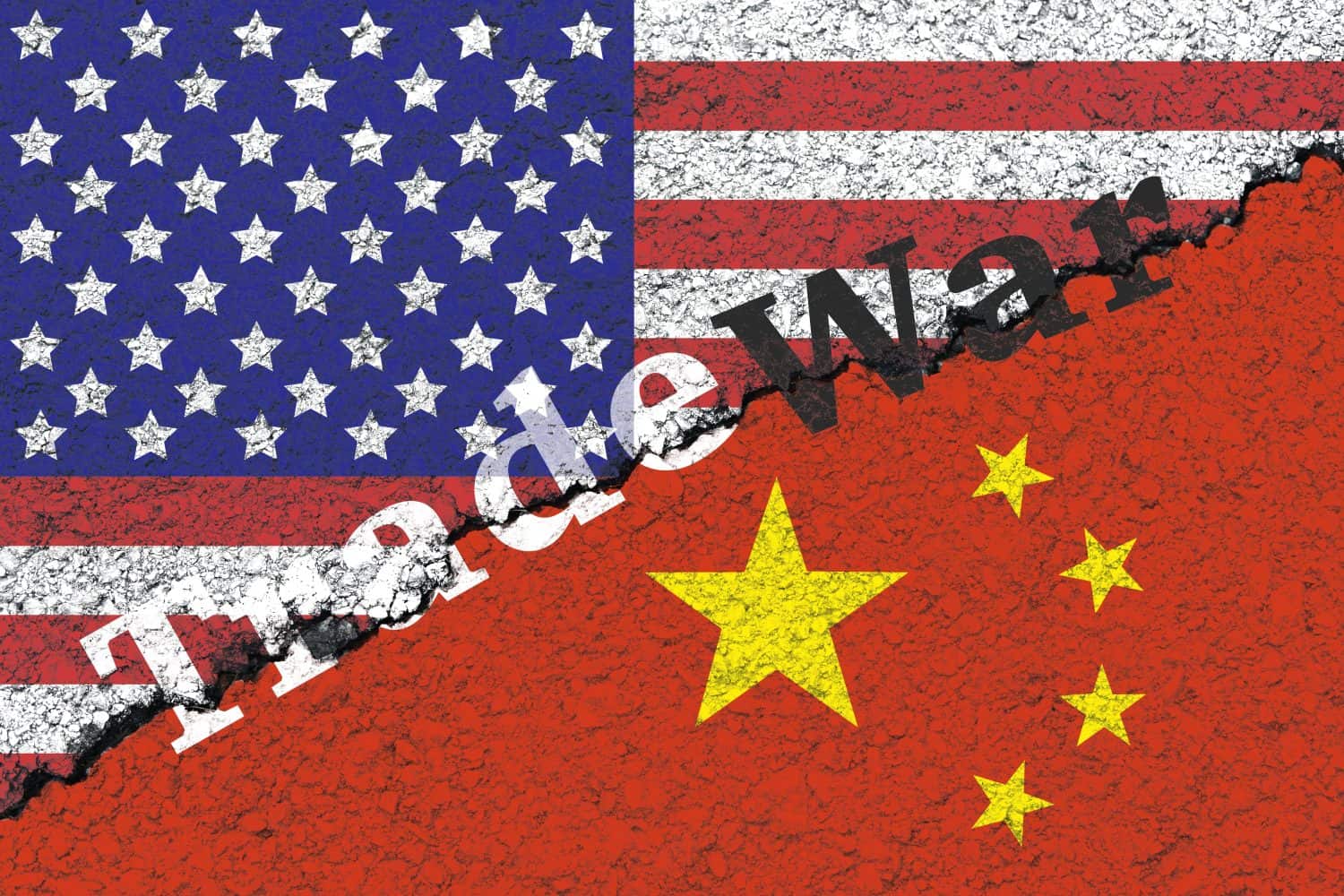
U.S.-China Power Play
Jim Cramer, CNBC’s outspoken TV host, is renowned for his stock market commentary, often offering sharp investment insights. However, his broader geopolitical predictions can many times miss the mark.
His recent essay on U.S.-China trade talks is just such a case as Cramer seems to have underestimated the amount of leverage the U.S. actually holds in these negotiations, as recent developments demonstrate.
Misreading U.S. Leverage
In his CNBC essay, Cramer argued the U.S. was poorly positioned in trade negotiations with China, particularly over rare earth minerals. These 17 minerals — essential for smartphones, electric vehicles, and F-35 jets — are dominated by China, which controls 85% of global production and nearly all refining.
Cramer criticized the U.S. for failing to invest in domestic production, pointing to the Mountain Pass mine’s troubled history and MP Materials’ (NYSE:MP) limited 15% global output. He noted China’s April export controls on rare earths and magnets, which disrupted automotive supply chains, and questioned why the U.S. lacked a strategic reserve or robust refining capacity.
The Mad Money host suggested China held overwhelming leverage, leaving the U.S. vulnerable in trade talks, likening the situation to entering a trade war without preparation.
However, his concerns were overstated. By June 27, a framework agreement between U.S.-China was reached, with China agreeing to expedite rare earth export licenses and the U.S. easing semiconductor export restrictions.
This deal reveals President Trump’s 55% tariffs on Chinese goods gave the U.S. significant leverage, as China’s exports to the U.S. were down 35% year-over-year in May, highlighting its greater dependence on the U.S. market compared to U.S. reliance on Chinese goods, directly contradicting Cramer’s pessimistic outlook.

Why the U.S. Had Leverage and China’s Dependence
Cramer’s assertion that the U.S. “doesn’t have the cards” ignored key economic dynamics that gave the U.S. leverage in trade talks.
The U.S. market is a critical destination for Chinese goods, with $439 billion in exports in 2024, making China more vulnerable to tariffs than the U.S. is to rare earth restrictions. Trump’s 55% tariffs on Chinese imports, implemented in early 2025, led to a 35% drop in Chinese exports to the U.S. by May, severely impacting China’s economy, which relies on export-driven growth.
This pressure forced China to negotiate, as evidenced by the June 27 agreement to restore rare earth exports, ensuring supply chain stability for U.S. industries like automotive and defense.
Conversely, the U.S. demonstrated resilience in mitigating its rare earth dependency. MP Materials, despite Cramer’s skepticism, halted exports of rare earth concentrate to China in April, ramping up domestic refining.
Crucial Bargaining Chips
The Department of Defense’s support for MP Materials, alongside potential North American partnerships (Mexico is rich in rare earth deposits, for example), somewhat reduces U.S. vulnerability. The U.S. also leveraged its technological edge, particularly in semiconductors, as a bargaining chip. China’s need for advanced chips, critical for its tech and military ambitions, prompted concessions on rare earths when the U.S. relaxed export curbs.
Cramer’s focus on China’s “stranglehold” overlooked these factors, as well as consumer spending dynamics. While not directly addressed in his essay, U.S. consumer demand for Chinese goods, such as electronics, supports China’s economy, amplifying the impact tariffs had on the country’s exports.
The agreement shows China prioritized market access over withholding rare earths, proving the U.S. held stronger cards than Cramer anticipated, with Trump’s aggressive trade strategy exploiting China’s export reliance.
Key Takeaway
Cramer was misguided with hi June warning of U.S. weakness in trade talks with China. The U.S.-China agreement, driven by Trump’s tariffs and China’s export dependence, highlights U.S. leverage.
China’s concessions on rare earths affirm its greater reliance on the U.S. market, proving Cramer’s concerns were unfounded. Investors may want to focus more on the TV host’s stock picks and less on his macroeconomic musings.











 Top Gaining Stocks
 Top Losing Stocks