



The AI Boom and Overlooked Gems
Artificial Intelligence (AI) is reshaping industries, driving demand for advanced computing power and specialized chips. Companies like Nvidia (NASDAQ:NVDA | NVDA Price Prediction) and Palantir Technologies (NASDAQ:PLTR) often dominate headlines, capturing investor attention with their high-profile roles in AI hardware and software.
However, when such stocks monopolize the spotlight, lesser-known opportunities can emerge, offering significant upside for discerning investors willing to look in the shadows.
One such AI chip stock, operating outside the mainstream frenzy, has doubled in value since its early-April low by capitalizing on the AI-driven demand for memory solutions. With such rapid gains, is there still room for investors to profit, or has that ship already sailed?
Powering AI with Memory
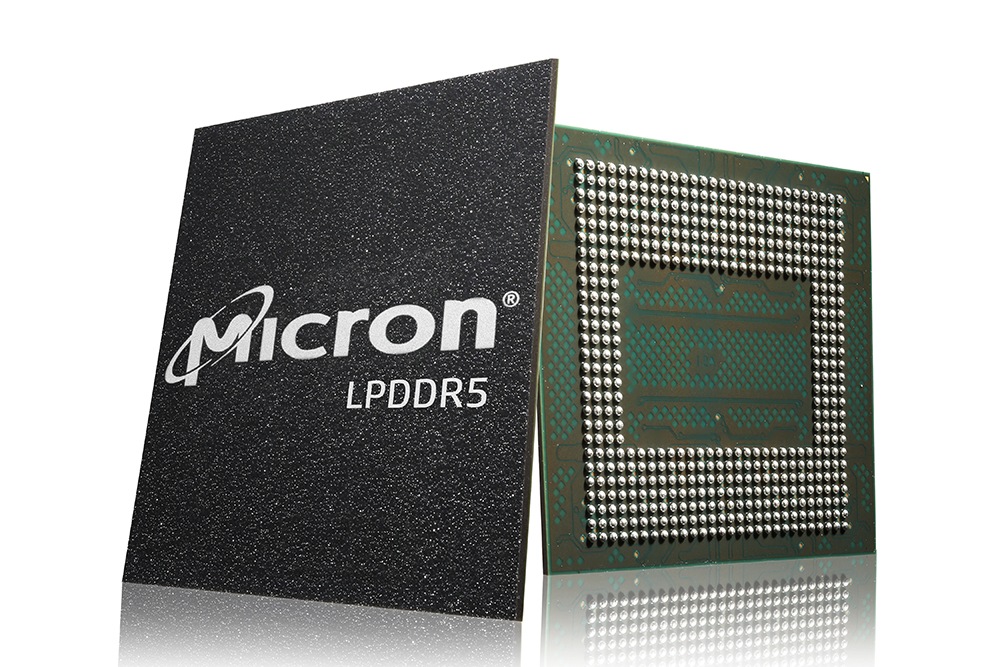
Micron Technology (NASDAQ:MU) designs, manufactures, and sells memory and storage products globally. Operating through four segments — Compute and Networking, Mobile, Embedded, and Storage Business Units — Micron produces dynamic random-access memory (DRAM), NAND flash memory, and high-bandwidth memory (HBM) under brands like Micron and Crucial.
These products are critical for data centers, smartphones, PCs, automotive systems, and AI applications. Notably, Micron’s HBM chips, such as HBM3e, are essential for AI data centers, powering high-performance computing for Nvidia’s GB200 and GB300 Blackwell GPUs.
In its fiscal third quarter. Micron reported $9.3 billion in revenue, up 37% year-over-year, driven by surging AI-driven HBM demand. Its HBM capacity is fully booked through 2025, reflecting its pivotal role in the AI ecosystem.
Why Micron Has Outperformed
Micron’s stock jumped 111% from its April low of $61.54 per share due to several factors fueling this performance.
- First, the AI boom has spiked demand for HBM, with revenue jumping 50% quarter-over-quarter, generating over $1 billion in revenue. Partnerships with Nvidia and Advanced Micro Devices (NASDAQ:AMD) bolster its market position, as these leaders rely on Micron’s HBM for AI GPUs.
- Second, Micron’s strategic investments, including new DRAM facilities in Idaho and New York — supported by $6.4 billion in CHIPS Act grants — enhance its production capacity, with operations scheduled to start in 2027 to 2028.
- Third, improved pricing conditions and operational leverage drove a 36.5% revenue increase and spurred a 460% increase in profits, with earnings growing from $0.30 per share to $1.68 per share.
Although the stock dropped 54% from its June 2024 highs after a second-quarter forecast miss, it has since doubled, reflecting renewed investor confidence in its AI-driven growth.
MU Is Not a Risk-Free Investment
Despite its success, Micron faces significant risks. The semiconductor industry’s cyclical nature, driven by supply-demand imbalances, poses challenges. In April, MU stock fell 27% due to tariff concerns, reflecting volatility from U.S.-China trade tensions.
Gross margin compression, from 38.4% in Q1 to 36.8% in Q2 (it expanded to 37.7% in the third quarter), signals potential pricing pressures in consumer memory chips like NAND, used in smartphones and PCs, where demand remains weak.
Heavy capital expenditures for new facilities may also strain near-term profitability due to increased depreciation. Geopolitical risks, including export restrictions to China, may also threaten revenue, as Micron operates in Taiwan, China, and Japan.
Additionally, competition from SK Hynix and Samsung could erode market share if pricing wars intensify.
Have Investors Missed the Boat?
MU stock’s 100% gain since April raises the question of whether it is too late to invest in Micron. With a forward P/E under 10 and a 12-month price target of $147.53, implying 22% upside still possible, analysts remain bullish, driven by a projected 501% earnings growth in 2025 and an additional 54% gain the following year.
Potential normalization of trade relations between the U.S. and China (and other trading partners) helps offset supply chain risks, supporting Micron’s operations. However, cyclical downturns and margin pressures warrant caution.
For long-term investors, Micron’s HBM leadership and AI exposure suggest there is still significant growth potential, but short-term volatility may provide better entry points for those who are patient. Regardless, MU remains a compelling, if cyclical, AI investment.










 Top Gaining Stocks
 Top Losing Stocks