


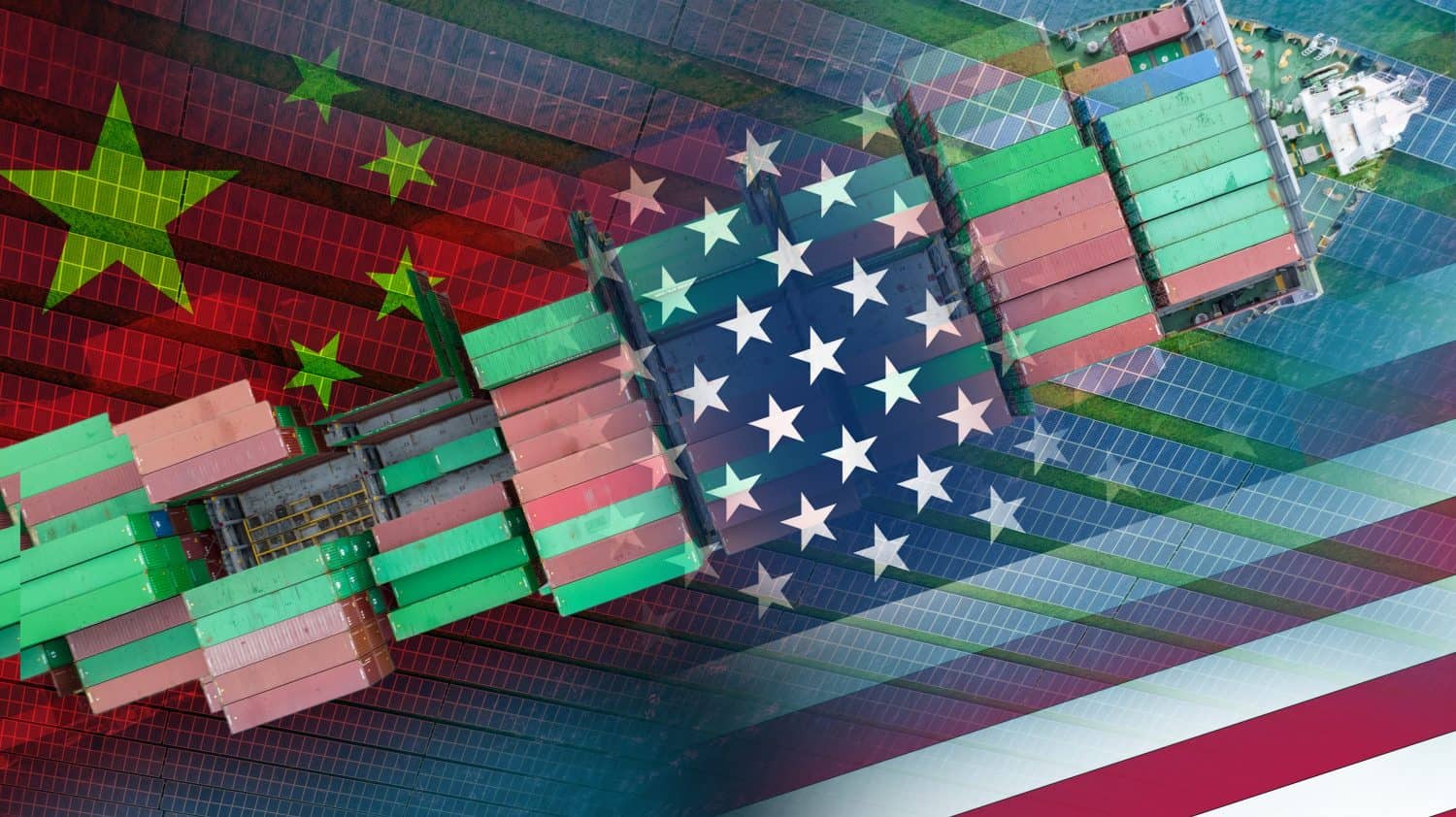
Federal Reserve Board Chairman Jerome Powell stated over the past few months that interest rates should not be lowered, as inflation might be forthcoming from tariffs. I rarely quote Joe Biden, but my response to Powell is encapsulated in one word, “Malarkey!”
Many in the media informed us in 2018 that Trump’s tariffs would cause inflation. However, inflation averaged 1.9% for Trump’s 4 years, despite the trade war with China. China had been stealing an estimated $200 billion of intellectual property per year, while devaluing their currency and subsidizing industries in violation of WTO regulations. That led to 95,000 US factories closing, with 5 million jobs lost. Trump’s tariffs produced an agreement to stop intellectual property theft, with China increasing their purchases of agricultural and industrial products, and US energy.
The Smoot-Hawley tariffs of 1930 increased tariffs by 20% on average. The Great Depression produced six years of negative rates of inflation, but inflation was a mere 0.7% in 1940. Thus, a decade after Smoot-Hawley, this is another case of tariffs not causing inflation.
Going back to the “Roaring 20’s”, the Tariff Act of 1922 was legislated. In this fun and prosperous time, inflation from 1923-1929 was literally almost nothing, averaging 0.34%. Whether with Trump’s tariffs, Smoot-Hawley, or the Tariff Act of 1922, historically tariffs are not typically linked to inflation.
Larry Kudlow, former Director of the National Economic Council, noted that if more money is spent on newly tariffed goods, then, less money is available to spend on all remaining goods. Thus, demand for other products lessen, which could lead to minor price drops that would offset increased pricing on tariffed goods. There also can be substitution to products produced in the US without tariffs, which would then be priced under imported goods.
Often, around 50% of a tariff is absorbed by the producer and importer, with 100% being absorbed for about 25% of tariffed goods, albeit everything is case by case.
The reciprocal tariffs that Trump has instituted could lead to zero or lower tariffs not only on US exports, but on imported goods. Reciprocal tariffs could ultimately result in lower prices on imported goods, lessening inflation, which is what happened after legislating the 1934 Reciprocal Trade Agreements Act.
If the reader hears a PhD economist, government official, or journalist proclaiming that tariffs cause inflation, from the historic data cited, one should recognize they likely are not being told the truth.
Fed Chairman Jerome Powell and the CBO have been lying (per my opinion) to the public by stating that Trump’s tariffs would cause inflation, which again was 1.9% for his first term with the trade war with China. This has been the basis for the Federal Reserve not lowering interest rates in 2025.
High rates have made home purchases and renting unaffordable for many. Additionally, if interest rates are 1 point higher than necessary, this costs our country about $370 billion per year in interest on $37 trillion of debt.
The evidence is overwhelming that Powell and the FED have acted with bias. In 2018, the FED raised interest rates 4 times, with inflation ranging from 2.2-2.8%. This was inexcusable particularly with moderate GDP growth, but, Trump was president. Subsequently the stock market had the worst December since 1931.
However, when Biden gave us the highest inflation rates of the previous 40 years, the Fed didn’t raise rates until inflation had hit 7.5%.
Effectively Powell and the Fed raised rates with inflation at 2.2%, but in the next administration did not increase rates until inflation hit 7.5%? That is bias, period.
The Fed cut rates just prior to the 2024 election with Biden as President and Harris as the democratic nominee, when inflation was 2.5%. The Fed also cut rates twice after the election with inflation at 2.6% and 2.7%. However, in 2025 with Trump as President, Powell has refused to cut rates with inflation at 2.3% and 2.4%. Again, seemingly biased policies.
Conclusions: Many governmental economists and journalists are lying to the public claiming that tariffs cause inflation, while better monetary policy would save hundreds of billions of dollars in interest payments every year.









 Top Gaining Stocks
 Top Losing Stocks