


Strong Quarter, Weak Outlook
British semiconductor designer Arm Holdings (NASDAQ:ARM | ARM Price Prediction) delivered a solid fiscal 2026 first-quarter, posting revenue of $1.053 billion, up 12% year-over-year, marking its second straight quarter above $1 billion.
Royalty revenue surged 25% to $585 million, driven by Armv9 architecture adoption and data center growth. License and other revenue fell 1% to $468 million, and adjusted earnings of $0.35 per share met analyst expectations.
Yet, Arm’s stock is tumbling 12% in noontime trading today as investors react to a cautious second-quarter outlook, forecasting adjusted earnings of $0.29 to $0.37 per share, below Wall Street’s consensus $0.36 per share at the midpoint. Citing supply chain disruptions and softening smartphone demand, Arm’s outlook unnerved markets.
A Bold Shift to Chip Manufacturing
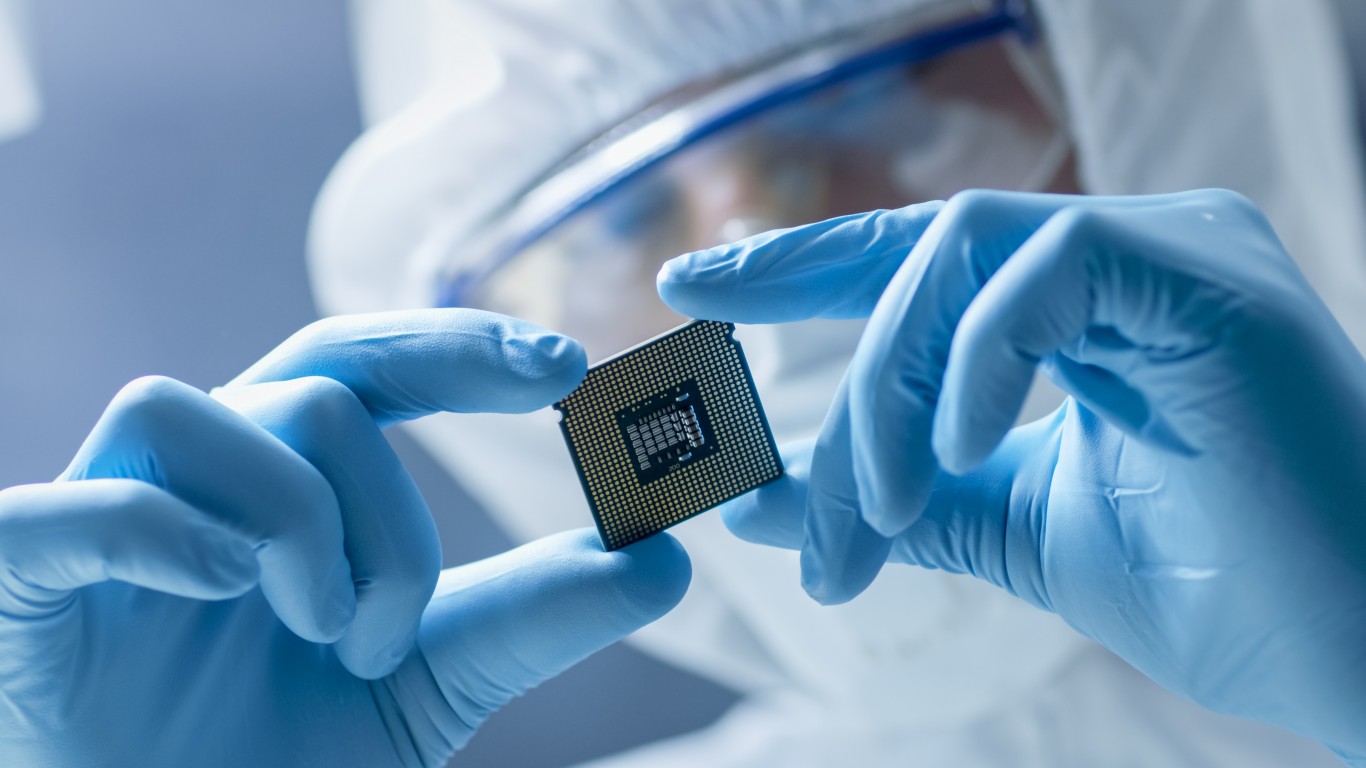
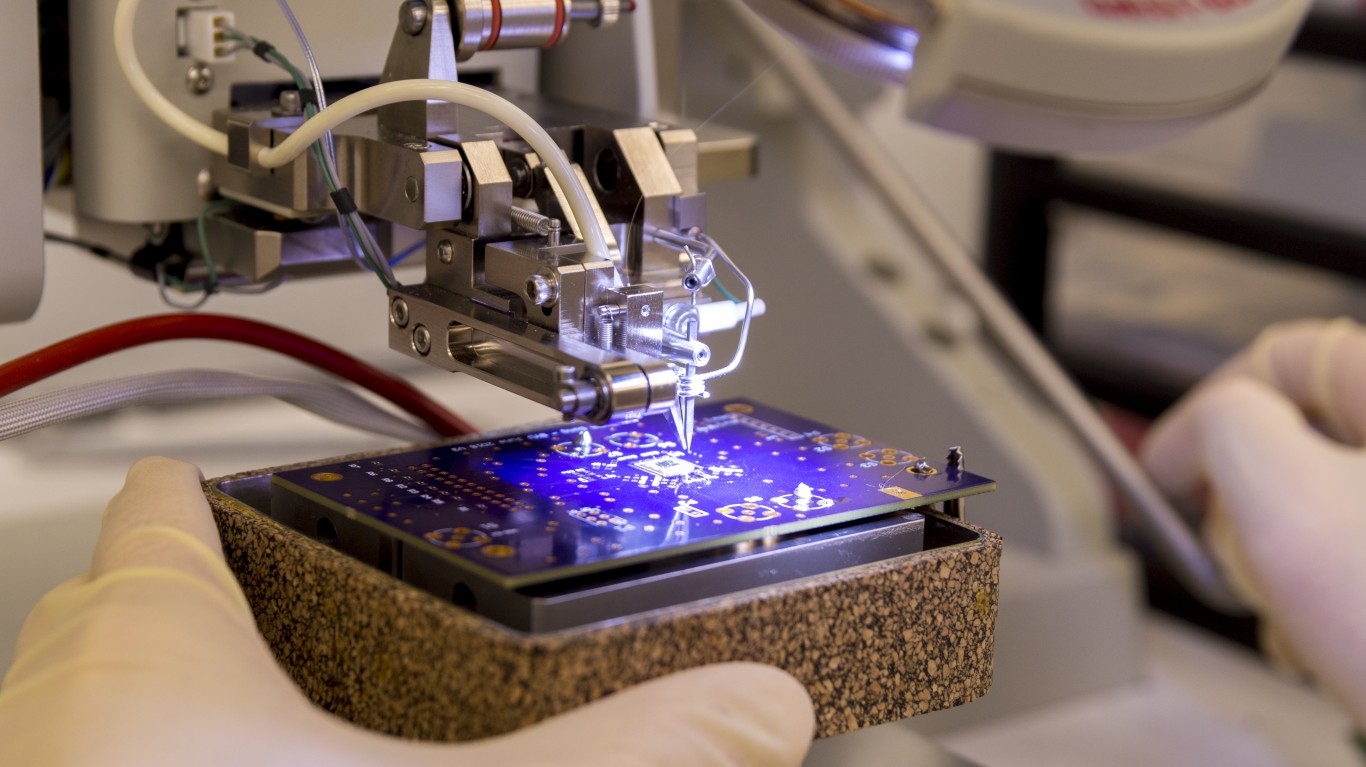
Arm revealed plans to manufacture its own chips, moving beyond its core role of designing and licensing intellectual property (IP) for central processing units (CPUs) and graphics processing units (GPUs).
Historically, Arm’s neutral model has powered nearly every smartphone globally by licensing its architecture to clients like Nvidia (NASDAQ:NVDA), Qualcomm (NASDAQ:QCOM), and Amazon (NASDAQ:AMZN), who build their own chips. This impartiality has been key to Arm’s dominance, as it avoids direct competition with its customers.
However, CEO Rene Haas outlined ambitions to produce “chiplets” and complete solutions through Arm’s Compute Sub Systems (CSS) initiative, targeting AI and cloud computing markets.
This strategic pivot risks placing Arm in direct competition with its licensees, who depend on its designs to create competitive products, potentially disrupting its carefully built ecosystem.
Risks of Alienating Customers
By entering chip production, Arm could erode trust among its key clients. For instance, Nvidia, which leverages Arm’s architecture for its Grace CPU, might see Arm’s chip-making as a threat to its AI market share. Similarly, Qualcomm, a major licensee for smartphone chips, could turn to alternatives like RISC-V, an open-source architecture gaining traction.
Arm’s move also introduces financial risks, as chip manufacturing requires significant capital investment, unlike its high-margin IP licensing model. Geopolitical tensions, including potential U.S. export controls impacting Android smartphone markets, are putting pressure on Arm’s royalty stream and amplifying the risks of this strategic shift.
Analysts question Arm’s ability to sustain growth while navigating these competitive challenges and lofty valuation.
A Fragile Ecosystem at Stake
Arm’s chip-making plans reflect bold ambition but threaten its neutral business model, which supports over 22 million developers and a vast ecosystem of licensees. Losing customer confidence could drive major clients toward rival architectures like RISC-V, which is increasingly appealing due to its open-source nature and flexibility.
Arm’s dominance in smartphones, where it holds a near-monopoly, is a strength. However, its growing data center presence — with an audacious claim to want to steal 50% of the market share in hyperscale servers — could be jeopardized if clients perceive Arm as a competitor.
The shift to manufacturing requires partnerships with foundries like Taiwan Semiconductor Manufacturing (NYSE:TSM), introducing supply chain vulnerabilities amid geopolitical tensions. For example, restrictions on advanced chip exports to China could limit Arm’s royalty growth in the Android market.
This gamble, if mishandled, could fracture Arm’s ecosystem, erode its competitive moat, and undermine its long-term market leadership, especially as competitors like Advanced Micro Devices (NASDAQ:AMD) and Intel (NASDAQ:INTC) bolster their own AI chip offerings.
Key Takeaway
Arm’s stock, trading at over 63 times expected earnings, assumes flawless execution and uninterrupted growth. Its soft Q2 guidance, driven by supply chain concerns and smartphone market weakness, already signals challenges.
The plan to manufacture chips, which risks conflicts with key licensees, further undermines this valuation. By competing with its customers, Arm could alienate its ecosystem, pushing clients toward alternatives like RISC-V. The capital-intensive nature of chip production, combined with geopolitical risks such as export controls, adds financial strain.
Even after its 12% stock drop, Arm’s valuation remains unsustainable, as the dual threats of customer backlash and market headwinds suggest significant downside risk. Investors may find safer bets in the semiconductor space until Arm clarifies its strategic execution and stabilizes its ecosystem relationships.










 Top Gaining Stocks
 Top Losing Stocks