


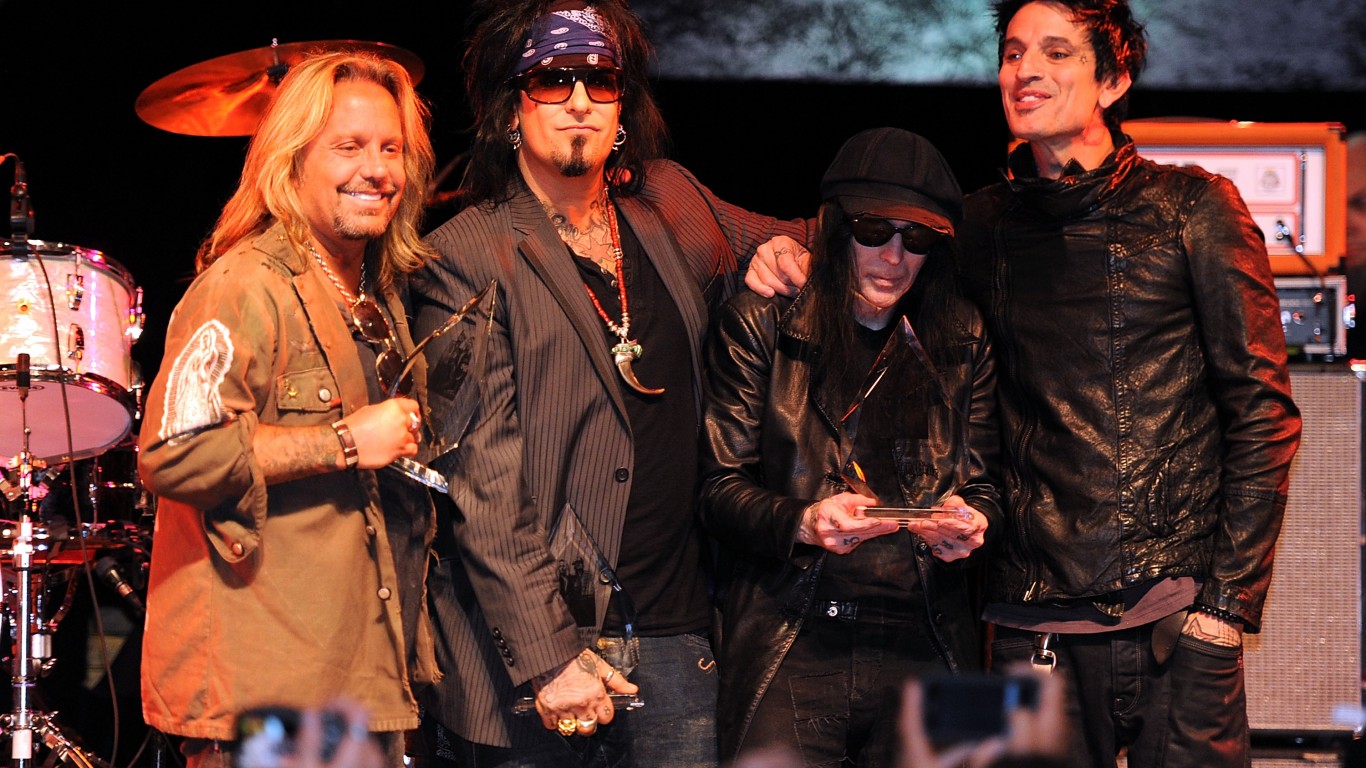
Tommy Lee is notorious for his hedonistic lifestyle, his leaked X-rated video with ex-wife starlet Pamela Anderson, and his manic drumming with the iconic heavy metal band, Mötley Crüe, which legitimized its style of music with multi-platinum record sales and sold out concerts around the globe. However, another Tom Lee has established a comparable trailblazing career in the financial world, and his two decades as a Wall Street analyst has led his firm to issue one of the most innovative ETFs to date: The Fundstrat Granny Shots US Large Cap ETF (NYSEARCA: GRNY). The name is a tongue-in-cheek reference to the aesthetically derided but unquestionably effective basketball “granny shot” , the underhanded free throw used primarily by children and the elderly who lack the strength to execute the standard, overhand free throw. Similarly, Mötley Crüe’s name was a self referenced joke to being described as a “motley crew”, to which the respelling and German umlaut were added, inspired by Löwenbräu beer.
Fundstrat’s founder, whose X account name is “Thomas (Tom) Lee (not drummer) FSInsight.com @fundstrat”, has, in his own way, captured the attention of his industry with a new paradigm towards stock analysis, a bold and maverick stance in legitimizing Bitcoin and cryptocurrency as worthy Wall Street assets, and superlative returns for GRNY, which has been leaving its competitors in the dust during its first 9 months. GRNY’s 18%+ year-to-date returns have pulled in an astonishing $2.3 billion of inflows, something that other ETFs often take a decade to compile.
The Other Tom Lee – a Wall Street Outlaw Rockstar
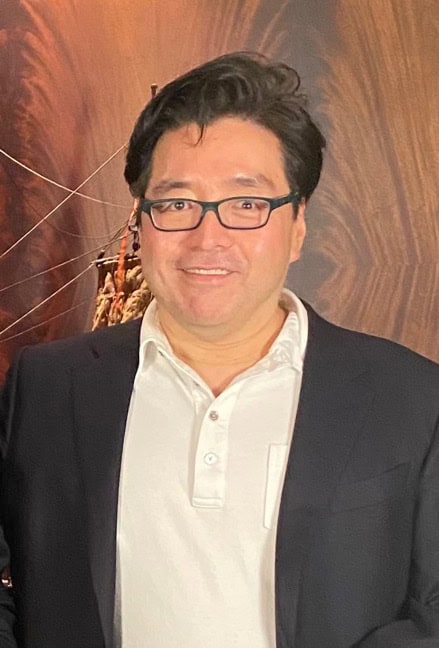
Fundstrat Capital founder Tom Lee has a history of bucking Wall Street trends and being proven right at the end of the day – GRNY is the ETF putting his theories into practice to great success.
A Michigan native and Wharton School of Business graduate, Fundstrat founder Tom Lee is the son of Korean immigrant parents whose professions may have influenced his career as an equities analyst-turned ETF issuer: his father is a psychiatrist and his mother is a franchise owning entrepreneur.
Lee has spent over 20 years on Wall Street as an equities analyst. Starting at Kidder, Peabody and Solomon Smith Barney, he soon took a prominent role at JP Morgan Chase. After years of observing the cozy quid-pro-quo between public companies and Wall Street analysts, Lee began displaying a stubborn independent streak in 2002.
Tom Lee’s analyst report of Nextel posed a slew of inconvenient questions hinting at accounting irregularities and misleading metrics that obscured transparency. Nextel’s response was a scathing rebuttal in The Wall Street Journal in a late attempt at damage control, but failed to address the questions and accounting inconsistencies posed by Lee. Sticking to his guns, Lee was vindicated when Nextel’s subsequent deal with Sprint evidenced his analyses: the acquisition made history as the most disastrous merger in the telecom industry.
Fundstrat Capital launched when Lee left JP Morgan in 2014. Taking cryptocurrencies seriously way before the majority of his Wall Street peers, Tom Lee stepped up to become the first Wall Street analyst to, in 2017, publicly go on record in analyzing Bitcoin (BTC). At the time, Bitcoin had hit a new high of $2,450 and many investors feared it was a bubble. On the contrary, Lee projected a 5-year price target of $55,000. Tom Lee’s comfort in public appearances and willingness to answer random audience questions both in person and online rapidly expanded his reputation among cryptocurrency and DIY equity investors. It was therefore no surprise that various groups in the investment community were already excited when news of Fundstrat’s first ever ETF would be released in Q4 2024. But even Lee himself has expressed amazement at the huge response, although less so at GRNY’s sterling performance.
Themes and Variations

The Fundstrat “theme strategy” of stock selection for the GRNY portfolio contains earnings and call transcripts along with arcane digital data points like keyword frequency.
In music, theme and variations is a form structure that starts with a melody theme, and then variations on the theme repeat the melody with different aspects of harmony, rhythm, tempo, or instrumentation. Tom Lee’s “theme strategy” of stock selection involves taking the core, or theme fundamentals, such as large cap, S&P 500 stocks of certain key industries, such as technology, financial, communications, etc.
Each stock is then put through a variety of theme variations of analytical criteria that are far from the Wall Street fundamental analysis protocols in accounting, economics, and finance taught at universities. Short-term variations include style tilts, PMI recovery, and seasonal rotations, while long-term variations concentrate on structural tailwinds like cybersecurity & energy security, global labor suppliers (AI), demographic shifts, and easing financial conditions. The GRNY portfolio is structured around big-picture themes anticipated to shape the U.S. economy, such as the digital lifestyles of millennials, tech innovation, or consumer behavior fluctuations.
The GRNY selection process commences with deep research across macro trends, business cycles, demographics, and other criteria for the bird’s eye view perspective on the US economy. Fundstrat’s analytics team then prowls for large-cap, primarily S&P 500 companies with over $10 billion market cap that appear, at first look, best positioned to capitalize on the forecasted trends.
The elimination process involves standard criteria like earnings and call transcripts to such arcane digital data points as keyword frequency, to narrow down the 40 or so companies genuinely aligned with these trends.
The final stock picks must excel across multiple themes, ace rigorous quantitative screen measuring factors like free cash flow, valuation, and momentum, and must satisfy a minimum of 2 trend qualifications to meet the final cut. Qualifying in more than two themes does not necessarily lead to greater portfolio weighting for any particular stock, as additional criteria is used for that determination.
The multiple themes concept is designed to choose sufficiently diverse growth stocks that will supply GRNY with sufficient resilience against a range of potentially adverse news events that could hurt the ETF price. The top 10 largest holdings in GRNY at the time of this writing are:
- Palo Alto Networks: 2.83% (4 themes)
- American Express: 2.79% (2 themes)
- Alphabet Inc. Class A (Google): 2.71% (4 themes)
- Expedia Group: 2.67% (2 themes)
- Live Nation Entertainment: 2.66% (2 themes)
- JP Morgan Chase: 2.66% (2 themes)
- Garmin Ltd.: 2.66% (3 themes)
- Bank of New York Mellon: 2.64% (2 themes)
- GE Aerospace: 2.62% (2 themes)
- Cadence Design Systems: 2.60% (3 themes)
Credibility, Transparency, Expansion

The Granny Shots ETF is hitting the mark consistently and by taking in $2.3 billion inflows in 9 months, have justified Fundstrat’s expansion to two more ETFs.
Acknowledging how his frequent appearances on CNBC and in other forums has helped his public profile build his vast following in the investment community, Tom Lee does not take any of it for granted. Unlike most of his peers in the active investment world, Lee conducts weekly research updates and webinars to explain the strategy and rationales for the directions that Fundstrat is taking and its subsequent decisions. The swelling of GRNY daily average volume to over 3 million shares is testament that more and more institutional and individual investors appreciate how Lee, now on the other side of the fence, remains staunchly on the side of principle. That he eschews the opaqueness of which he justifiably accused Nextel nearly a quarter-century ago has only added to his street cred in the investment arena.
Buoyed by the $2.3 billion inflows, Fundstrat has recently filed to register two additional ETFs: a small to mid-cap ETF and a covered call income ETF, similar to YieldMax’s offerings. The Fundstrat experiment with the Granny Shots methodology is apparently on its way to becoming a catalog of ETFs managed under Lee’s protocols. Should the high YTD returns prove consistent over the long haul and across different asset categories, it may well become the next Wall Street paradigm.











 Top Gaining Stocks
 Top Losing Stocks