



Since 1999, the Invesco QQQ Trust (NASDAQ: QQQ) | QQQ Price Prediction has been the “go-to” Exchange Traded Fund of institutions and aggressive growth-minded investors looking for Nasdaq-100 Index tracking and equivalent gains. With trailing returns ranging from 1 year (20.57%), 5 years (17.00%), and 10 years (18.49%), QQQ has a consistent performance history of large cap growth that has helped millions of investors successfully engage in portfolio wealth building with sterling results.
In November 2024, Fundstrat Capital, founded by heralded equity and cryptocurrency analyst Tom Lee, launched its own large cap ETF: the Fundstrat Granny Shots US Large Cap ETF (NYSEARCA: GRNY) named for its unconventional, yet effective approach towards portfolio management, likened to the underhanded Granny Shot free-throw technique used by children and elderly basketball players.
To the surprise of many, GRNY is smoking its ETF rivals, notching an 18% return year-to-date. The enthusiasm behind GRNY has been such that Fundstrat has received over $2 billion in inflows with a full fiscal quarter remaining in its first year of operations. This begs the question: How did a first time ETF grow so quickly, and what makes it different from the other large cap ETFs on the market?
Tom Lee – Wall Street Maverick
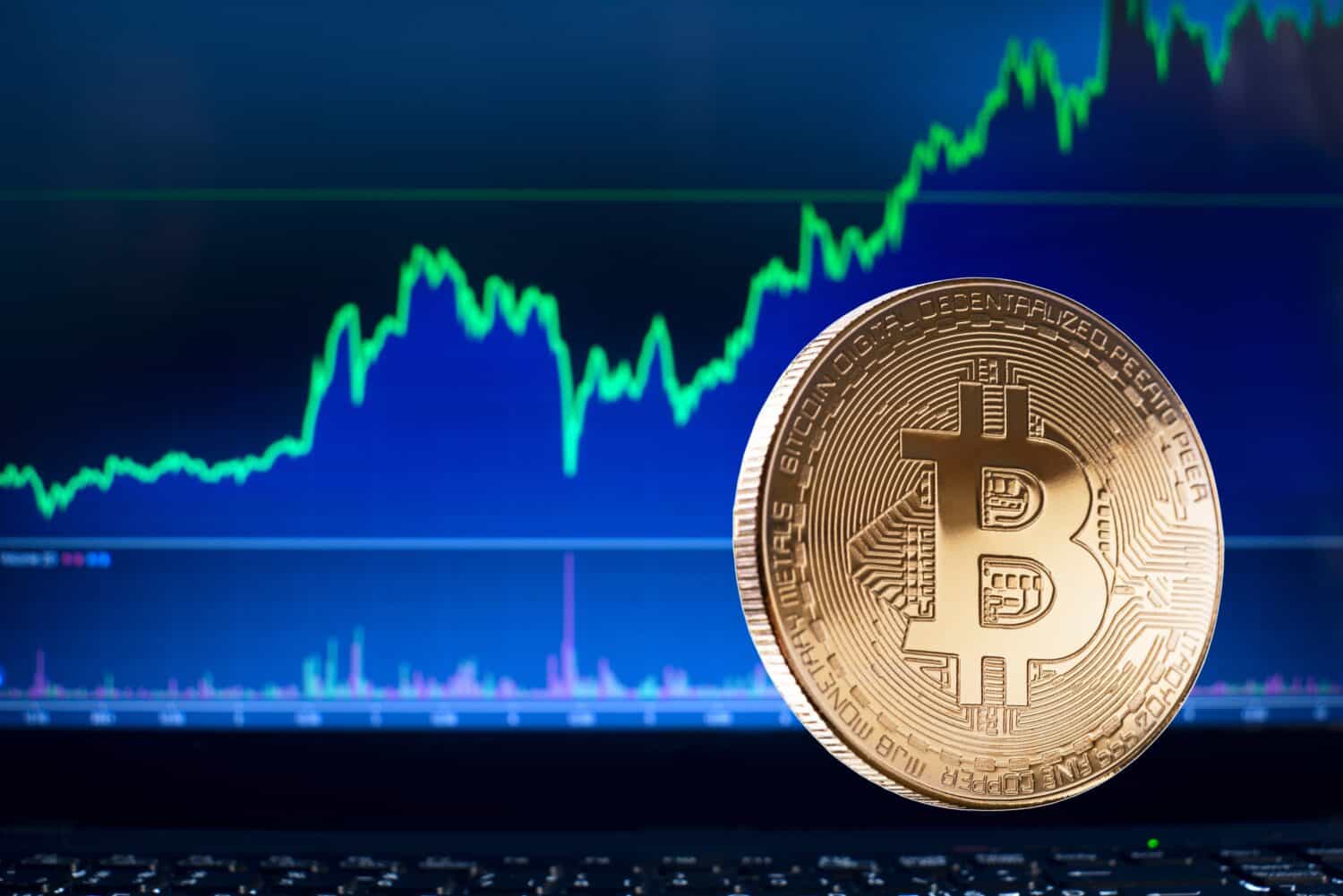
Aa a Wall Street veteran, Tom Lee was the first to put his reputation on the line to cover Bitcoin, predicting a 20X+ 5-year gain from $2,450 to $55,000 in 2017 that endeared him to the cryptocurrency community.
A Michigan native, Fundstrat founder Tom Lee is the son of Korean immigrant parents whose professions give clues to his career decisions: his father is a psychiatrist and his mother is a franchise owning entrepreneur. After graduating from Wharton, Lee spent over 20 years on Wall Street as an equities analyst, starting at Kidder, Peabody and Solomon Smith Barney before taking a prominent role at JP Morgan Chase. With an individualistic maverick streak, Lee first demonstrated his unwillingness to play the Wall Street “buddy game” with public companies, publishing a 2002 analyst report on Nextel which posed a number of inconvenient questions that hinted at accounting irregularities and misleading metrics that obscured transparency. Nextel took out a scathing rebuttal in The Wall Street Journal to do damage control but failed to inject the clarity demanded by Lee. Nextel’s subsequent merger with Sprint validated Lee’s analyses: the deal went down in history as the most disastrous acquisition in the telecom industry.
Lee left JP Morgan in 2014 to start Fundstrat Capital. In 2017, Tom Lee became the first Wall Street analyst to publicly go on record in analyzing Bitcoin (BTC) . At the time, Bitcoin had hit $2,450. Lee projected a 5-year price target of $55,000. His comfort in public appearances and willingness to answer random audience questions both in person and online rapidly expanded his reputation among cryptocurrency and DIY equity investors. As a result, there was already a buzz in some pockets of the investment community when news of Fundstrat’s first ever ETF would be launched in Q4 2024. But few expected it to roar out of the gate like it has so far.
Granny Shots – Off-the-Wall, Yet Efficiently Effective
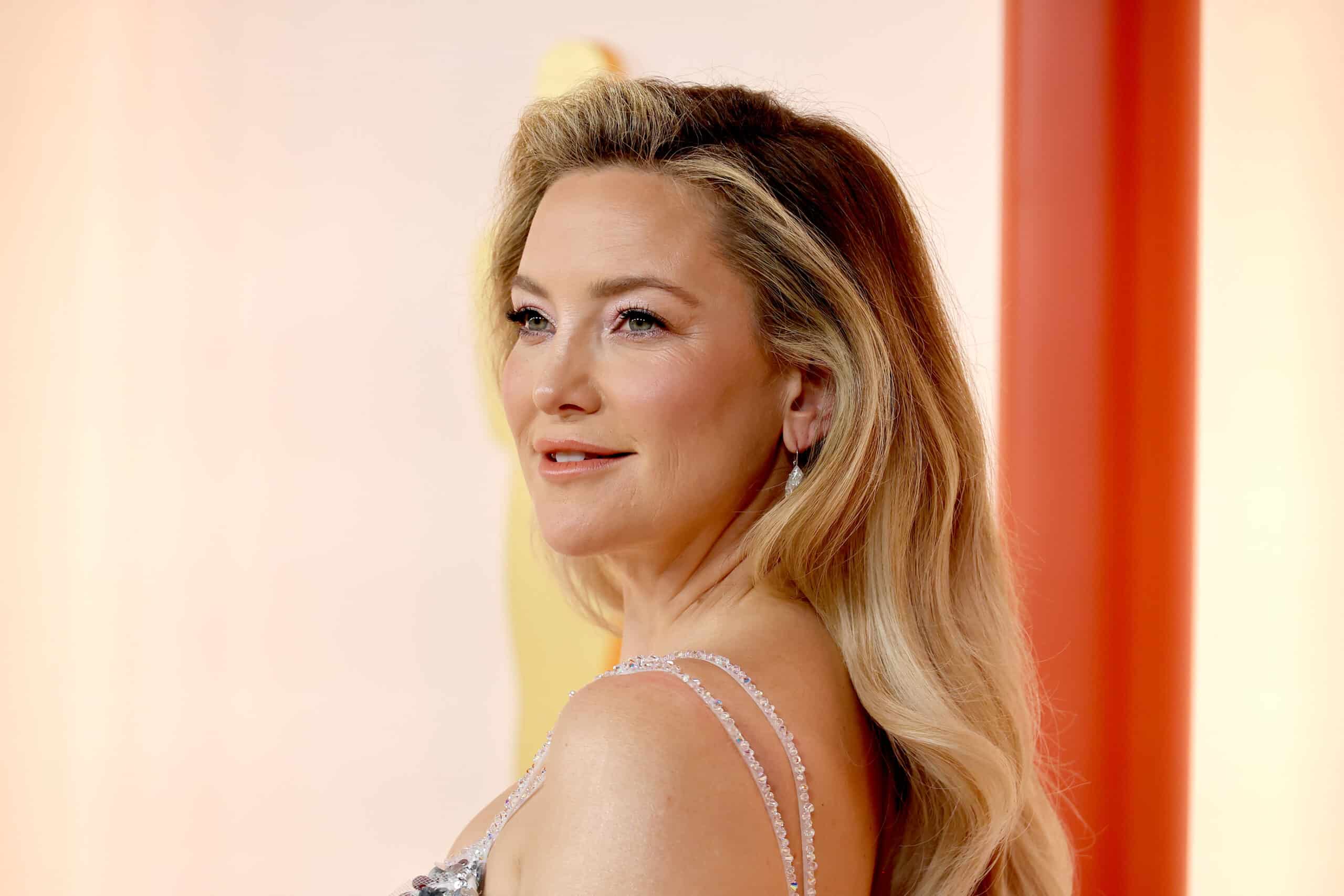
Kate Hudson stars as an NBA team owner based on the Los Angeles Lakers’ Jeanie Buss in the Netflix comedy “Running Point”, which made the granny shot a plot device during its first season.
The Granny Shot basketball free throw is often derided as a shot for children or old people who lack the strength to execute a standard basketball one handed shot. However, whatever it may lack in aesthetically, it is statistically a more reliably accurate shot. It was most recently used as a plot device in the Netflix sports sitcom Running Point, starring Kate Hudson, where a young player gets the “yips” but is reluctant to use the Granny Shot out of fear of teammate ridicule, but ultimately needs to use it with a game on the line.
Rather than attempting to replicate and track an index with only a couple of tweaks, GRNY rethinks the ETF approach in several ways:
- Comparable to the underhanded Granny Shot free throw, GRNY stock selection qualification requires the stock to fall under a number of off-the-wall and unconventional investment themes that Fundstrat has identified as growth drivers.
- Qualifying stocks must align with at least two (2) themes identified in the investment themes to warrant portfolio inclusion.
- There are three short term (6-12 month) themes: Style Tilt, Seasonality, and PMI Recovery.
- The four long term (3-5 year) themes are: Energy/Cybersecurity, Millennials Impact, Global Labor Suppliers (an AI parameter), and Easing Financial Conditions.
- The multiple themes concept is designed to choose sufficiently diverse growth stocks that will supply a portfolio with resilience against a range of potentially adverse news events.
- Qualifying in more than two themes does not necessarily lead to greater portfolio weighting for any particular stock, as additional criteria is used for that determination.
- The portfolio is limited to roughly 35-40 S&P 500 stocks that meet the Fundstrat multiple investment theme parameters. It is rebalanced every quarter.
The top 10 largest holdings in GRNY at the time of this writing are:
- Palo Alto Networks: 2.76% (4 themes)
- American Express: 2.70% (2 themes)
- Tesla, Inc.: 2.69% (2 themes)
- Caterpillar: 2.66% (2 themes)
- Axon Enterprise: 2.63% (2 themes)
- Live Nation Entertainment: 2.63% (2 themes)
- Alphabet Inc. Class A (Google): 2.63% (4 themes)
- JP Morgan Chase: 2.62% (2 themes)
- Expedia Group: 2.62% (2 themes)
- Bank of New York Mellon: 2.62% (2 themes)
The Throwdown Comparison

Compared head-to-head, GRNY has a higher YTD return, but QQQ has greater liquidity, lower expense ratio, and a much longer operating history.
Since QQQ has been in operation for over 25 years and GRNY for only 9 months, a throwdown A/B comparison should be restricted to those categories applicable to both. Therefore, such criteria as 3,5, and 10-year return data doesn’t apply, at least not at this time.
The Invesco QQQ Trust has a cumulative 10 year rate of return of 55,369%, meaning that a $1,000 investment in 2015 would be worth approximately $6,200 today. QQQ has benefited significantly from heavy weighting in the “Magnificent 7” tech stocks. Managed by Invesco Capital Management, QQQ tracks the Nasdaq-100 Index as its benchmark. There is notably greater volatility in QQQ, due to the Nasdaq-100 boasting a greater range of volatile tech stocks, eschewing the more stable large cap financial and defensive companies that are included in S&P 500 index ETFs, for example.
QQQ Top 10 largest holdings:
- Nvidia: 12.56%
- Microsoft: 10.96%
- Apple: 8.97%
- Amazon: 5.75%
- Broadcom: 5.28%
- Meta Platforms (Facebook): 3.88%
- Netflix: 2.81%
- Tesla: 2.60%
- Alphabet Class A (Google): 2.58%
- Google: 2.44%
Head-to-Head (quotes based on market at time of this writing)
|
Category |
QQQ |
GRNY |
|
YTD Return: |
13.17% |
18.00% |
|
Number of Holdings: |
102 |
35 |
|
Total Assets: |
$360.6 billion |
$2.395 billion |
|
Expense Ratio: |
0.20% |
0.75% |
|
Daily Average Volume: |
44.81 million shares |
3.006 million shares |
|
Price: |
$569.58 |
$23.33 |
|
NAV: |
$577.06 |
$23.68 |
As one can see, GRNY has a 4.83% year-to-date return advantage so far over QQQ. Even with the former’s 0.55% higher expense ratio, that still leaves GRNY outpacing QQQ by 4.28%. This has obviously buoyed the continued strong inflows to Fundstrat’s coffers in such a short time period. For reference’s sake, the Nasdaq-100 YTD Return at this time is 12.81%, so QQQ is still maintaining a lead over its benchmark.
In QQQ’s favor, liquidity is almost 15x greater than that of GRNY, with nearly 45 million QQQ shares daily vs. 3 million shares for GRNY. Additionally, QQQ has a huge institutional ownership percentage that are long-term holds, so the odds of significant large block sales are not a high risk. GRNY’s history still is too young to assess any ownership ratios between institutional and individual investors, although Lee’s fanbase would likely tilt current ownership stronger towards individual shareholders at this time.
Different, Maybe Better

GRNY is definitely a very different way to assemble an ETF investment portfolio that is proving successful so far, but time will tell as to if the method can sustain it consistency at a similar level over the long haul, as QQQ has done.
GRNY definitely represents a new way of looking at equities. The ETF both validates and crystallizes many of Tom Lee’s conclusions and theories about the equities market culled from his 25+ years on Wall Street. His use of “themes” is a systematized method of addressing the influence of social media, age demographics, and AI into equity analysis, something which his peers have yet to fully adopt as standard methodology, so he is likely ahead of the pack. In his own words, Lee explained on CNBC:
“A stock that’s both an AI story and tied to millennials then has a better chance of outperforming, because at any moment AI may not be in favor, but millennials might, so you’re improving your chances of continuous outperformance…I think the idea of using a thematic approach and thinking about the story arcs that last a long time to find the stocks [that] outperform, I think that’s what [has] really resonated with us. I think that is how you can still outperform.”
With QQQ’s long history of consistent double-digit annual gains, its value is firmly established and can be justifiably relied upon for many portfolios. Those willing to bet on Tom Lee already have a hint that he has a winning formula, based on GRNY so far. Since he called Bitcoin so accurately when nobody else would, GRNY may be his next disruptive winner. The fact that Fundstrat has registered to issue a couple of forthcoming ETFs should garner even further interest: Lee has a small-cap ETF and a covered call ETF waiting in the wings to be issued. Fans both old and new will inevitably be placing orders.








 Top Gaining Stocks
 Top Losing Stocks