


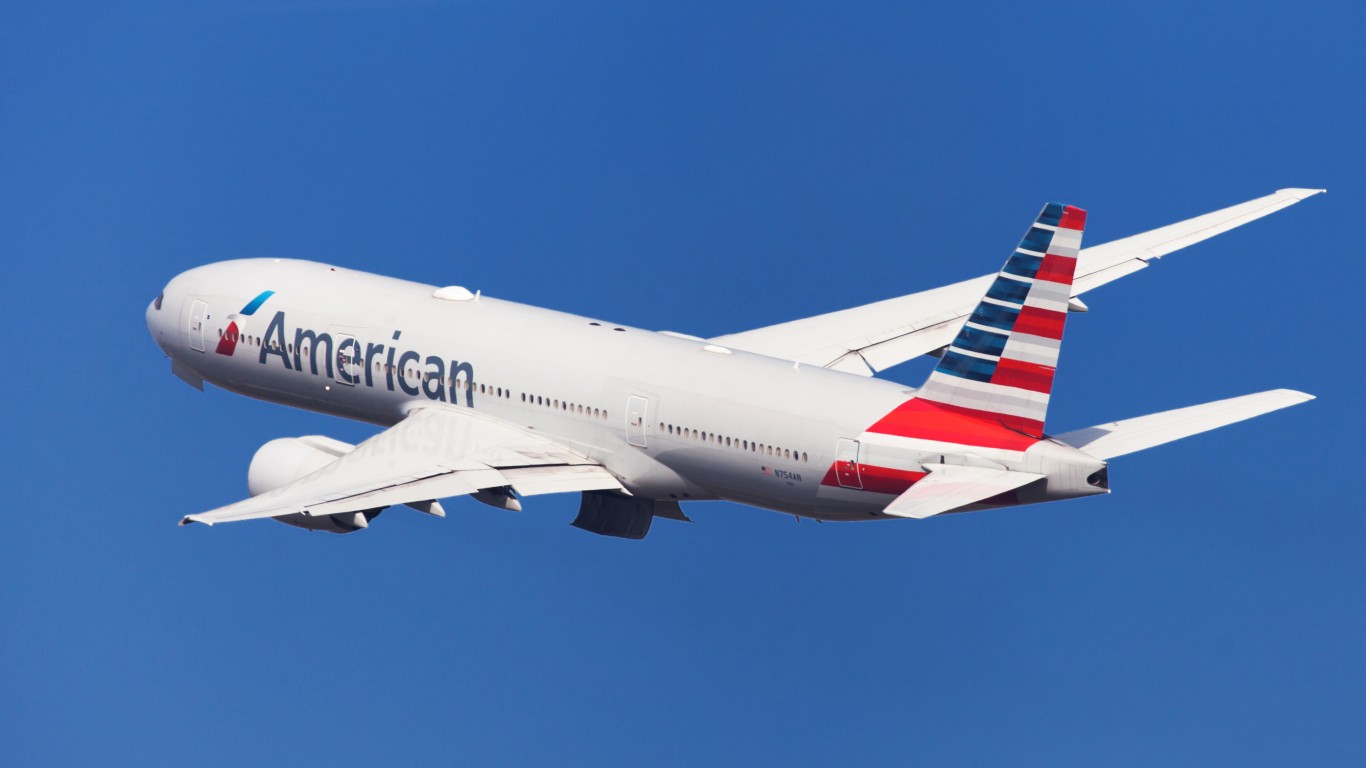
American Airlines (Nasdaq:AAL | AAL Price Prediction) beat Wall Street’s expectations on both revenue and earnings today, posting Q3 results that beat on both EPS and revenue, sending shares 4.48% in premarket trading.
The airline reported $13.70 billion in revenue, narrowly exceeding the $13.63 billion consensus estimate, and posted an adjusted loss of just $0.17 per share versus expectations for a $0.28 loss. While the bottom line remained negative, the 39 basis-point improvement in net income versus the year-ago quarterand a 69.66% surge in operating income to $151 million was enough to get Wall Street’s attention.
AAL’s Q3 results arrive three months after management signaled a turning point in July earnings calls. Back then, CEO Robert Isom warned that July would be “the low point” for domestic unit revenue, with sequential improvement expected through Q3 and into Q4. That script is now playing out.
The airline reported a net loss of $114 million for the quarter, a sharp improvement from the $149 million loss in Q3 2024. More importantly, management’s forward guidance improved significantly, Q4 EPS guidance of $0.45 to $0.75 and full-year free cash flow exceeding $1 billion signal that the worst of 2025’s headwinds are behind.
Revenue Drivers: Premium and Loyalty Outperform
AAL’s revenue beat was driven by strength in higher-margin segments. Premium unit revenue outperformed main cabin, and the airline saw a 7% increase in AAdvantage active accounts alongside a 9% year-over-year increase in co-branded credit card spending. These metrics matter: loyalty members generate higher yields and currently account for approximately 77% of premium revenue, a structural advantage as business travel stabilizes.
The airline also highlighted progress in recovering indirect channel revenue share which was a persistent drag through 2024 and early 2025 after a 2023 distribution strategy shift. Management indicated it remains on track to restore historical indirect share by year-end, with CFO Devon May noting that roughly $1.5 billion in revenue recovery is embedded in the recovery path.
The Cost Challenge Persists—But Narrows
Unit costs remain elevated. Q3 nonfuel costs are expected to rise 2.5% to 4.5% year-over-year, primarily due to new labor contracts ratified over the past two years. This is a structural headwind that separates AAL from peers still negotiating with pilot and flight attendant unions. Yet management has offset much of this through operational efficiency and a shift in maintenance timing which is a sign that the $750 million in cumulative cost reductions since 2023 are real and sustainable.
What to Watch Next
Investors should monitor three key signals in the quarters ahead:
- Domestic demand sustainability- Management’s confidence rests on domestic leisure recovery and stabilizing corporate travel (which grew 10% year-over-year in Q2). Q4 bookings are only 20% filled.
- Indirect channel recovery completion. The $1.5 billion revenue tailwind from restored indirect share should flow through in 2026. Execution here directly impacts margin expansion versus peers.
- Citi credit card agreement ramp. The new 10-year partnership begins January 2026. Management expects this to be a material margin contributor after years of underperformance versus United and Delta on loyalty economics.
Bottomline
AAL’s Q3 beat and forward guidance suggest the airline has stabilized operations and positioned itself to benefit from domestic demand recovery. The 4.48% premarket pop reflects investor relief that management’s July narrative, that July marked the trough, appears to be holding. But execution on indirect channel recovery, loyalty monetization, and maintaining cost discipline will determine whether AAL can close its persistent margin gap to network peers or merely stabilize at current levels.









 Top Gaining Stocks
 Top Losing Stocks