


Watch the Video
Why sentiment has changed
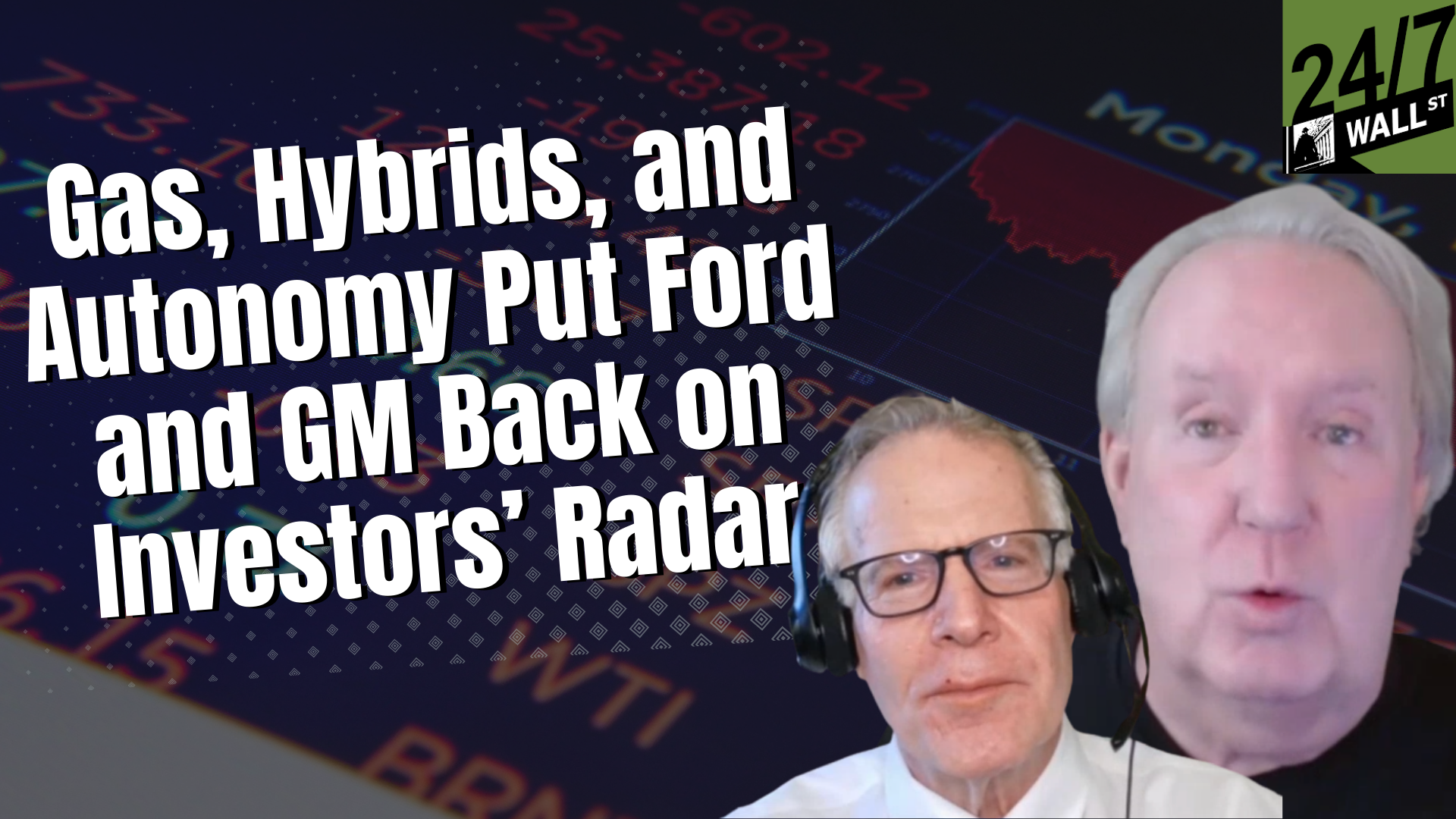
I opened the discussion by admitting that I have reversed my long-standing negative view on Ford and General Motors. Lee immediately agreed, pointing out that GM has been one of the strongest-performing auto stocks this year. The reason is simple. The EV growth narrative has cooled, and the market is refocusing on what actually sells cars in the United States.
EV demand slows materially
I said it directly. EVs are not going away, but they are no longer on a straight-line path to dominance. After tax credits rolled off in September, EVs fell from about 8% of new car sales to roughly 4.5%. Lee added that Tesla (NASDAQ: TSLA) | TSLA Price Prediction reported its weakest November sales in several years, confirming that the slowdown is industry-wide. With gas prices low and electricity costs rising, the economics favor gas-powered vehicles and hybrids for most buyers.
Autonomy becomes the next catalyst
Lee and I agreed that capital spending is rotating away from aggressive EV expansion and toward autonomous driving technology. Ford and GM already have advanced driver-assistance systems on the road, and I believe fully autonomous vehicles could begin appearing within a few years. Beyond convenience, autonomy has a powerful social angle, with the potential to reduce fatalities from drunk, distracted, and fatigued driving.
Dividends and durability matter again
From an investor standpoint, Ford and GM offer something many EV-focused names do not. Cash flow and dividends. GM reduced its payout, but Ford still yields over 4%, providing downside support. I closed by saying that EV dominance by 2030 is not happening, gas-powered vehicles remain central, and autonomy is the real long-term opportunity. That shift is why Ford and GM are back in favor.
Transcript:
[00:00:04] Doug McIntyre: Lee, I’ve thrown in the towel on my hatred of GM and Ford particularly. You have? I have. And I’ll tell you why. Both of those stocks are up a lot this year. They’ve done,
[00:00:16] Lee Jackson: Especially gm. It’s been outstanding
[00:00:19] Doug McIntyre: And here’s why.
[00:00:23] EVs are dead. And I don’t mean that it, they won’t be around, but if you watch what happened to EVs when the tax credit went away, in September, EV sales were 8% of new car sales in the United States. The last two months, they’ve been four and a half. Okay. It was Now that’s a big drop,
[00:00:47] Lee Jackson: but Well, in Tesla’s November sales were the worst in like four years.
[00:00:51] Yeah.
[00:00:51] Doug McIntyre: So from that standpoint, and I want people to understand this, the US is and will be, for maybe another two decades, a gas powered car nation. Okay? It may be that people have a hybrid, which still, you still gotta put gas in it, right? with gas at two and a half, $3, whatever, very attractive to own a car.
[00:01:18] Very, cars are durable. Now. The average age of a car on the road in the United States now is 12 years. 12 years. And, these companies have a absolutely built in almost a monopoly along with Toyota. I mean, if you look at gm, Ford, and Toyota, look at how much of that US market, gas powered car market they own, and something else that’s important for people to look at,
[00:01:49] the attention of the car companies is rotating out of EVs into autonomous cars. Yep. If you look at what’s going on and you look at where these companies are investing their money, they are not investing a lot of money in EV infrastructure and sales ’cause they got killed. But they are moving and you now have some very good Ford and GM cars that are autonomous driving.
[00:02:13] I think that the really, truly autonomous car, will be on the US road in two or three years. And it, they’re not all gonna be Teslas.
[00:02:23] They are not.
[00:02:24] Lee Jackson: Oh, absolutely not. I think you’re right. I mean, plus when you think about it just from the sheer social angle, think of how many lives will be saved over the years.
[00:02:35] When, a, an inebriated driver gets into a car and says, take me home and ain’t driving. And I, think there’s a big social component there that I think will be huge.
[00:02:48] Doug McIntyre: Yeah. Because over 40,000 people are killed in the USA every year in car accidents. And I, think people need to understand something.
[00:02:57] You hear about a crash with an autonomous vehicle. Okay. You hear about 30 crashes. You the newspapers don’t report it ’cause it’s not exciting. But for every person who gets killed in an autonomous vehicle, controlled car, yeah, it’s a big, they probably another 20, 30, 40 who get killed because of drunk drivers, The cat jumps on their back while they’re driving. Yeah.
[00:03:22] Lee Jackson: Falling asleep at the wheel, whatever. Yeah, absolutely.
[00:03:25] Doug McIntyre: And by the way, texting, that’s probably kills more people. Absolutely. The nice thing about a truly autonomous car is you can text, you can be drunk, you can read a book, I mean, amen.
[00:03:37] Lee Jackson: Amen.
[00:03:38] And I will guarantee you, I will guarantee you there’s a lot of people in this world because airline travel has become a just a ass whip. And I think there’s a lot of people in this world who’d rather just get in their autonomous car and say, go to grandma’s, and it’s four hours away or five hours away, rather than go through the, the airport and the security and all that.
[00:04:02] So I think you’re right, and I think they could be the standard within 10 years.
[00:04:07] Doug McIntyre: Oh yeah, I think less than that, but, so I like, Ford and gm. Good dividend dividends, by the way.
[00:04:15] Lee Jackson: Yeah, well, GM cut their dividend, but Ford still pays an outstanding dividend.
[00:04:19] Doug McIntyre: Oh my God. It’s, even with the stock running up, it’s probably over 4%.
[00:04:23] Lee Jackson: Oh, absolutely.
[00:04:26] Doug McIntyre: It ain’t going lower, ’cause the Fords need that money. The Fords need that money. But it’s, this is a gas powered car nation. We believed there were for five years that, that the, that 50% of all new car sales in 2030 were gonna be EVs. Guess what, eh, is not gonna happen. So
[00:04:46] Lee Jackson: Well, and look at the di, the dichotomy because the whole pitch for EV was like, well it’s a lot cheaper than going to the gas station.
[00:04:53] Well, where I live in, Northeast Mississippi, I just went by the gas station pump place over by me. Gas was $2 and 22 cents, and it’s gonna be under $2 next year. And when electricity rates continue to skyrocket, it’s gonna be costly to charge up your EV. So I mean, that’s, that’s just a almost the reverse of how things were looking five years ago.
[00:05:20] Doug McIntyre: Anyway, GM and Ford, which I was telling people to sell, sell, sell. I like those stocks now, and I, well, well listen,
[00:05:29] Lee Jackson: you, they had plenty of time to grab Ford. GM’s been running all year long, but Ford kind of sat there for a while and it has finally, started to move solidly higher.









 Top Gaining Stocks
 Top Losing Stocks