



The Volatility Shares 2x Bitcoin Strategy ETF (NYSEARCA:BITX) has plunged roughly 50% in 2025, tracking Bitcoin’s descent from over $105,000 in November to around $87,469 today. While Bitcoin dropped about 17% from its peak, BITX’s leveraged structure amplified losses far beyond the expected 2x multiple. That disconnect reveals the hidden cost of daily rebalancing, which matters more than Bitcoin’s direction when volatility spikes.
The fund saw nearly $557 million in outflows earlier this year, representing 4.9% of assets under management, and retail discussion on social platforms has gone silent. Investors who bought near the November highs got crushed, and the question now is whether Bitcoin’s stabilization around $87,000 to $90,000 sets the stage for recovery or another false start.
The Macro Factor: Federal Reserve Policy and Risk Appetite
Bitcoin’s 2026 trajectory hinges on whether the Federal Reserve pivots toward rate cuts or maintains restrictive policy. Higher real rates make yield-free assets like Bitcoin less attractive, draining speculative capital from crypto markets. When the Fed signals dovish intent, liquidity flows back into risk assets, and Bitcoin typically rallies. Institutional adoption forecasts remain bullish for 2026, with analysts at Standard Chartered and Grayscale predicting significant gains if regulatory clarity improves and corporate treasury allocations continue.
Watch the Federal Reserve’s quarterly Summary of Economic Projections and post-meeting press conferences. If dot plots shift lower or Chair Powell hints at easing, Bitcoin could break above $100,000 again. Persistent inflation concerns or hawkish rhetoric would keep Bitcoin range-bound or lower, magnifying BITX’s downside through leverage.
Polymarket prediction markets currently assign 58.55% odds that another S&P 500 company will add Bitcoin to its balance sheet by late 2026, suggesting institutional momentum hasn’t stalled despite the pullback. That narrative shift from speculative asset to corporate treasury diversification could provide fundamental support.
The Micro Factor: Volatility Decay and Daily Reset Mechanics
BITX doesn’t hold Bitcoin directly. It uses Bitcoin futures contracts and resets daily to maintain 2x leverage, creating path dependency. In choppy markets, the fund bleeds value even if Bitcoin ends flat over time. This volatility decay explains why BITX’s 50% decline exceeds twice Bitcoin’s 17% drop from peak. The fund’s 2.38% expense ratio and futures roll costs compound the drag.
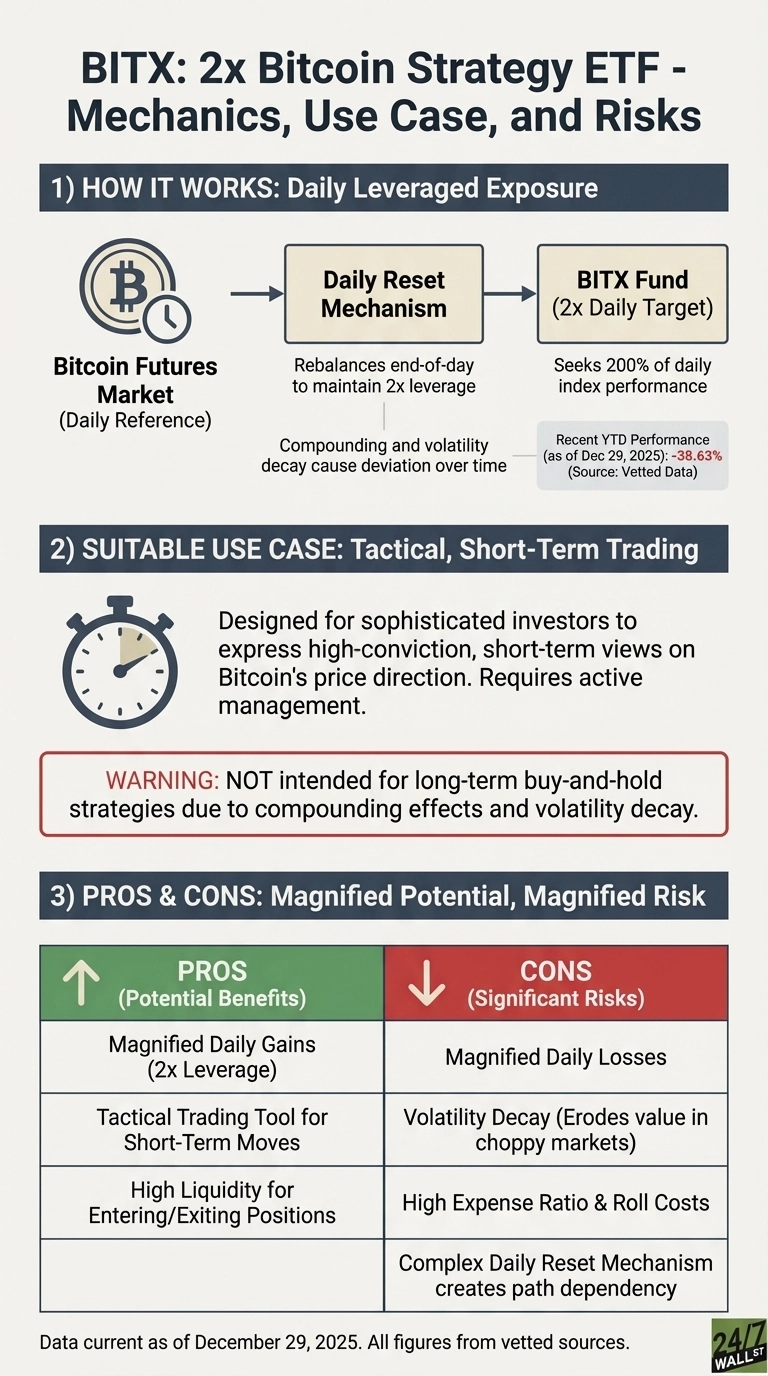
For 2026, monitor Bitcoin’s realized volatility. If Bitcoin stabilizes in a tight range, BITX can track closer to its 2x target. But wild swings erode returns through compounding losses on daily rebalancing. Check Volatility Shares’ monthly fact sheets and holdings reports to track futures positioning and roll costs. The fund is designed for tactical, short-term trades, not buy-and-hold strategies.
Alternative: Spot Bitcoin ETFs
BlackRock’s iShares Bitcoin Trust (NYSEARCA:IBIT | IBIT Price Prediction) offers spot Bitcoin exposure without leverage or daily resets. With a 0.25% expense ratio and $30 billion in assets, IBIT tracks Bitcoin directly without the volatility decay inherent in leveraged products.
Bottom line: Watch Federal Reserve policy signals for macro direction and Bitcoin’s volatility regime for micro performance. Both will determine whether BITX recovers or continues bleeding value through 2026.










 Top Gaining Stocks
 Top Losing Stocks