


Among the top-performing (and most closely-watched) stocks in the market, Nvidia (NASDAQ:NVDA | NVDA Price Prediction) has to be on every investor’s radar. That’s mostly because this is the largest company in the world. As such, Nvidia’s price movements on a daily basis can swing the market in one direction or another – that’s how market cap-weighted indices work, after all.
Thus, price predictions around where Nvidia will ultimately end up in 2026 are meaningful, and could have a significant impact on where investors think the overall market could be headed in the year to come.
Let’s dive into a few of the challenges Nvidia could face in 2026, and take a more bearish perspective on this stock from a skeptical angle. I find such an exercise to be useful, even for investors such as myself who are generally bullish on the direction of this stock over the medium to long-term.
What Could Go Wrong for Nvidia In 2026
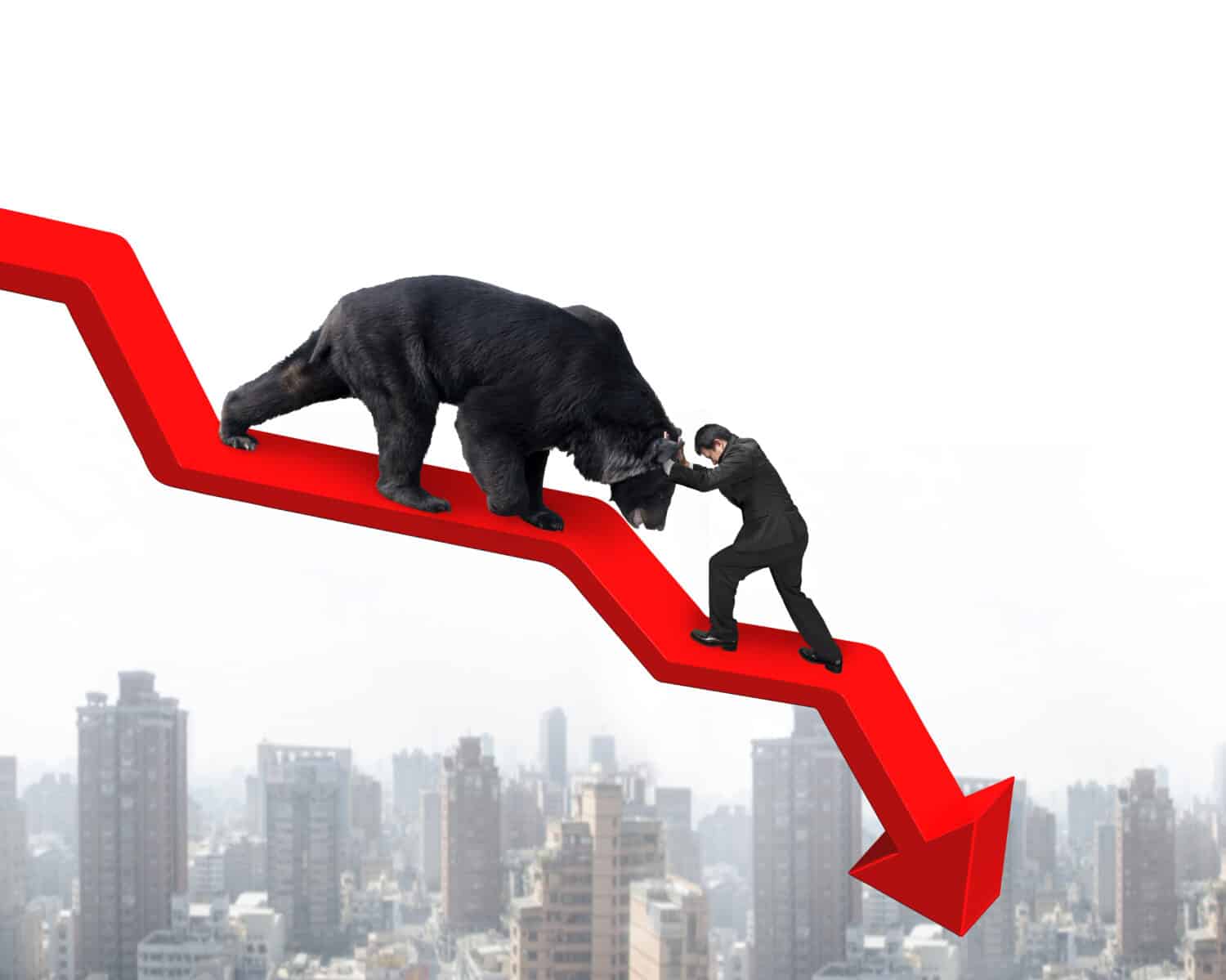
Man fighting a bear on top of a red arrow heading lower
I think the key risk facing Nvidia and its investor base this year is Capex-related growth which could be decelerating off of extremely high levels. Simply put, hyperscalers who have been investing heavily in the data center and AI buildout have been buying Nvidia chips to run their models one. With a fully integrated stack which includes key software that allows AI developers to utilize these chips to their maximum potential, Nvidia has created a world-class ecosystem which drives significant network effects that provide growing cash flows over time that are very difficult to replicate.
The thing is, if the growth we’ve seen thus far in this buildout slows, and investors catch a whiff of a diminished backlog or some indication that future growth may not be as robust, this is a stock that could have significant downside from here. That’s mostly because investors can generally agree that NVDA stock is priced to perfection (or even a bit above perfection), with continuous earnings beats already priced into this name.
If AI bubble chatter picks up, and some of Nvidia’s customers continue to turn into direct competitors (nearly all mega-cap tech companies are in the process of, or have already developed, their own chips), then Nvidia’s stranglehold on the high-performance chip market could deteriorate.
If regulatory and labor bottlenecks further slow this AI buildout, then other key drivers could drive bearish momentum for this stock. In other words, things need to continue rolling as they have in recent years, and Nvidia will need to avoid these key potholes in the road ahead, to continue marching higher to the next $trillion thresholds along the way.
Why These Headwinds May Be Okay For the Broader Markets

Elderly couple looking at their portfolios in a surprised and positive way
When I think about the headwinds Nvidia is facing right now, I also realize that these headwinds could have opposite and offsetting effects from other companies. If we do see a widespread Capex spending slowdown from the largest players in tech, then it’s entirely possible we could also see profits surge as existing AI technology creates added efficiencies and allows companies to earn more profits with less people.
Of course, there’s a downside for the labor market if this takes place. But it’s also true that in the event that more Nvidia customers become direct competitors, that prices of AI technology and models could come down, which could be a net benefit both for consumers and for the entire AI ecosystem. In such an event, Nvidia’s potential decline could come at the benefit of many other companies and individuals (large and small), which could drive outsized economic growth. That’s the bullish take on how this bearish narrative could unravel.
I think we need to see a broadening of the leadership Nvidia and other key tech giants have dominated in terms of market returns in recent history. Perhaps these well-choreographed headwinds will materialize, and it won’t be such a bad thing for investors or consumers over the long-term. We’ll see.











 Top Gaining Stocks
 Top Losing Stocks