


As we kick off a new year, the thought process many investors may have is which sectors or areas of the economy will be the places to invest. After all, various macro dynamics have changed a great deal in recent months, and this year is shaping up to be much different than 2025 in a number of ways.
Aside from the ongoing geopolitical turmoil we’ve seen, as well as concerns around inflation driven by quickly-changing tariff and trade policies, the direction of monetary policy coming out of the Federal Reserve could be the hot topic many will be watching very closely. Given president Trump’s views on interest rates (namely, that they’re way too high right now), a pressure campaign is still being waged on the Fed to drop rates, and do so quickly.
I’m not so sure the president will have as much say on interest rates as overall economic developments will. But one thing I will be watching that will likely determine monetary policy decisions will be the labor market, which has been weakening at a rapid pace.
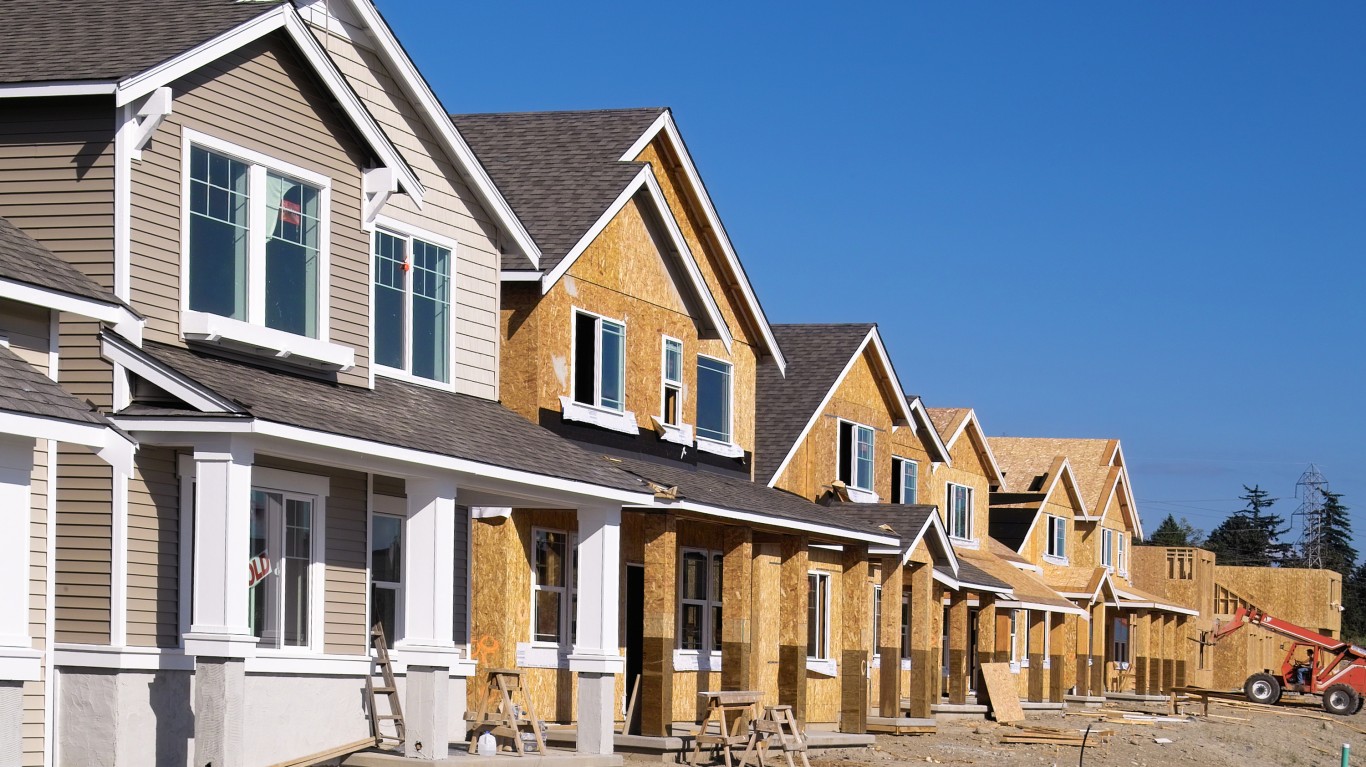
For those who think interest rates are likely to come down because of (or in spite of) president Trump’s rhetoric, here’s why the construction sector is one to watch this year.
Interest Rates Come Down In 2026

Interest rate visual
With three consecutive 25 basis point (0.25%) interest rate cuts from the Federal Reserve to end fiscal 2025, plenty of investors may be looking at interest rate-sensitive areas of the economy to put some capital to work in, come the New Year.
It think construction-related companies could be among the biggest beneficiaries of this trend. Indeed, home sales continue to slow, as prices remain high (but look to be coming down in some key metropolitan markets across the country). In order for these trends to reverse, and for buyers to come off the sidelines, many experts have suggested that interest rates would need to come down to a 5-handle to encourage greater activity.
For new home builders, interest rates have become the key headwind for profitability and earnings growth in recent quarters. Builders are now having to resort to providing builder financing, or buying down mortgage rates, to entice new homebuyers to take on their inventory. What that’s led to is an interesting dynamic where, in certain markets, new homes are now selling for effectively less than existing homes – something that generally shouldn’t be possible, considering the depreciating value of hard assets such as real estate.
That said, if Trump’s new pick for Fed chair does indeed follow his lead and lower interest rates aggressively at the front end of the curve (whether spurred by further economic weakness or not), it will be interesting to see if long bonds (mortgage rates generally follow the 10-Year Treasury yield, not short-term overnight rates set by the Fed) will follow. For those who think they will, this is a trade potentially worth putting on.
We Still Have a Housing Shortage

Real estate agent passing keys to a new homebuyer
New supply of homes are coming on the market, with many homeowners who are looking to lock in the gains they saw following a pandemic-driven frenzy seemingly wanting to do so before prices drop. In some areas of the real estate market (such as condos in key metropolitan areas in Florida and other states), prices are falling. So, the time to offload some inventory (either for individual homeowners or builders) appears to be closing.
That said, despite this new supply, the reality that prices remain elevated compared to historical income standards, in mortgage rates are still near the highest levels they’ve been in a decade, has led to an affordability crisis where few homeowners are willing to buy. This has depressed margins for new homebuilders such as Lennar (NYSE:LEN) and others, who are being forced to offer significant incentives such as mortgage rate buy downs and free upgrades to get buyers to pull the trigger.
That said, I think despite slightly softening prices across the board, we could be due for a reasonably solid year for homebuilders and other companies tied to the construction trade. Retailers like Home Depot (NYSE:HD) and Lowe’s (NYSE:LOWE) could see a resurgence of business, if those who feel locked into their homes are willing to put the necessary upgrades in to maintain their place of residence. The lock-in effect is real, but if we’re all going to be locked into our place for years to come, I think the recent declines these stocks have seen may provide a buying opportunity for those thinking long-term.
The Verdict

Judge banging his gavel on a desk
The reality is that the housing market is a very difficult and complex animal to analyze. Broad supply and demand metrics are a good starting point. But this market is made up of millions of individuals, each making the best decisions for them and their families.
With that in mind, I think investors may be looking too closely at the macro data, and not enough at home homeowners are actually making their purchase decisions. If home buying activity slows down, home renovation stocks like Home Depot and Lowe’s could be screaming buys. But if interest rates come down, that’s a broad-based catalyst for all stocks in this space, providing the rising tide that should lift all boats.
Overall, I’m looking most closely at Home Depot in particular of the three stocks I mentioned in this article as a potential winner in 2026. That’s because no matter what happens, I think this is a retailer with upside potential that’s not being priced in presently.









 Top Gaining Stocks
 Top Losing Stocks