


Clean Harbors sits at $257 per share with a 35.6x P/E ratio, triple the typical industrial stock. The market is pricing in something beyond the modest 1.3% quarterly revenue growth we saw in Q3 2025. The answer lies in regulatory tailwinds, capital-intensive infrastructure, and strategic positioning that’s quietly expanding the company’s competitive moat.
The PFAS Catalyst
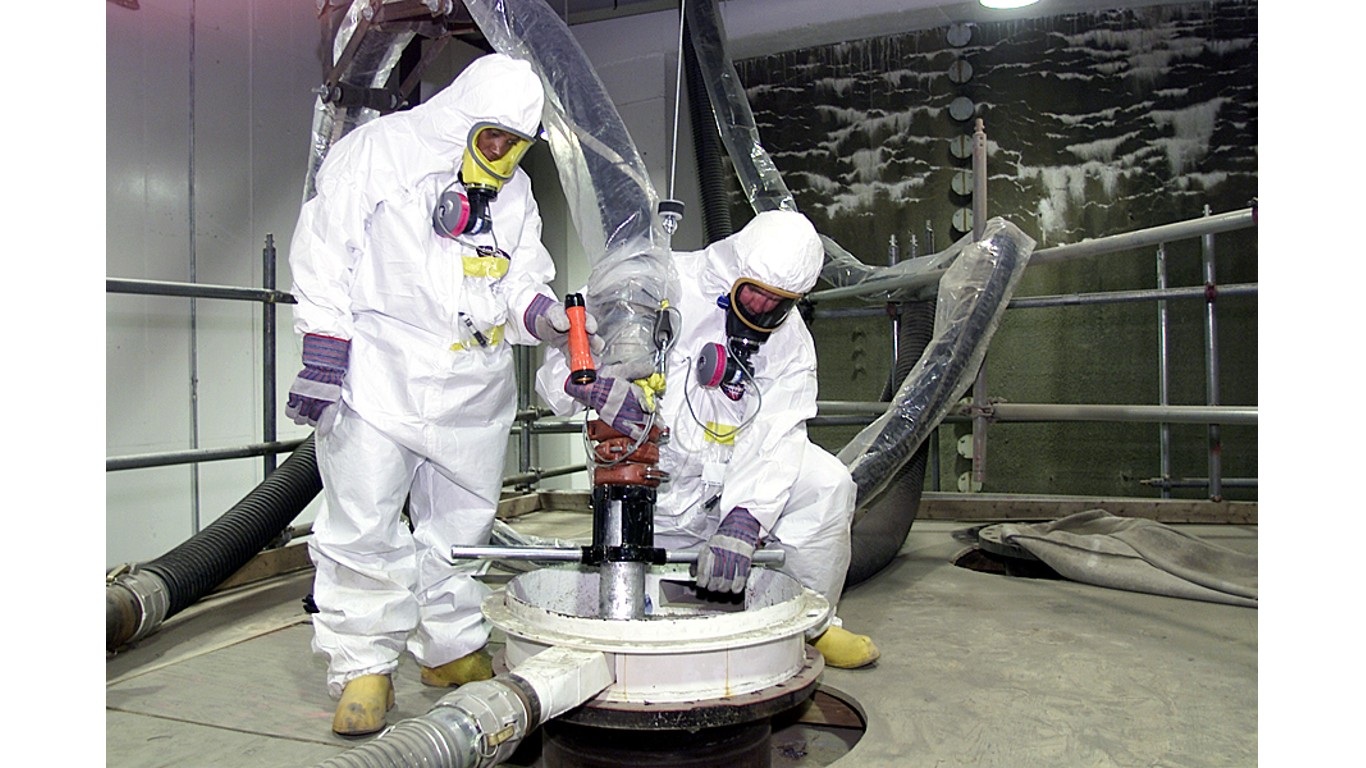
Clean Harbors just locked in a $110 million contract for PFAS water filtration at Joint Base Pearl Harbor-Hickam. This isn’t just another project win. It’s validation of the company’s end-to-end PFAS solution: lab analytics, water filtration, site remediation, and most critically, high-temperature incineration disposal.
CEO Eric Gerstenberg laid out the advantage on the Q3 earnings call: “The study confirmed what we already know. Our RCRA-permitted high-temperature incinerators cannot only safely destroy these forever chemicals in various forms, but can do so at a cost-effective commercial scale.”
The EPA’s late-2024 study at Clean Harbors’ Utah facility proved commercial-scale PFAS destruction works. The Department of Defense lifted its moratorium. Management now expects PFAS revenue of $100-120 million in 2025, up 20-25% year-over-year, with pipeline growth accelerating 15-20% quarter-over-quarter. This isn’t a one-time bump. It’s a regulatory wave that competitors without incineration capacity simply cannot ride.
The Infrastructure Moat
Clean Harbors operates $2.74 billion in property, plant, and equipment. That’s 36% of total assets locked up in landfills, incinerators, treatment facilities, and transfer stations. The company’s incineration utilization hit 92% in Q3 2025 (excluding the ramping Kimball facility), up from 89% a year earlier. When you’re running near capacity with mid-single-digit pricing growth, you’ve got pricing power.
The Environmental Services segment posted 14 consecutive quarters of year-over-year margin expansion, reaching a 20.7% adjusted EBITDA margin in Q3. CFO Mike Battles noted the trajectory toward 30% margins “continues on unabated.” That’s not commodity pricing. That’s a company with structural advantages.
The Headwinds Are Real
Clean Harbors missed Q3 estimates by 6.8% on EPS and 1.9% on revenue. Industrial Services revenue dropped 4% as chemical and refining customers deferred maintenance turnarounds. Field Services fell 11% due to an absence of medium-to-large emergency response projects. Healthcare costs spiked $6 million company-wide on higher-than-normal claims frequency.
Management expects no meaningful Industrial Services recovery before spring 2026 turnaround season. Yet CEO insiders sold 601 shares in December at $241 per share. No insider buying to offset it.
The Verdict
The moat is expanding, but it’s not a straight line. PFAS regulations, capital-intensive infrastructure, and the Safety-Kleen recurring revenue base (249,000 parts washers generating consistent cash) provide durable advantages. The $210-220 million SDA unit investment targeting $30-40 million in annual EBITDA by 2028 shows management is doubling down on vertical integration.
But that 35.6x P/E demands near-perfection. If you believe PFAS becomes a multi-year tailwind and Industrial Services recovers by mid-2026, Clean Harbors is correctly priced. If those catalysts disappoint, the valuation leaves little room for error. The moat is widening. Whether it’s wide enough to justify today’s premium depends on how quickly those regulatory tailwinds convert to cash.













 Top Gaining Stocks
 Top Losing Stocks