


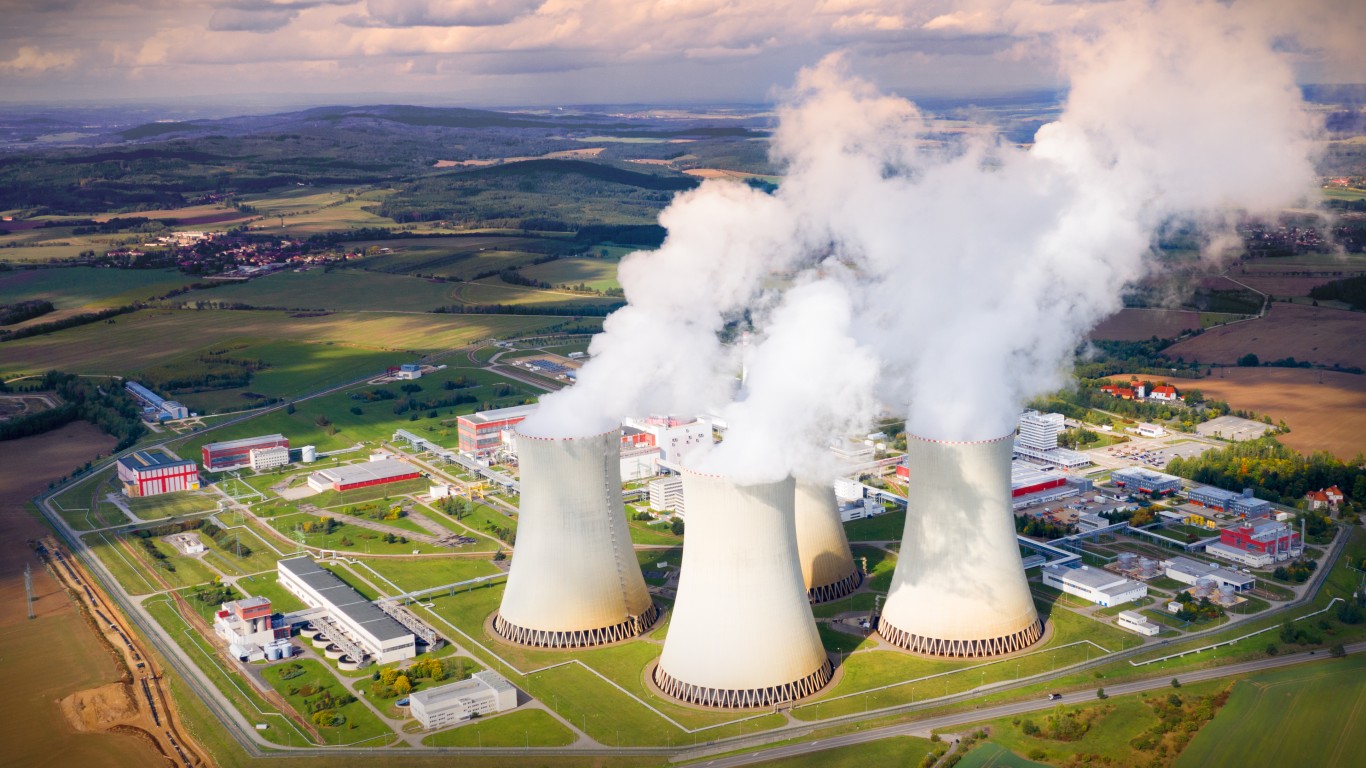
The Range Nuclear Renaissance Index ETF has gained 58% over the past year, riding enthusiasm for nuclear power that’s built since Microsoft and Amazon announced plans to power data centers with small modular reactors. With $725 million in assets under management and a portfolio spanning uranium miners, reactor manufacturers, and utility operators, NUKZ has become the go-to vehicle for investors betting on nuclear energy’s comeback.
The fund’s recent performance masks a more complicated reality. While shares climbed from around $44 to nearly $70, underlying holdings show diverging fortunes. GE Vernova, the fund’s ninth-largest position at 2.77%, has surged 76% over the past year, reflecting strong demand for nuclear infrastructure equipment. Meanwhile, Vistra Corp, a nuclear utility representing 1.78% of the portfolio, has declined 9%, highlighting uneven performance across the nuclear value chain.
The Policy Tailwind That Matters Most
Federal energy policy will determine NUKZ’s trajectory over the next year—specifically how aggressively the government supports nuclear expansion through tax credits, loan guarantees, and regulatory streamlining. The Inflation Reduction Act provides production tax credits for existing nuclear plants, but the real catalyst would be expanded support for new reactor construction and small modular reactor deployment.
Watch for Department of Energy announcements regarding loan program utilization and legislative proposals to accelerate reactor licensing timelines. The Nuclear Regulatory Commission publishes monthly licensing activity reports, and increased application volume would signal utilities and tech companies are moving beyond announcements to actual construction commitments. A shift from political rhetoric to capital deployment would validate premium valuations embedded in many holdings.
Concentration Risk in a Narrow Theme
NUKZ’s micro challenge is portfolio concentration. Cameco, the Canadian uranium miner, represents over 10% of the fund, while the top three holdings account for 21% of assets. This creates significant single-stock risk in a fund already concentrated in a single energy theme. If uranium prices soften or Cameco faces operational issues, the fund’s performance will suffer disproportionately.
Review the fund’s monthly holdings file on the issuer’s website to track concentration level changes. The 13% annual portfolio turnover suggests a stable approach, but rebalancing decisions around Cameco’s weight will be critical to managing risk as the fund grows.
Consider URNM for Pure Uranium Exposure
The Sprott Uranium Miners ETF offers a more focused alternative with 87% of assets in uranium mining and exploration companies, compared to NUKZ’s broader nuclear infrastructure approach. With a lower 0.85% expense ratio and $1.8 billion in assets, URNM provides better liquidity and a cleaner bet on uranium prices without industrial conglomerate exposure that dilutes NUKZ’s returns.
Over the next twelve months, watch federal nuclear policy developments for macro direction and Cameco’s portfolio weight for micro risk management.










 Top Gaining Stocks
 Top Losing Stocks