


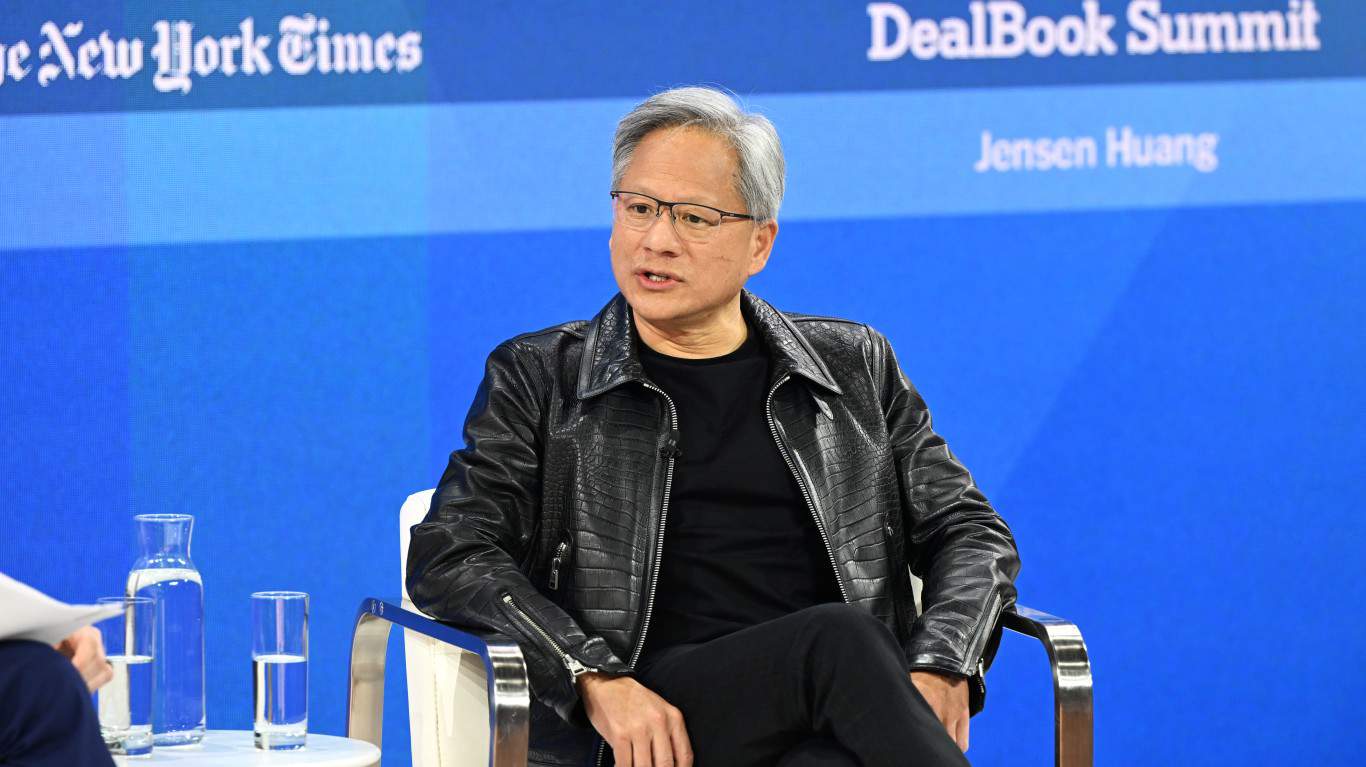
Jensen Huang has built a $4.6 trillion empire selling the picks and shovels of the AI revolution. But while he preaches accelerated computing, three existential threats aren’t discussed in earnings calls. They’re happening now.
Threat #1: Your Best Customers Are Building Your Replacement
Microsoft (NASDAQ:MSFT | MSFT Price Prediction), Meta (NASDAQ:META), Amazon (NASDAQ:AMZN), and Alphabet (NASDAQ:GOOGL) represent 40-50% of Nvidia (NASDAQ:NVDA) revenue. Every single one is developing custom AI chips.
Google’s TPUs power Bard and Search. Amazon’s Trainium chips offer AWS customers cheaper alternatives. Meta’s MTIA handles inference workloads. Microsoft’s Maia chip is deploying across Azure. These are production infrastructure.
Nvidia’s response? Custom chips “complement” rather than replace GPUs. But here’s the math that should terrify investors: inference represents 80% of long-term AI compute. Training is 20%. If hyperscalers build inference chips in-house, Nvidia loses access to 80% of the addressable market. The company captured 85% gross margins selling infrastructure to customers now building their own data centers.
Threat #2: AMD Is the Alternative Nobody Wants to Acknowledge
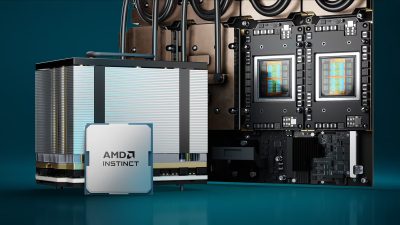
Advanced Micro Devices (NASDAQ:AMD) stock surged 111% over the past year while Nvidia gained 28%. The market is noticing what enterprises already know: MI300X chips deliver competitive performance at 20-30% lower cost.
Microsoft Azure now offers MI300X instances. Oracle Cloud partnered with AMD for infrastructure. Meta deployed MI300X for inference. OpenAI reportedly tested AMD chips to diversify away from Nvidia dependency.
The CUDA moat argument assumes 2020 dynamics still apply. PyTorch support improved dramatically. AMD’s ROCm software stack closed gaps. OpenAI’s Triton compiler abstracts hardware differences. For inference workloads, where performance-per-dollar matters more than raw speed, AMD wins business.
Nvidia doesn’t need to lose outright. AMD capturing 20-30% market share means Nvidia’s growth decelerates sharply. Can the company sustain 73% gross margins with real competition? The MI400 series launching in 2026 closes the performance gap further.
Threat #3: China’s Approval Is Bait for Later Retaliation
China approving H200 chips sounds bullish. It’s actually a trap. China’s playbook: approve foreign technology, extract partnerships and knowledge transfer, develop domestic alternatives, then ban the foreigner citing national security.
They did this with rare earth metals. With Qualcomm. They’re attempting it with Apple’s iPhone. Huawei’s Ascend 910B chips emerged despite sanctions. SMIC produces 7nm chips despite equipment bans. China’s “indigenous innovation” strategy always ends the same way.
If Nvidia rebuilds 20-30% revenue dependency on China, the 2028 ban becomes an extinction-level event. Investors celebrating today’s approval are ignoring tomorrow’s geopolitical weapon.
What Jensen Won’t Discuss
In quarterly calls, Huang focuses on insatiable AI demand and partnership announcements. He never addresses customer chip development progress, AMD market share trajectory, or the inference versus training margin split. These omissions aren’t accidental.
The bull case assumes AI growth lifts all boats. The bear case recognizes customers are building their own boats, AMD is offering cheaper passage, and China is planning to sink the ship entirely. These aren’t distant risks. They’re current realities the market refuses to price in.








 Top Gaining Stocks
 Top Losing Stocks