



Momentum strategies sound simple: buy what’s working, sell what’s not, and ride the trend until it breaks. But turning that into consistent returns requires a disciplined system for identifying genuine momentum versus temporary spikes. That’s the challenge Invesco Dorsey Wright Technology Momentum ETF (NASDAQ:PTF) attempts to solve with its relative strength methodology.
Built for Tactical Tech Exposure
PTF serves investors wanting concentrated technology exposure without picking individual stocks or holding a static portfolio. The fund uses Dorsey Wright’s relative strength methodology, ranking technology stocks based on price performance against peers. Winners get overweighted, losers get cut. The portfolio rebalances regularly, maintaining at least 30 positions but concentrating heavily in names showing the strongest technical momentum.
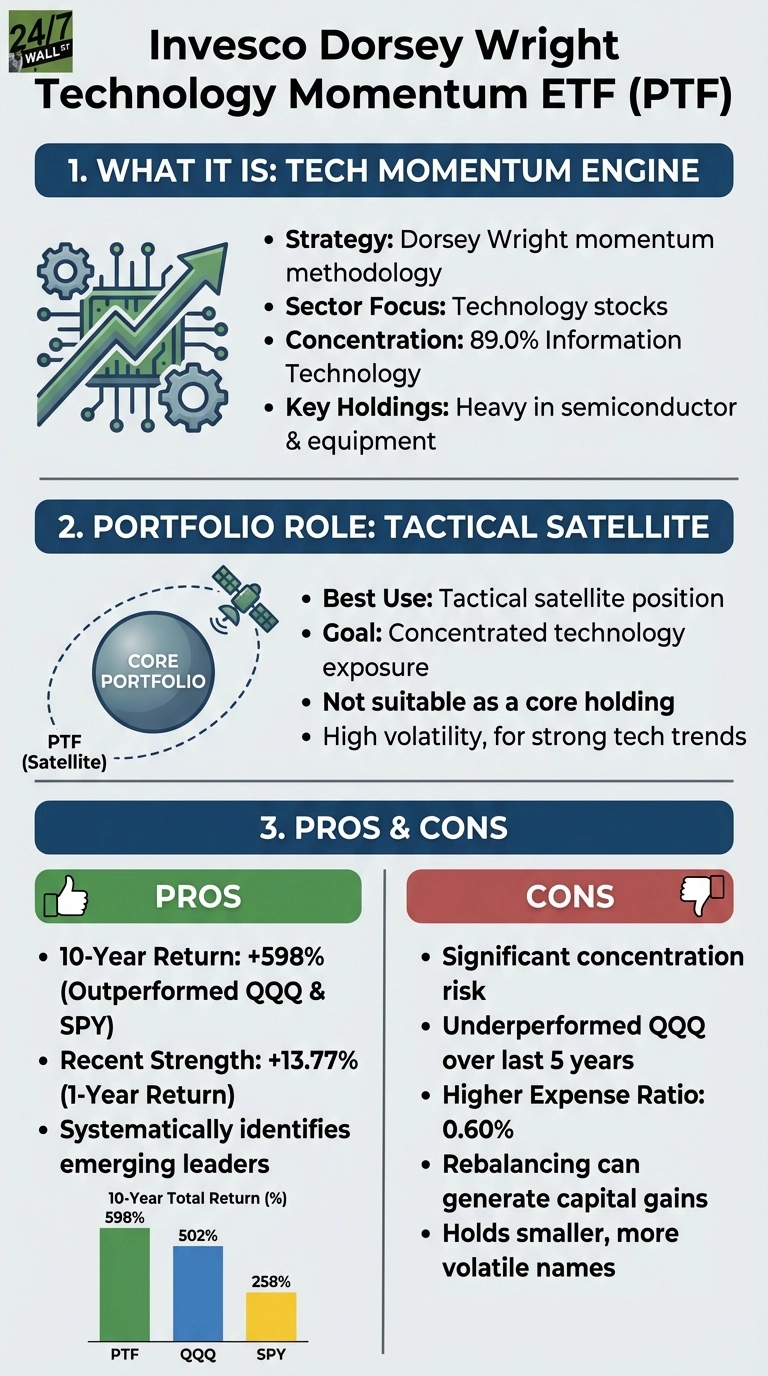
Over the past decade, PTF’s momentum approach delivered 598% total returns by systematically overweighting smaller, more volatile technology names. This tactical rotation strategy identifies emerging tech leaders before they become established giants, allowing the fund to capture explosive growth phases that passive approaches miss. The result: PTF significantly outperformed both QQQ’s mega-cap focus and SPY’s broader market exposure, validating the power of disciplined momentum investing in the technology sector.
When Momentum Works and When It Doesn’t
PTF’s current portfolio reveals both promise and peril. The largest holding is Ondas Holdings Inc (NASDAQ:ONDS) at nearly 6%, a small-cap wireless technology company that surged 446% over the past year but remains deeply unprofitable. The fund holds concentrated positions in semiconductor equipment makers, optical component suppliers, and emerging tech names that can deliver outsized gains in bull markets but crater during downturns.
The fund’s recent performance illustrates momentum’s cyclical nature. PTF surged 7% in a single month as certain tech subsectors caught fire, delivering 9% year-to-date gains that outpace broader indexes. This demonstrates how momentum strategies excel when market leadership rotates into the smaller, more volatile names the fund targets.
However, the five-year picture reveals momentum’s limitations during mega-cap dominance. PTF’s 74% return trails QQQ’s 96% gain over this period, showing how the strategy underperforms when market leadership concentrates in established tech giants rather than rotating among emerging players.
The Concentration and Turnover Tradeoff
Investors need to accept two realities with PTF. First, concentration risk is significant. Nearly 90% of assets sit in information technology, with semiconductor and equipment stocks dominating. When those subsectors correct, the fund offers little diversification cushion. Second, the rebalancing process creates turnover that can generate short-term capital gains, making this better suited for tax-advantaged accounts than taxable portfolios.
The 0.60% expense ratio is reasonable for an actively managed momentum strategy but higher than passive tech ETFs. For investors willing to accept higher volatility in exchange for potential outperformance during strong tech trends, that cost makes sense.
PTF works best as a tactical satellite position for investors who believe technology momentum will continue and want systematic exposure to relative strength leaders without picking individual stocks, but the concentrated portfolio and inherent volatility make it unsuitable as a core holding.












 Top Gaining Stocks
 Top Losing Stocks