


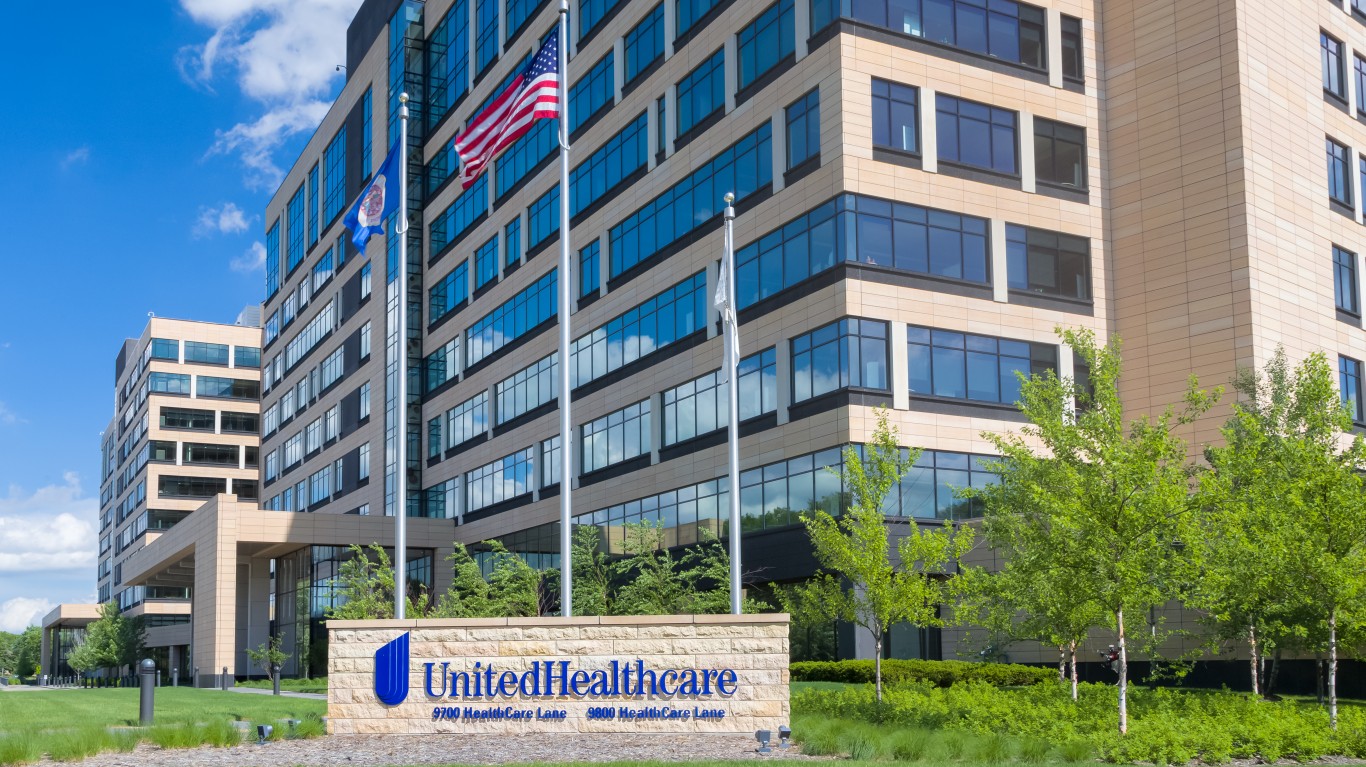
Is the outlook for UnitedHealth (NYSE:UNH | UNH Price Prediction) stock healthy or ill? That’s the crucial question for concerned investors as the general sentiment remains low for this embattled healthcare provider.
This might sound counterintuitive at first, but the fall-off in UNH stock could provide a multi-year investment opportunity. There’s no denying that the aging baby boomer population will need healthcare, and UnitedHealth could benefit from a ramp-up in demand for services.
Furthermore, contrarian investors and value seekers might determine that all of UnitedHealth’s known headwinds are already priced into the shares. If that’s the case, then UnitedHealth stock should surprise the skeptics with a powerful bounce-back by 2030.
Finding Value Amid the Drawdown
Oftentimes, value investing doesn’t bring immediate rewards. Rather, it’s a long-term slog through the tough times with an eye toward strong returns later on.
Indeed, the tough times can offer excellent entry points for stock buyers. Currently, UNH stock is practically in the gutter as it’s down 47% over the past 12 months.
It’s an unattractive chart, but this is what a share-price bottoming process might look like. When so much worry is discounted into the stock price and people start to believe that UnitedHealth is “uninvestable,” this is when contrarians should consider taking a long position.
After all, UnitedHealth’s valuation is undoubtedly reduced after the share-price collapse. Notably, UnitedHealth has a trailing 12-month (TTM) price-to-earnings (P/E) ratio of 17.51x, which is 17.34% below its five-year average.
Also, UnitedHealth has a TTM price-to-sales (P/S) ratio of 0.58x, and that’s 55.22% below the five-year average for this company. The critics might call this a “value trap,” though, since UNH stock could continue to fall even after getting cut in half.
So, we’ll take a look at UnitedHealth’s financials to help determine whether the stock is a “trap.” For the time being, however, long-haul shareholders can enjoy some passive income as UNH stock offers an eye-catching 3.1% forward annual dividend yield.
Not as Bad as It Seems
At first glance, UnitedHealth’s bottom-line results might be off-putting to fearful investors. Yet, it’s worthwhile to dig deeper and consider the full financial picture for UnitedHealth.
We can actually start off with some positive news as UnitedHealth’s full-year 2025 revenue grew 12% year over year to $447.6 billion. This is, at least, an auspicious sign for the coming years if UnitedHealth can maintain this growth trajectory.
Here’s where the critics will complain. In 2025, UnitedHealth’s adjusted earnings from operations declined to $21.7 billion, versus $34.4 billion in 2024 (a reduction of 36.9%).
We need to put all of this into context, though. As it turns out, 2025 was an unusually rough year for UnitedHealth. For one thing, the company suffered a massive cyberattack that incurred a $799 million negative net impact to UnitedHealth’s net earnings.
Also during that year, UnitedHealth’s net earnings took a $2.521 billion hit from impacts in the “restructuring and other” category. In other words, the company’s bottom-line financial state wasn’t really as bad as the headline figures suggest.
For what it’s worth, UnitedHealth guided for 2026 revenue exceeding $439 billion. A positive surprise could easily happen since this guidance implies that UnitedHealth’s year-on-year revenue might not grow at all.
News Impact Won’t Last Forever
Beyond UnitedHealth’s financial report for 2025, a common topic of discussion among UNH stock traders is Medicare Advantage plans. More specifically, the U.S. government proposed a tiny 0.09% average rate increase in 2027 Medicare Advantage plan payments to private insurers such as UnitedHealth.
That’s disappointing if people had anticipated a rate increase in the ballpark of 4% to 6%. A significant portion of UnitedHealth’s revenue is tied to Medicare Advantage plan payments, so it’s understandable that UNH stock tumbled on the news bombshell.
But again, we return to the theme of contrarian and deep value investing. If you’re looking past 2027 and all the way through to 2030, the news bombshell shouldn’t bother you too much as it’s short-to-medium-term and temporary.
It may be emotionally difficult to hit the “buy” button on UNH stock when a news powder keg just detonated. However, if you’re going to buy low and sell high, remember that buying low is something than tends to happen during scary times.
Besides, the proposed 0.09% rate increase isn’t set in stone yet and could change in the coming weeks. At this low point in investor sentiment, it could just take a “not as bad as anticipated” news update to boost UnitedHealth stock.
Thus, for bold contrarians and value hunters, the outlook should be positive as UNH shares could possibly revisit $600 by 2030. There are no guarantees here, but this stock looks like a potential multi-year turnaround candidate for patient shareholders.












 Top Gaining Stocks
 Top Losing Stocks