


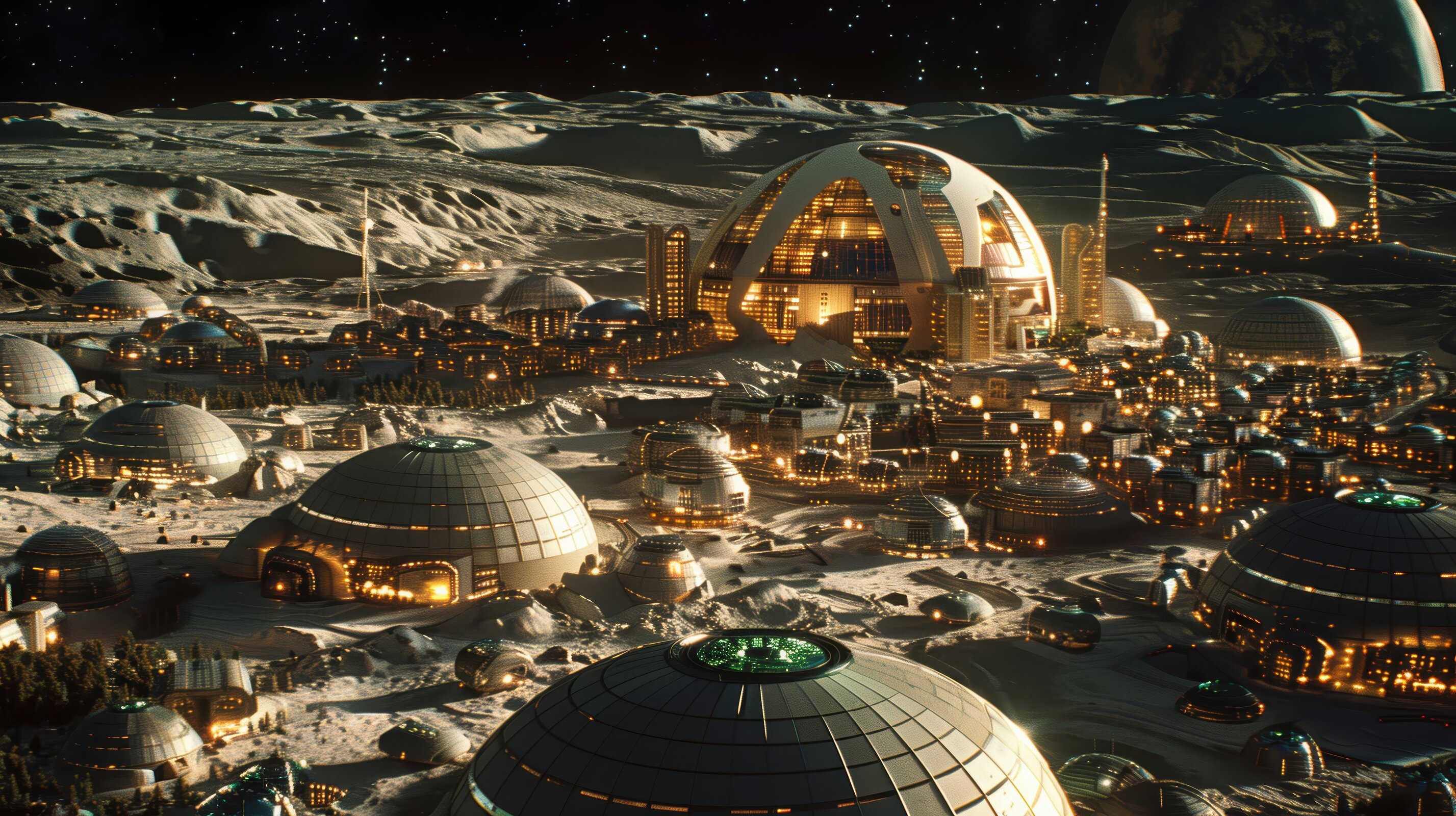
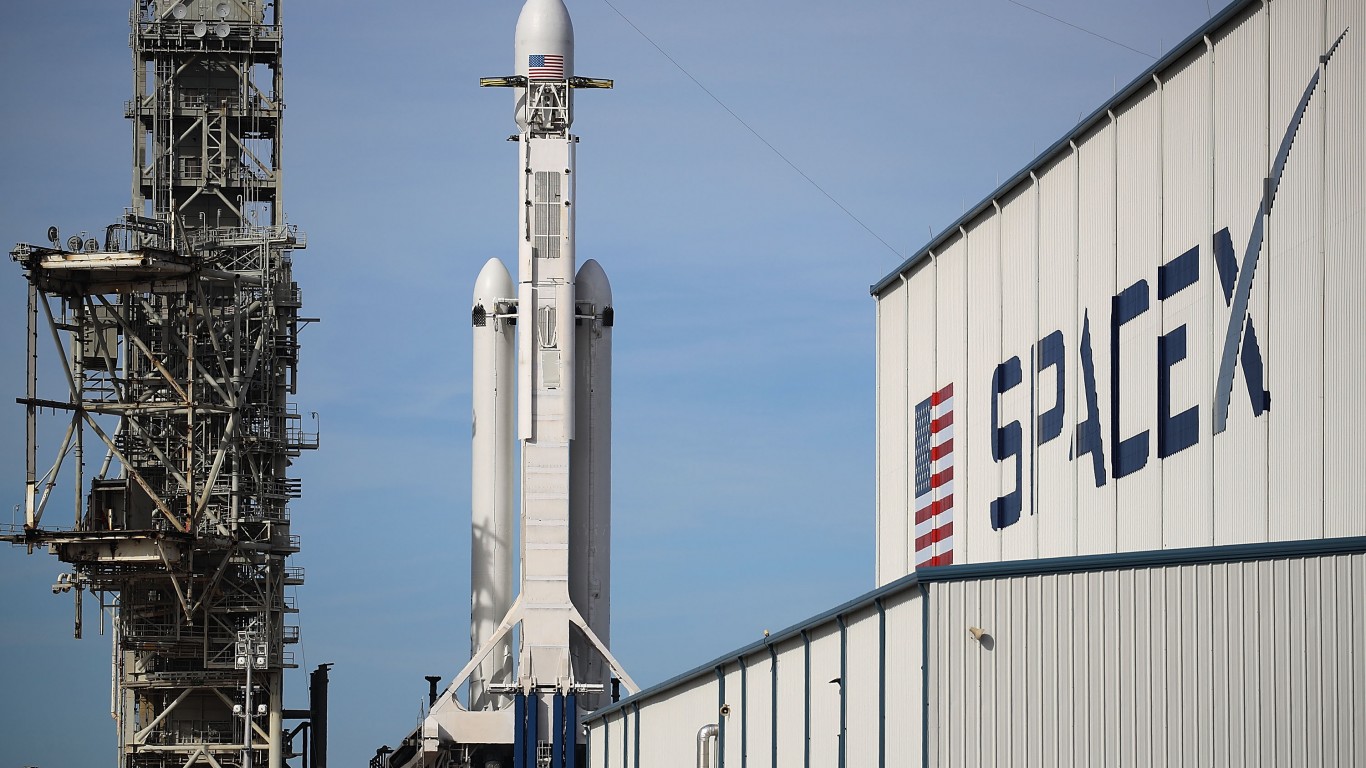
Elon Musk has long emphasized SpaceX‘s mission to colonize Mars as essential for humanity’s survival. However, on Sunday, Elon Musk dropped a pretty big update on X: SpaceX is now zeroing in on building a self-growing city on the Moon, something he thinks could happen in under 10 years. Although Mars is still the dream for making humanity multi-planetary, he explained that the Moon is more achievable in the near term — shorter trips, more frequent launches, quicker iterations. It’s all about securing civilization’s future quickly, and the Moon offers a quicker path while Mars remains a longer-term goal.
This shift feels timely, especially with SpaceX gearing up for its massive IPO later this year. But the interesting part is that Tesla (NASDAQ:TSLA | TSLA Price Prediction) could actually massively benefit from this lunar push, thanks to how intertwined Musk’s companies are becoming.
Tesla’s Shift Beyond EVs
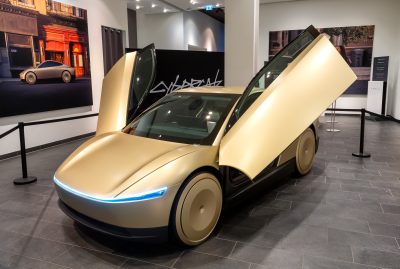
Tesla has been quietly evolving beyond just electric vehicles (EV). Lately, the focus has shifted heavily toward robotics and autonomy. Earlier this year, the company announced plans to wind down production of the classic Model S and Model X EVs to free up factory space — mostly in Fremont — for ramping up things like the Optimus humanoid robot and the Cybercab robotaxi.
It is pouring serious money into this shift, with capital spending expected to top $20 billion this year alone. A big chunk is going toward new factories for robots, autonomous vehicles, semi-trucks, batteries, and more. After slowing EV growth hit the industry, Tesla’s betting big on AI, robotics, and self-driving tech to fuel the next wave of growth — making it feel more like a cutting-edge tech company than a traditional carmaker.
So how does this connect to a Moon city? Building a thriving lunar base isn’t something humans can do by hand forever — the Moon is actually a harsh environment: no air, extreme temperatures, and constant risks. That is where robotics and autonomous systems play a large role. Tesla’s Optimus robots are built exactly for tough, repetitive, or dangerous jobs. Production is scaling up fast, with ambitions to build millions annually.
Autonomy: The Key to Lunar Development
Tesla’s Full Self-Driving technology and Cybercab designs could be adapted to lunar rovers or transport vehicles. With no fossil fuels on the Moon, electric power is essential, and Tesla’s expertise in batteries and solar energy storage from its Gigafactories could power the entire setup, keeping the lights on, systems running, and habitats livable.
Musk has a grand, connected vision across his companies. He has talked about Optimus potentially becoming the first “Von Neumann machine” — a self-replicating robot that could bootstrap entire civilizations on other worlds. That ties directly into SpaceX’s goals, allowing infrastructure to grow on its own with minimal human oversight. Add in The Boring Company for tunneling habitats, and recent moves like SpaceX merging with xAI (with Tesla making significant investments), and everything feeds into each other — stronger AI, better robots, faster space progress.
Key Takeaways
If SpaceX is successful with its Moon city, it could supercharge demand for Tesla’s robotics, self-driving tech, and energy solutions. Optimus and robotaxis alone have analysts forecasting enormous long-term revenue potential — some estimates are in the trillions for humanoid robots, eventually.
Tesla’s stock is trading at a sky-high forward P/E, far above typical auto companies, but that is because the market is pricing in this tech transformation. Bullish analysts, like Dan Ives at Wedbush Securities, are eyeing targets around $600 per share based on AI and robotics momentum, while ARK Invest maintains even bolder models calling for $2,600 by 2029. Cathie Wood just added Tesla to her ARK Space & Defense Innovation ETF (BATS:ARKX).
While the valuation looks stretched today, if these lunar and autonomy breakthroughs start delivering, Tesla could continue to surprise to the upside as it transitions from a car company to a full-fledged AI and robotics powerhouse, conquering new frontiers one planet at a time.




 Top Gaining Stocks
 Top Losing Stocks