


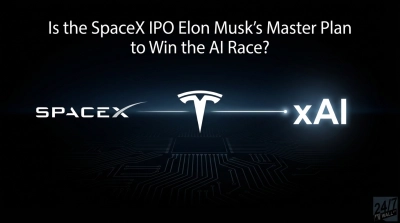
Last week, speculation swirled that Tesla (NASDAQ:TSLA | TSLA Price Prediction) and SpaceX would merge ahead of SpaceX’s planned initial public offering, potentially easing the path to going public by leveraging Tesla’s established market presence. There was also the possibility SpaceX would tie up with xAI, and analysts noted betting markets placed a 48% chance on a SpaceX-xAI merger by mid-year compared to just a 15% likelihood for Tesla-SpaceX.
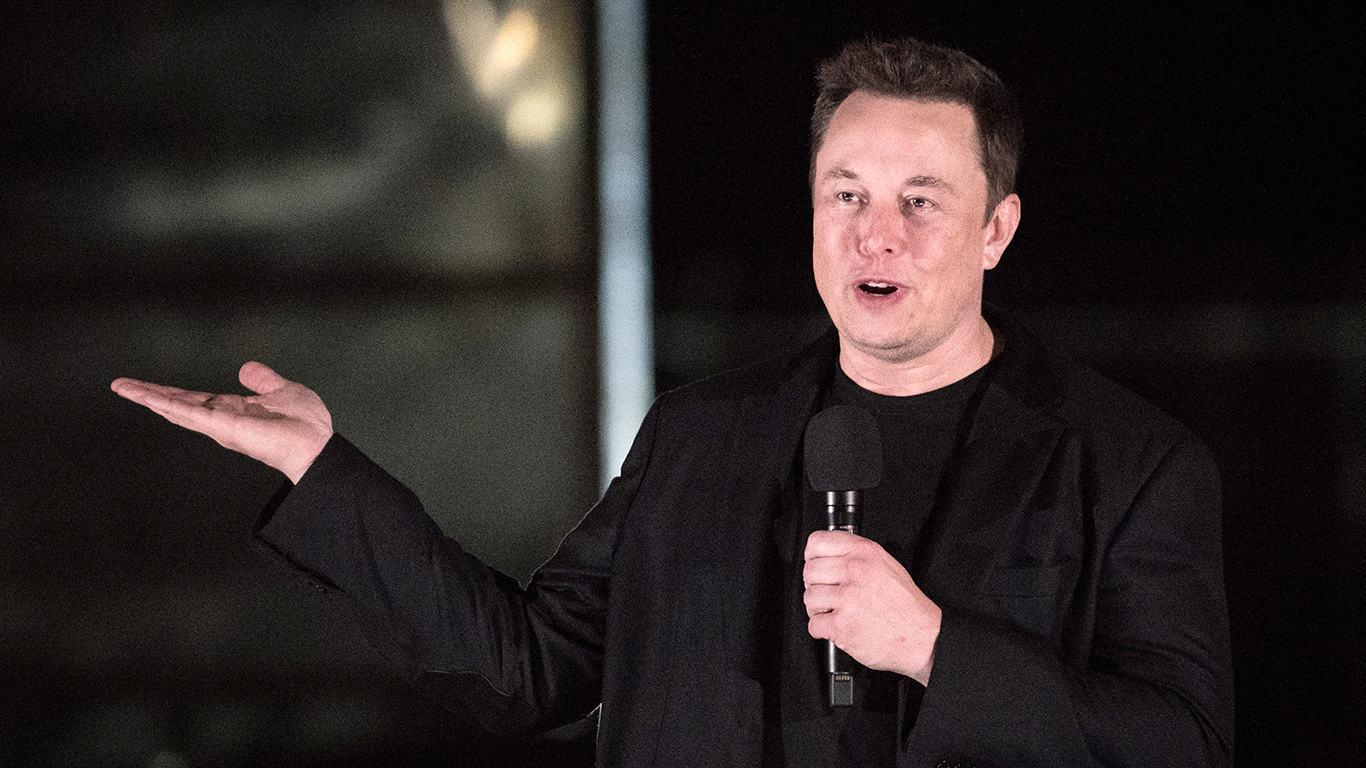
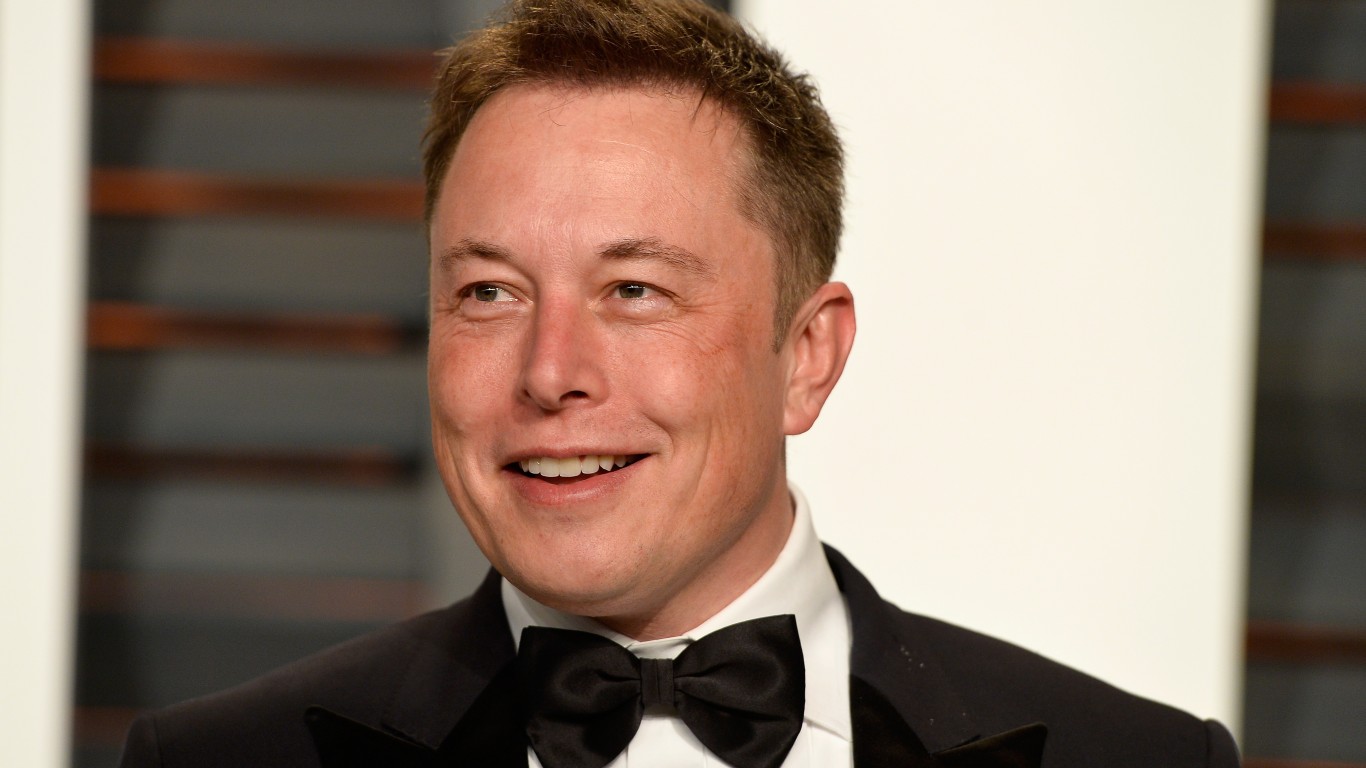
CEO Elon Musk made good on that bet yesterday by announcing in a SpaceX blog post that the rocket company had indeed acquired xAI in a $250 billion all-stock deal. Considering that xAI previously acquired Musk’s social media platform X last March, people now wonder whether he could complete the consolidation of his companies and eventually merge with Tesla to unify Musk’s empire under one roof.
Musk’s Orbital Compute Ambitions
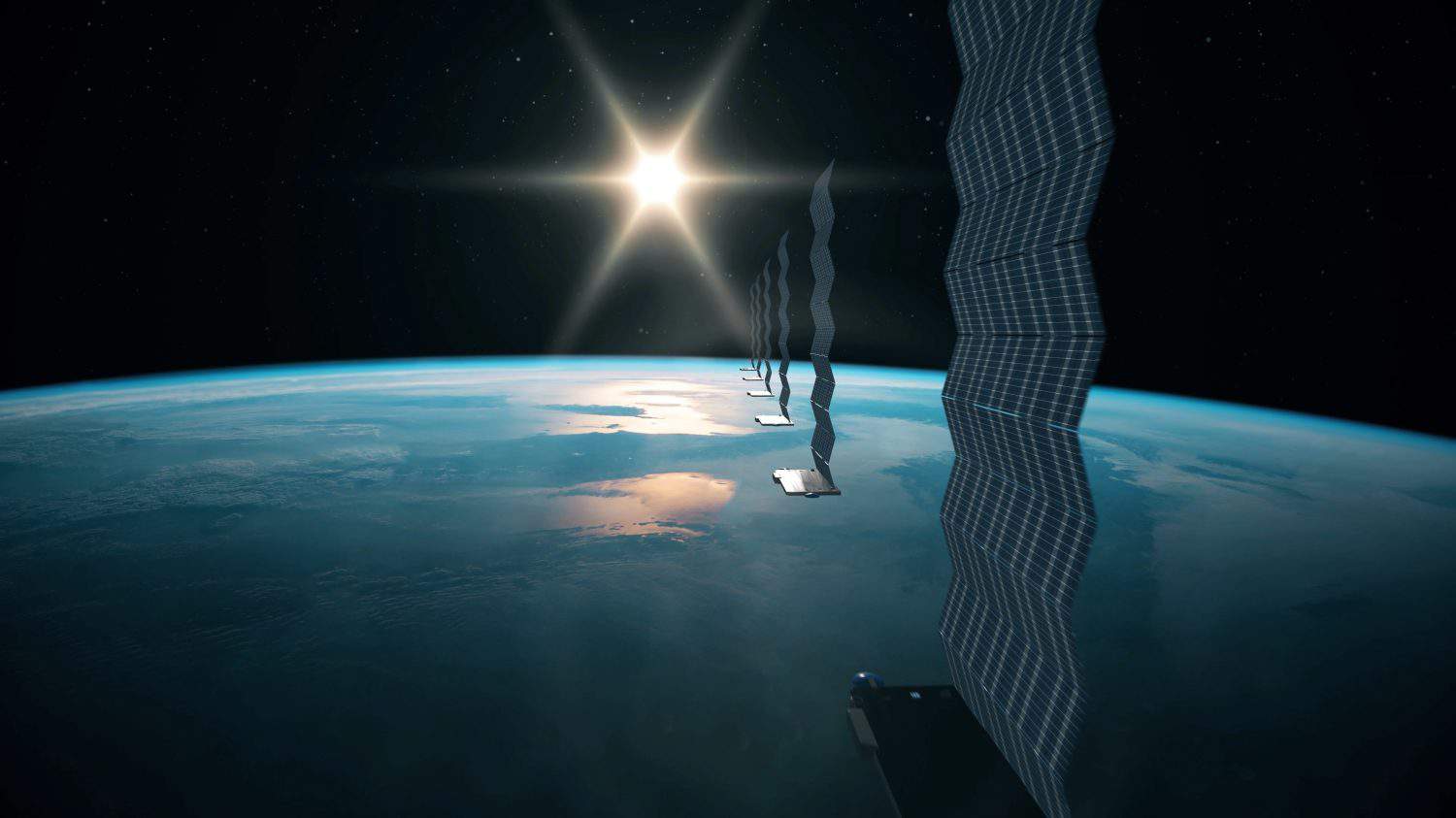
The merger aims to create a vertically integrated powerhouse combining SpaceX’s rockets, Starlink satellites, and direct-to-mobile communications with xAI’s Grok chatbot and AI capabilities. Musk outlined plans to shift AI computing to space, where solar power provides unlimited energy without earthly constraints like grid limitations or cooling needs.
The company targets deploying a million-satellite constellation for orbital data centers, initially achieving 100 gigawatts of AI compute and scaling to one terawatt annually. This would support Musk’s vision of lunar bases, Mars settlements, and broader expansion. It also positions the combined entity as the world’s most valuable private company at $1.25 trillion, with SpaceX valued at $1 trillion before the deal and xAI at $250 billion.
Hurdles in Space-Based AI
Despite the vision, significant challenges loom. Cooling in space relies solely on radiative methods, as there’s no air for convection, requiring large, heavy radiators that add mass and complexity. Cosmic radiation damages electronics, necessitating shielding that increases launch costs and hardware replacement every five to six years.
Sending components into orbit also remains prohibitively expensive at $2,000 to $2,500 per kilogram today. Prices must drop drastically for viability. Google’s research indicates costs could reach $200 per kilogram by the mid-2030s — a 10-fold decline from current pricing — making space data centers competitive. Musk, though, believes that cost level can be achieved within two to three years, allowing space to offer the lowest-cost AI compute, driven by Starship’s rapid launch cadence and economies of scale.
Will Tesla Join the Fold?
That leaves the question of a further merger with Tesla. Analysts say it is speculative, but remains possible, with discussions reported on feasibility prior to the xAI deal. Benefits of consolidation include shared resources for AI-driven autonomy, robotics, and satellite integration, potentially streamlining capital allocation across Musk’s ventures.
However, it’s no longer strictly necessary after the xAI acquisition, as SpaceX gains direct AI expertise and infrastructure synergies. There are also numerous disadvantages: Tesla shareholders could face substantial dilution from issuing new shares, given valuation mismatches — Tesla trades at roughly 200 times earnings compared to the merged entity’s premium multiples.
Antitrust scrutiny could also intensify from dominating EVs, space launch, satellites, and AI compute, complicating regulatory approval and raising competitive concerns. Some analysts now see a “growing chance” of eventual inclusion, but the xAI deal clarifies Tesla’s separate position within Musk’s portfolio.
Key Takeaways
While the market reacted positively to the surprise announcement, issues still exist. SpaceX diluted shareholders by issuing $250 billion in new stock for the xAI deal, boosting its valuation from around $800 billion before the merger to $1 trillion. Regulatory concerns include potential dominance in space-based data centers, raising questions about fair access for competitors and possible national security reviews under FCC oversight for the proposed million-satellite constellation.
Despite these concerns, shareholders appear to trust Musk’s execution, viewing the merger as a bold step toward AI and space innovation amid preparations for a potential blockbuster SpaceX IPO that could value the entity over $1.5 trillion and raise up to $50 billion.





 Top Gaining Stocks
 Top Losing Stocks