


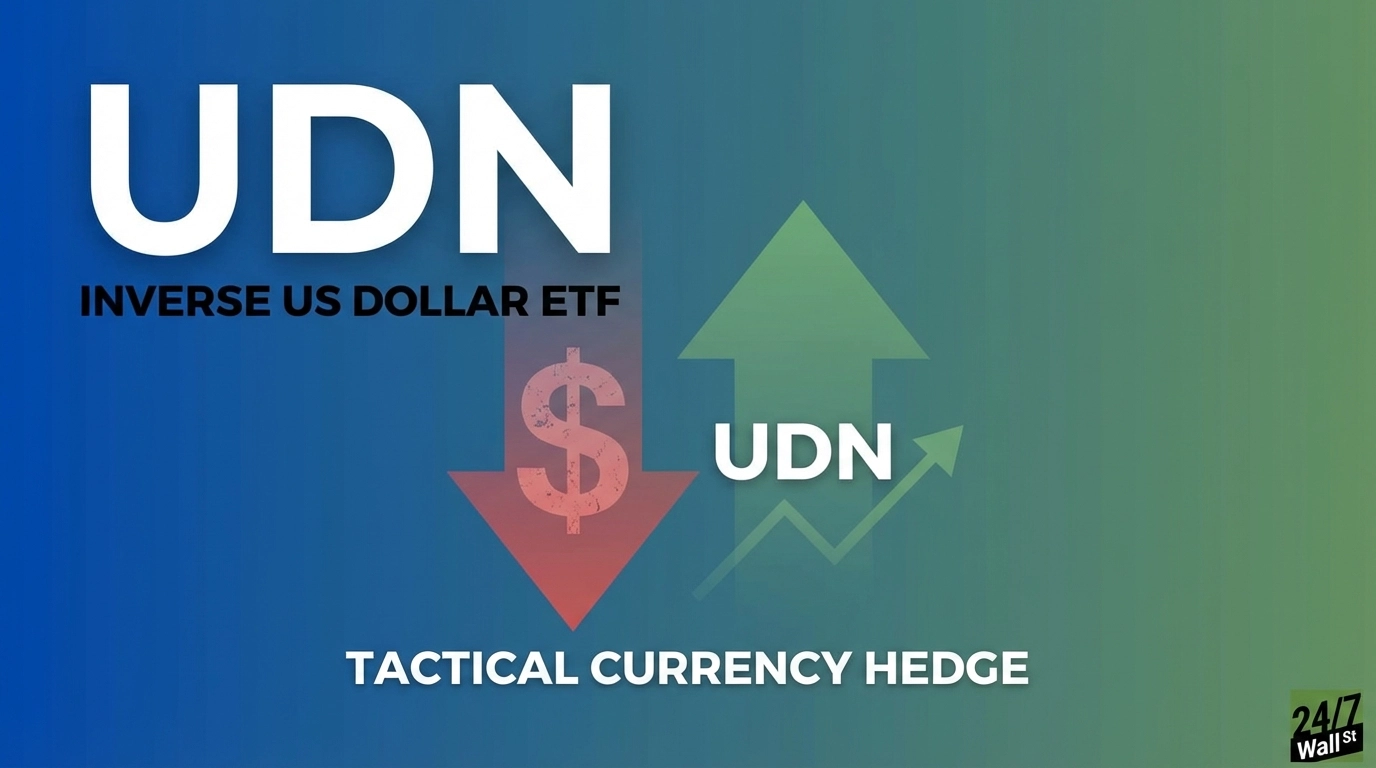
When the U.S. dollar strengthens against major currencies, most investors feel the impact indirectly through foreign earnings, import costs, or commodity prices. The Invesco DB US Dollar Index Bearish Fund (NYSE:UDN) exists for those who want to bet the other way. This ETF delivers inverse exposure to the U.S. Dollar Index, rising when the dollar weakens. It’s a tactical tool, not a core holding, designed for hedging currency risk or speculating on dollar depreciation driven by rate cuts, fiscal concerns, or shifts in global monetary policy.
A Pure Currency Play With a Narrow Mandate
UDN generates returns by tracking the inverse performance of the U.S. Dollar Index, which measures the dollar against six major currencies including the euro, yen, and British pound. The fund holds short-term government securities as collateral and uses futures contracts to deliver inverse dollar exposure. When the Dollar Index falls, UDN rises.
Recent dollar weakness has driven UDN’s strong performance, with the fund returning 13.1% over the past year. This gain reflects a fundamental shift in currency dynamics as Federal Reserve rate cuts reduced the dollar’s yield advantage over other major currencies. When monetary policy turns accommodative and fiscal concerns emerge, the dollar typically loses ground—creating the exact conditions where inverse dollar exposure delivers returns.
Where It Works and Where It Doesn’t
UDN fits portfolios in specific scenarios. Exporters with significant international revenue can hedge against dollar strength eroding overseas profits. Investors concerned about dollar depreciation from loose monetary policy or fiscal instability can use UDN as a tactical hedge. Traders use it to express short-term views on currency markets tied to rate differentials or geopolitical events.
Long-term performance tells a different story. UDN has declined 1.5% over five years, a period dominated by dollar strength. The fund offers no dividend yield to offset losses during unfavorable cycles, making it a pure directional play. Investors holding through extended periods of dollar appreciation face steady capital erosion, which is why timing and tactical positioning matter more than long-term commitment.
The Cost of Betting Against the Dollar
UDN’s inverse structure introduces timing risk. Currency markets can remain directional for extended periods, and holding an inverse position during the wrong cycle erodes capital. The fund also faces daily rebalancing dynamics common to inverse products, which can create tracking inefficiencies over longer holding periods. This makes UDN unsuitable for buy-and-hold investors.
UDN is a precision instrument for hedging or speculation, not a diversification tool. It works when the dollar weakens, but extended dollar strength turns it into a persistent drag.













 Top Gaining Stocks
 Top Losing Stocks