



The dollar has been quietly losing ground in 2026, and for investors holding only domestic assets, that is a risk they may not have priced in. A weaker dollar erodes purchasing power and compresses the relative value of U.S.-denominated portfolios. DVYE turns that dynamic into an opportunity.
iShares Emerging Markets Dividend ETF (NYSEARCA:DVYE) reads almost like it was purpose-built for this environment. It packages high dividend-yielding stocks from emerging markets into a single fund, and when the dollar weakens, two things happen simultaneously: the underlying foreign assets become worth more in dollar terms, and the income they generate translates into larger US dollar distributions.
What DVYE does for your portfolio
DVYE tracks the Dow Jones Emerging Markets Select Dividend Index, which screens for the highest-yielding dividend payers across developing economies. Its role in a portfolio is to serve as an international income sleeve with a built-in currency tailwind when the dollar is declining.
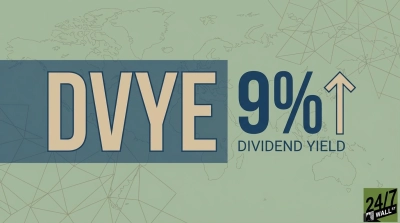
The return engine is threefold. The underlying companies pay dividends, giving the fund a dividend yield of 5.3%. Those dividends are paid in local currencies like the Brazilian real, Chinese yuan, and Polish zloty, so a weaker dollar amplifies their translated value. The equities themselves also tend to appreciate when dollar weakness draws capital into emerging markets as investors seek higher-yielding assets abroad.
Foreign stocks are among the best hedges against a cheaper dollar, and DVYE concentrates that bet on the highest-yielding names in the developing world.
Where the holdings point to
The fund’s sector and geographic composition reinforce the dollar-weakness thesis. Financials make up roughly 28.6% of the portfolio, energy nearly 24%, and materials about 19%. These sectors are deeply tied to commodity cycles and local economic growth, both of which tend to accelerate when the dollar softens and global liquidity expands.
Geographically, Brazil accounts for about 25% of the fund and China roughly 22%, with meaningful exposure to Indonesia, Poland, Taiwan, and India. Top holdings include Petrobras (Brazilian energy), Vale (Brazilian iron ore mining), and Orlen (Polish energy). These commodity-linked businesses generate stronger cash flows when dollar-denominated commodity prices rise alongside a weaker greenback.
Does the performance hold up?
The recent numbers are compelling. DVYE has returned 25% over the past year and is up more than 7% year-to-date in 2026.
Dollar strength from 2022 through 2024 suppressed returns as foreign earnings translated into fewer dollars. That tide is turning, with the USD weakening by over 6% against the Euro in the past year.
For DVYE, this is the optimal operating environment.
Dividend distributions have been variable quarter to quarter. That variability reflects the underlying businesses, not a flaw in the fund’s structure, but investors who need a fixed monthly check will need to plan around it.
Is there a catch with DVYE?
There is. The biggest one is that currency risk cuts both ways: The same mechanism that amplifies returns when the dollar falls will compress them if the dollar strengthens again. Investors who believe dollar weakness is a structural trend will be comfortable here; those uncertain about the currency outlook carry meaningful two-sided risk.
Plus, geopolitical events, capital controls, or shifts in commodity policy in either country can move the fund sharply.
The fund offsets some of these concerns with a lean 0.5% expense ratio, so it is not eroding returns through excessive trading.
Investors who want emerging market income exposure and believe the dollar’s multi-year strength has peaked will find DVYE structurally aligned with that thesis. Those who need income stability or cannot tolerate a currency reversal should weigh the position size carefully against those risks.











 Top Gaining Stocks
 Top Losing Stocks