



Every investor wants to believe they can outsmart the market. The thrill of buying at the perfect moment and selling just before the drop is intoxicating — and, for most, entirely elusive. Over the years, countless studies and anecdotal examples have shown that the best investors often share one surprising trait: they do absolutely nothing. In fact, some of the top-performing accounts in major brokerages belong to investors who forgot they even had them — people who lost their passwords or, believe it or not, passed away.
That point should make every active trader pause. If those who vanish from the market outperform those who tinker daily, what does that say about our approach to investing?
Time in the Market vs. Timing the Market

Series of clocks
The old adage that “time in the market beats timing the market” isn’t just a Wall Street cliché. It’s one of the most statistically grounded insights in finance.
Markets are unpredictable in the short-term, yet remarkably consistent over long periods. Consider the S&P 500. Despite a number of vicious cycles of volatility, crashes, pandemics, and geopolitical shocks, this benchmark has delivered an average annual return of roughly 10% over the long-haul. Those who stay invested through market cycles capture the compounding effect that makes wealth growth exponential over decades, not months.
Missing even a handful of the market’s best days can severely erode returns. Fidelity once analyzed decades of market data and found that an investor who missed just the ten best days of market performance in a 30-year span would lose nearly half of the potential gains compared to one who stayed fully invested. The takeaway is simple: patience isn’t just a virtue, it’s a mathematical edge.
The Paradox of Doing Less

Man thinking at his desk
One of the hardest lessons for investors (especially in today’s hyper-connected, algorithm-driven age) is that doing less often results in achieving more. Every day, market pundits call for “rotation trades,” “quant signals,” or “macro inflection points.” However, trying to capitalize on every shift often leads to overtrading, higher transaction costs, and emotional decision-making. Behavioral finance calls this activity bias. That’s the tendency to believe that doing something is inherently better than doing nothing.
Successful investing, however, resembles gardening more than gambling. You plant seeds, nurture them, and give them time to grow. Pulling them up every week to check the roots doesn’t make them grow faster. Rather, it kills them.
The same goes for compounding. Albert Einstein reportedly called compound interest the “eighth wonder of the world,” for good reason. A dollar invested and left alone in a diversified index fund for 30 years has a dramatically different trajectory than one constantly shifted between trendy plays.
Acquire Patience Over Time
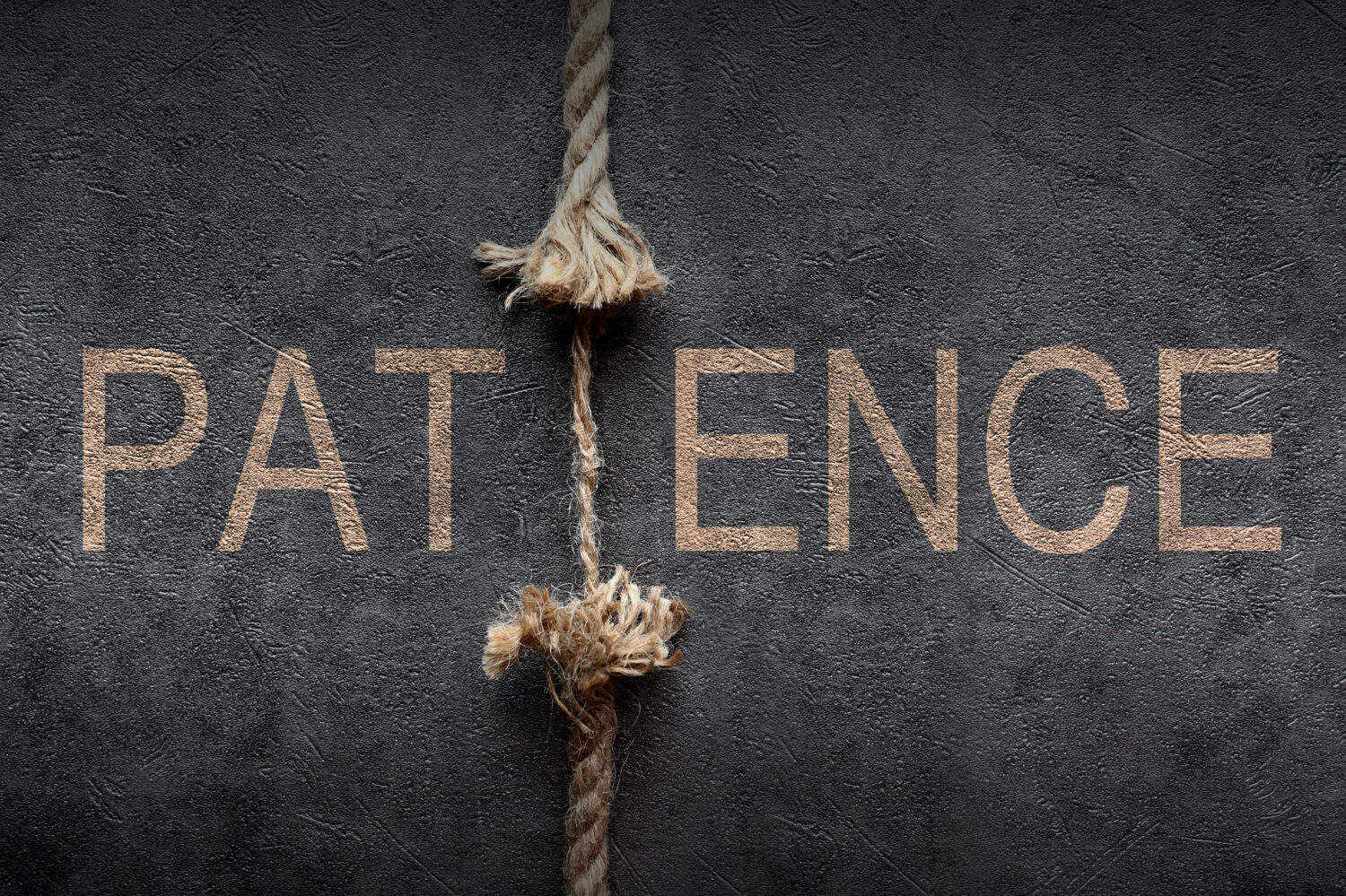
Patience visual
For investors who find it difficult to sit still, discipline can be designed into the process. Dollar-cost averaging (DCA), for instance, allows those who want to grow wealth over the long-term to do so via setting a certain amount aside to be invested on a regular schedule. This method removes emotional timing decisions and ensures you buy more shares when prices are low and fewer when they are high, averaging out your cost over time.
Diversification also serves as a silent stabilizer. By spreading investments across different asset classes (think equities, bonds, real estate, and perhaps a small allocation to alternatives), you’re less likely to panic when one sector underperforms. The key is to view your portfolio as a long-term ecosystem rather than a collection of short-term bets.
Finally, setting clear, realistic financial goals helps reframe patience as progress. If you’re investing for retirement 20 or 30 years down the road, short-term market volatility becomes background noise rather than a call to action.









 Top Gaining Stocks
 Top Losing Stocks