


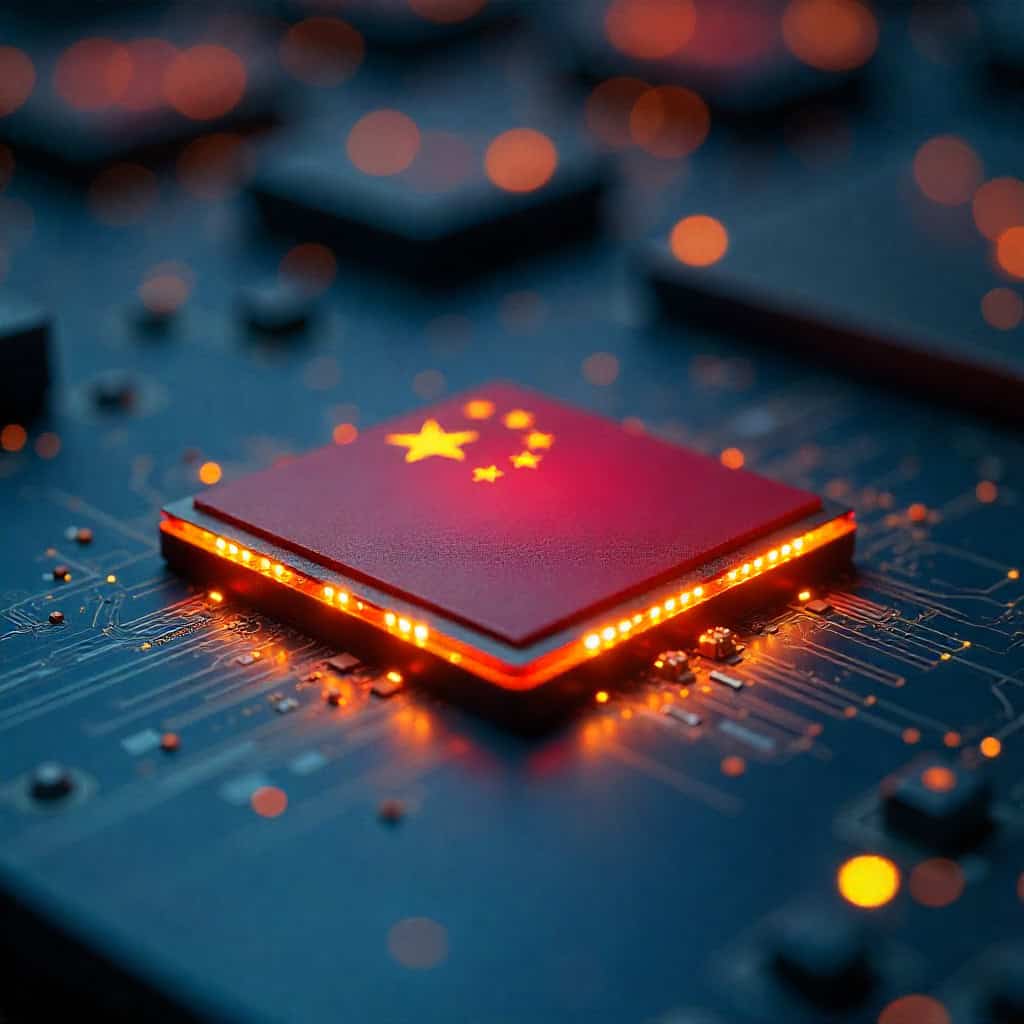
The U.S.-China trade war delivered an early gut punch to Nvidia (NASDAQ:NVDA | NVDA Price Prediction). What began as a promising growth engine — China once accounted for a sizable and rapidly expanding slice of the company’s data-center revenue — quickly turned into a regulatory quagmire.
Repeated rounds of export controls forced Nvidia to redesign advanced AI accelerators, stripping out key features to create “compliant” versions for the Chinese market. Even these watered-down chips faced endless back-and-forth: Washington would grant licenses, only for Beijing to drag its feet or impose its own hurdles. After more than a year of this exhausting ping-pong, it appears Nvidia is ready to walk away from China — at least for now.
Pivoting AI Chip Production
According to a Financial Times investigation today, Nvidia has quietly halted production of its H200 AI chips specifically earmarked for Chinese customers. The company is redirecting that precious manufacturing capacity at Taiwan Semiconductor Manufacturing (NYSE:TSM) toward its newest Vera Rubin platform — the successor to the already red-hot Blackwell architecture. Two people familiar with the matter told the Times that the shift is already underway, signaling that Nvidia no longer anticipates meaningful H200 sales in China anytime soon.
Nvidia itself has offered no official comment, and the report remains unconfirmed, yet the move aligns with a string of recent developments. Just last week, the U.S. government issued licenses allowing “small amounts” of H200 chips to reach Chinese buyers — following formal approval from the Trump administration in January. Even so, Commerce Dept. officials confirmed in February that not a single H200 unit had actually been sold there. Shipments remain stalled by layers of compliance guardrails on both sides of the Pacific.
The H200 was never going to be a full-featured flagship for China; it was already a “dumbed down” variant of Nvidia’s Hopper-generation technology. Still, the chip represented the most advanced product the company believed it could legally sell into the world’s second-largest economy.
Now, with that door effectively closed, Nvidia is reallocating scarce capacity to Vera Rubin, which entered full production earlier this year and is slated for broader availability in the second half of 2026.
A Shift to Align with Market Realities
From a pure business standpoint, the pivot is rational. Global demand for Nvidia’s latest AI accelerators remains insatiable. Hyperscalers, cloud providers, and enterprise customers in the U.S., Europe, and other open markets are clamoring for every unit of Blackwell — and soon Rubin — that the company can produce. These newest chips command significantly higher margins than the H200s ever could. Redirecting capacity therefore maximizes both revenue and profitability.
Even if Beijing had green-lit the H200 without further delay, Nvidia was not banking on substantial revenue from China. Reports indicated the White House was considering capping sales at roughly 75,000 chips per customer — an order of magnitude below what would move the needle for a company whose data-center segment already exceeds $100 billion annually.
Meanwhile, Chinese authorities have made clear their priority: building domestic manufacturers capable of producing advanced AI silicon. Beijing has repeatedly signaled it will favor homegrown alternatives over foreign vendors, no matter how neutered the imports might be.
In short, the calculus is straightforward. Why tie up leading-edge chip capacity on a product line that faces indefinite regulatory limbo and razor-thin margins when unrestricted demand elsewhere is exploding? Nvidia’s decision– if accurate — reflects a logical surrender. The company is simply following the money to the markets where it can sell the most advanced technology at the highest prices with the least friction.
Key Takeaways
The widening rift between Washington and Beijing has reached a point where even the most China-dependent multinationals are willing to forgo today’s sales opportunities. This marks a stark contrast from just a few years ago, when access to the Chinese market was an all-consuming obsession that went beyond just tech companies. Today, China feels more like an afterthought than a must-win theater.
If the reported transition from H200 to Vera Rubin production materializes, it does not mean Nvidia has permanently abandoned the Chinese market. The company has repeatedly demonstrated its willingness to design compliant products and navigate export rules when the economics justify the effort. What it does mean is that, right now, the hassle, delays, and opportunity costs simply outweigh the rewards — especially when robust, high-margin demand is abundant elsewhere.






 Top Gaining Stocks
 Top Losing Stocks