


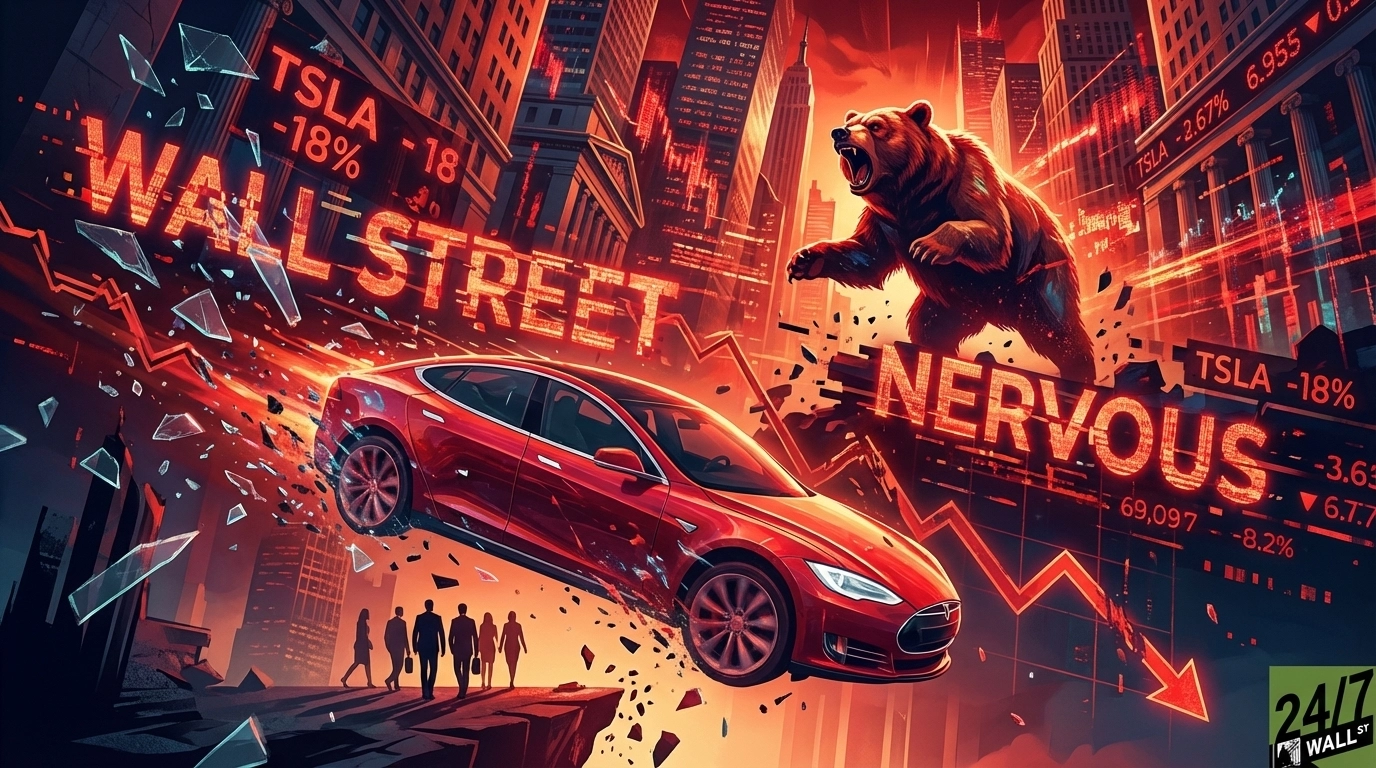
Tesla (NASDAQ:TSLA | TSLA Price Prediction) stock may be up 2% today, but the shares remain well below their all-time high. TSLA is down approximately 18% from its December 2025 peak of $498.83, and the reasons behind that slide are piling up fast.
The stock is down 9% year-to-date, even as bulls cling to the long-term AI and robotaxi thesis. Wall Street’s nervousness isn’t irrational; as we’ll discover, the concerns are data-driven.
Executive Exodus Rattles Confidence
The most immediate catalyst spooking investors is a wave of leadership departures. For one thing, Tesla Vice President of Finance Sendil Palani is departing after 17 years with the company, having served as VP of Finance since 2021.
Palani’s exit follows a string of other high-profile departures, including the VP of Gigafactory Texas, program managers for Cybercab and Cybertruck, the director of the robotaxi backend, and the VP of IT and AI Infrastructure. When the people closest to your most critical programs start leaving, the market notices.
FSD Safety Metrics Are Falling Apart
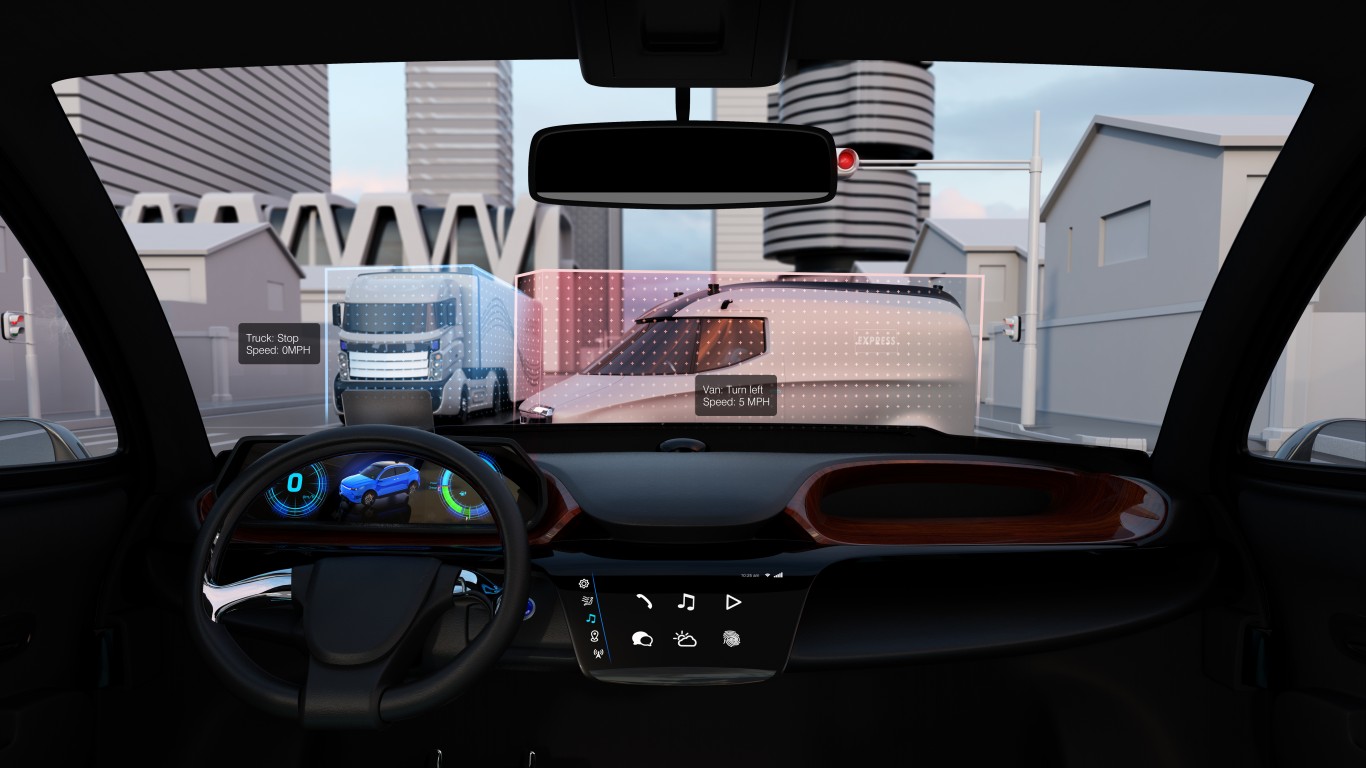
Here’s where the bear case gets technical and alarming. Analyst Gordon Johnson of GLJ Research flagged that Tesla’s Full Self-Driving (FSD) safety metrics are “sharply deteriorating.” The specific number that should concern investors: the “city miles to critical disengagement” metric for FSD v14.2 dropped to 809 miles from a peak of 4,109 miles with v14.1.
For context, Waymo achieves 30,000 miles before removing safety drivers — nearly 37 times better than Tesla’s current FSD performance. A new federal NHTSA probe into Tesla’s FSD system is also underway, adding regulatory risk to an already complicated autonomous vehicle story.
And as we’ve covered previously, Tesla’s Robotaxi Promises Are Empty: Zero Miles Logged, No Permits, Now Suing Regulators. It’s a credibility problem for Tesla that doesn’t disappear with a product announcement.
Deliveries Declining, Competition Accelerating
Tesla’s vehicle deliveries declined 16% year-over-year in Q4 2025 and 9% for the full year, even as the global EV market grew significantly. Meanwhile, China-based EV manufacturer BYD (OTC:BYDDY) reported a 165% increase in European registrations in January 2026, while Chinese competitors continue undercutting Tesla on price with rapid new model releases.
Tesla’s full-year 2025 net income came in at $3.794 billion, down 46.79% year-over-year, while operating income fell 38.45%; this occurred while revenue was essentially flat at $94.827 billion. The company is spending heavily on AI and autonomy while the core automotive business deteriorates. That’s a difficult story to sell at a trailing P/E ratio of around 370x.
The Bull Case Still Has a Pulse
To be fair, not everyone is running for the exits. Cathie Wood and ARK Investment Management continue buying the dip, anchoring their conviction on the long-term AI and robotaxi thesis.
Furthermore, Tesla’s China-made EV sales jumped 91% year-over-year in February to 58,600 units, marking a fourth consecutive monthly rise. That’s a genuine bright spot, even if it follows a weak comparison period.
The energy business is also quietly becoming a real contributor. Tesla’s Energy Generation and Storage segment posted $3.837 billion in Q4 2025 revenue, up 25% year-over-year, with record quarterly deployments of 14.2 GWh. And despite the recent pullback, TSLA stock is still up 79.71% over the past year from $222.15, indicating that the long-term chart still looks very different from the short-term pain.
What to Watch
Prediction markets are currently pricing in a 78% probability that Tesla delivers fewer than 350,000 vehicles in Q1 2026. If that turns out to be the actual figure, it would extend Tesla’s delivery decline narrative and likely pressure the stock further.
The analyst consensus target sits at $421.61 for TSLA stock. However, with a “Hold” rating dominating Wall Street, analysts note that a re-rating would likely require a delivery recovery or a credible FSD milestone.
Looking ahead, Q1 2026 delivery data, due at the end of March, will be the next major inflection point for TSLA. Q1 2026 delivery data will be a key data point for investors monitoring Tesla stock, which needs a turnaround sooner rather than later.









 Top Gaining Stocks
 Top Losing Stocks