


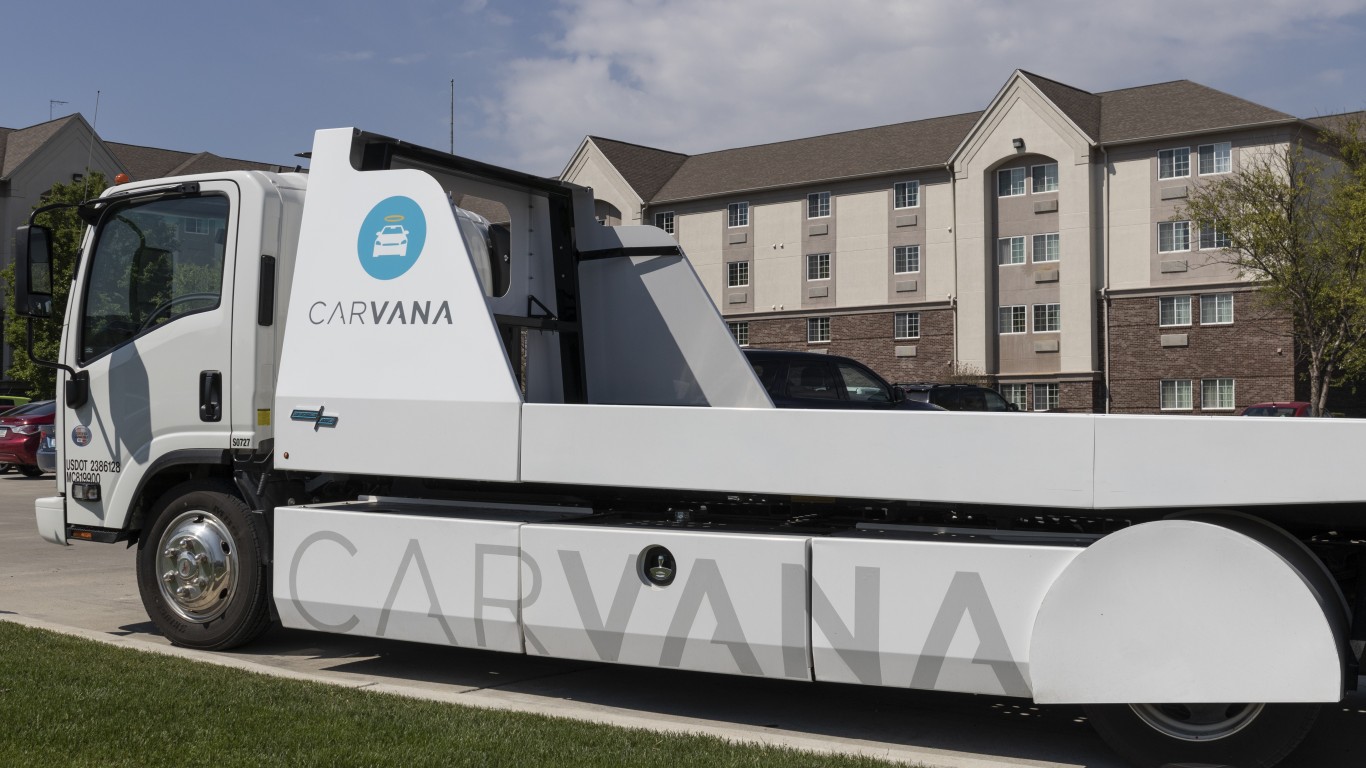
Carvana (NYSE:CVNA | CVNA Price Prediction) has delivered one of the most explosive rallies in recent market history, soaring nearly 4,000% over the past three years from pandemic-era lows. As recently as January, the used-car disruptor traded near $486, producing even more spectacular returns for early believers. Yet that momentum has notably stalled, with shares down nearly 40% from those highs.
This morning, Carvana’s board approved a 5-for-1 forward stock split, pending shareholder approval at the May 5 annual meeting. Trading on a split-adjusted basis would begin May 7. Stock splits often ignite bullish sentiment and retail enthusiasm, but does this move truly signal a buying opportunity for the embattled online retailer, or is it merely cosmetic? Let’s separate the hype from the fundamentals.
Stock Splits Are Technically Meaningless
At their core, stock splits accomplish nothing fundamental. A 5-for-1 split simply multiplies shares outstanding by five while dividing the price per share by the same factor. If you own 100 shares at $300, you’ll own 500 at $60 after the split — your total equity stake remains identical.
It’s the corporate equivalent of slicing a pizza into thinner pieces: the pie hasn’t grown, only the number of slices. Earnings per share, market capitalization, and every balance-sheet metric adjust proportionally. No new cash flows in, no debt disappears, and the company’s underlying economics stay untouched. Investors who treat splits as value-creating events are chasing an optical illusion.
In practice, however, markets interpret splits as bullish. Management signals confidence that future growth will lift the post-split stock price, while also broadening accessibility by lowering the nominal price. Institutional mandates — retail brokers offering fractional shares notwithstanding — and employee stock-purchase plans often favor cheaper shares.
By dropping Carvana stock from roughly $300 to around $60 per share, the company aims to invite more participants into its growth story — especially its own workforce, as the company explicitly noted. History shows split announcements frequently spark short-term rallies as momentum traders pile in.
Carvana’s Growth Prospects Face Serious Headwinds
Despite Carvana’s multi-year surge, reality has intruded. Shares are down roughly 30% year-to-date, having cratered from the January highs near $486 per share. The slide accelerated after disappointing fourth-quarter earnings and a January short-seller report from Gotham City Research that questioned the veracity of Carvana’s financials. The report alleged over $1 billion in overstated earnings tied to undisclosed related-party transactions involving entities linked to the Garcia family (CEO Ernie Garcia’s father controls a large stake).
Critics highlighted heavy reliance on loan sales, lax underwriting in subprime auto financing, and opaque dealings that may have masked true profitability. Broader used-car market pressures — rising inventory, softening consumer demand, and higher interest rates — have compounded the damage. While Carvana has streamlined operations and returned to profitability, these lingering doubts cast a shadow over its ability to sustain explosive growth.
Key Takeaway
This split looks more like a calculated attempt by management to manipulate investor sentiment and rekindle retail fervor than a genuine inflection point. When shares traded nearly 40% higher around $480 in January, a split would have felt far more organic.
At today’s elevated $300 level, the post-split price of roughly $60 would still come in under the sub-$100 sweet spot most splits target, but too many questions still linger around Carvana’s accounting transparency, dependence on related parties, and the health of the used-car sector overall. Its fundamentals won’t change with the split, only the number of slices on the plate. That means prudent investors should avoid buying the stock either before or after the split.










 Top Gaining Stocks
 Top Losing Stocks