


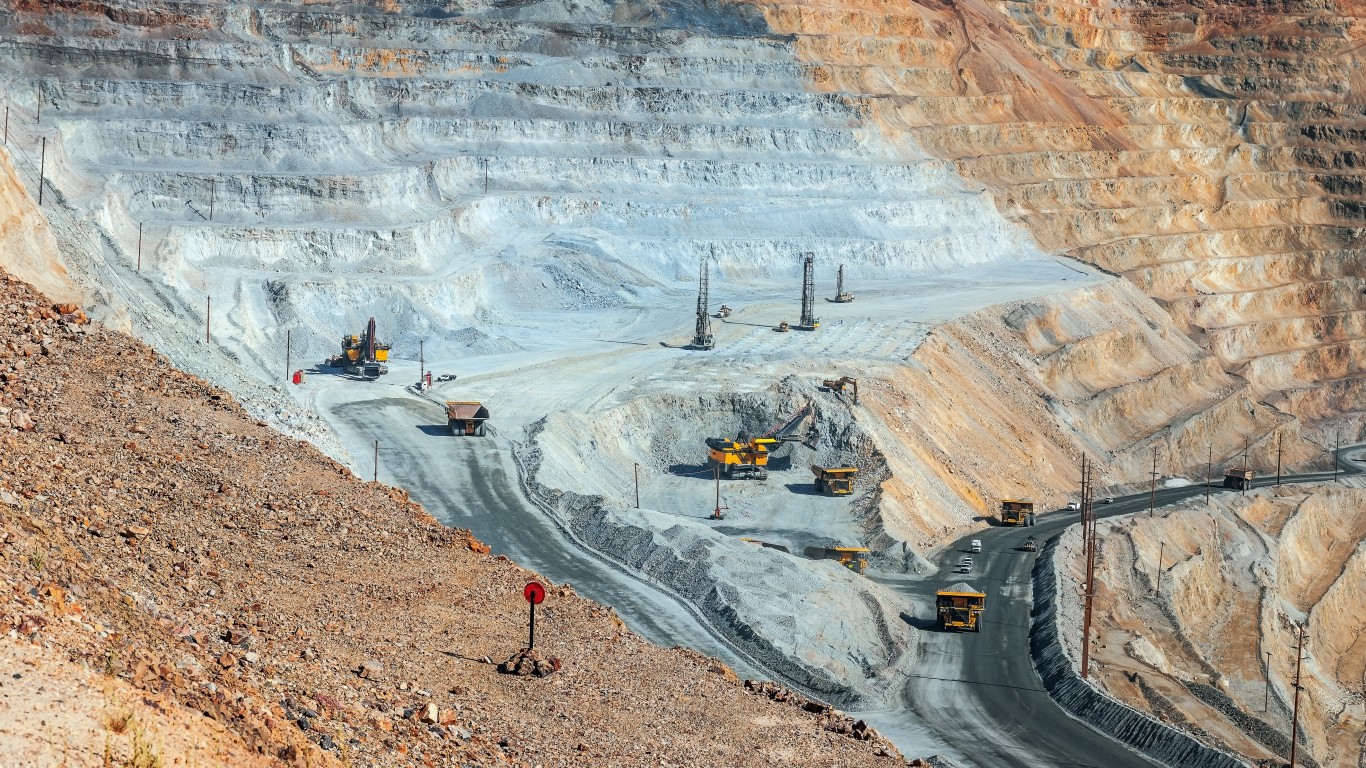
Mosaic (NYSE: MOS | MOS Price Prediction) has spent most of its public life trading on fertilizer cycles. The five-year return of −14.9% reflects that reality. Then, on March 11, the stock jumped 10% in a single session on news that had nothing to do with potash or phosphate prices.
The catalyst was a joint venture with Rainbow Rare Earths to extract neodymium and praseodymium (NdPr) from phosphogypsum at Mosaic’s existing Uberaba, Minas Gerais facility in Brazil. Phosphogypsum is a fertilizer byproduct waste stream that Mosaic currently disposes of. The Rainbow JV converts that disposal cost into a potential revenue stream with minimal incremental capital. A preliminary economic assessment is complete, a prefeasibility study is underway, and target production is set for 2030.
NdPr are used in the permanent magnets that power EV motors, wind turbines, and defense systems. China controls the dominant share of global supply, and Western governments are actively building alternative sourcing. That geopolitical urgency is why a fertilizer company’s announcement of a rare earths project moved its stock 10% in one day.
The Valuation Gap
Mosaic currently trades at a trailing P/E of roughly 16x and a price-to-book of 0.77, classic fertilizer cyclical multiples. MP Materials (NYSE: MP), the closest U.S. rare earths pure-play, is up 122.2% over the past year and trades at a price-to-sales ratio of 38.3x despite reporting a trailing EPS of −$0.50. The market is paying a substantial premium for critical minerals optionality, even without current profitability.
Mosaic’s consensus analyst target is $32.01, with the stock at $28.83. BMO Capital’s Joel Jackson carries a Buy rating with a $35.00 price target. That consensus almost certainly does not yet reflect rare earths optionality, as the prefeasibility study hasn’t been published and production is four years away.
Real Risks Remain
The bull case rests on two simultaneous bets. Near-term, a Middle East supply shock is pushing fertilizer prices higher, with Morningstar flagging higher near-term profits from the disruption. Longer-term, the Uberaba project needs to clear prefeasibility, permitting, and capital allocation before contributing a dollar of revenue.
Meanwhile, a Justice Department antitrust probe is circling the fertilizer industry, 64 agricultural groups are pressuring Mosaic to drop phosphate import duties, and the U.S. government dropped its appeal on Morocco tariff protections. On the institutional side, Moore Capital cut its stake by 25.4% and Fieldview Capital slashed its position by 91.6%. The 30-day implied volatility has reached 61, near 52-week highs—the options market is pricing in meaningful uncertainty.
CEO Bruce Bodine pointed toward the strategic direction on the Q4 earnings call: “Looking ahead to 2026, we’re pursuing strategic alternatives for selected Brazilian assets, including unlocking incremental value from co-products, niobium, and other critical minerals.” That framing suggests the Rainbow JV is part of a broader portfolio repositioning, not a one-off announcement.
With the stock trading within a few dollars of the consensus target, the rare earths optionality is the swing factor, though it won’t be quantifiable until the prefeasibility study lands. The prefeasibility study and any updates on the DOJ investigation represent the two most consequential near-term developments for the company.











 Top Gaining Stocks
 Top Losing Stocks