



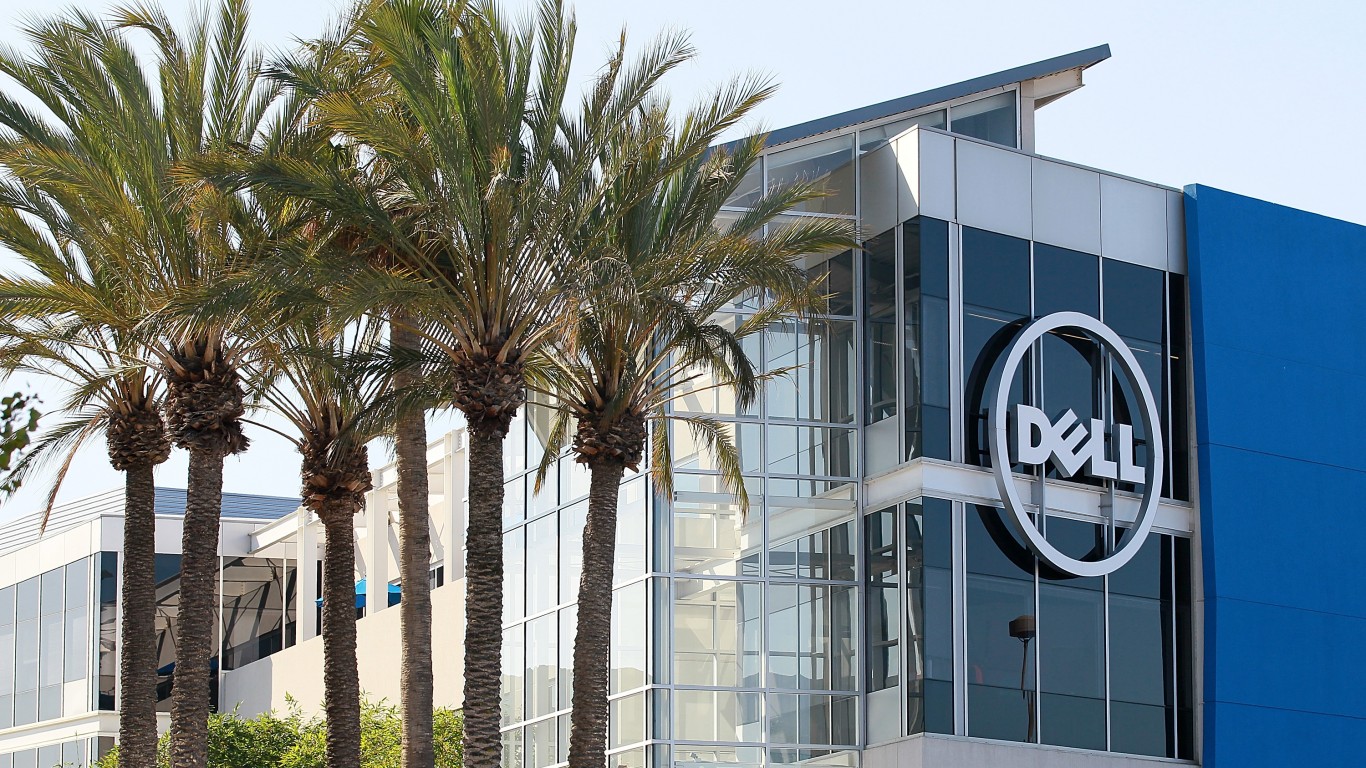
Dell Technologies (NYSE:DELL | DELL Price Prediction) fell from $168 all the way down to $110, and Jim Cramer thinks the market got it completely wrong. On a recent Mad Money segment, Cramer argued the selloff was irrational, driven by macro sentiment rather than anything wrong with the business. The fundamentals, he said, never stopped being strong.
His read on the cause: the selloff began when the Nasdaq peaked in AI-related names like Nvidia after months of blistering gains, and Dell got caught in the broader rollover. That kind of guilt-by-association selling is exactly the environment where quality companies get mispriced.
The Fundamentals Cramer Was Looking At
Cramer pointed to three specific reasons Dell deserved better than what the market gave it.
First, Dell bought back a significant amount of stock during the decline. That’s not a company in distress. Dell repurchased approximately 54 million shares in FY26 and returned a record $7.5 billion to shareholders for the full year. Management was buying while everyone else was selling.
Second, Dell’s servers had become the principal way for businesses to buy Nvidia chips. In Q4 FY26, Dell’s AI-optimized server revenue hit $8.95 billion, up 342% year-over-year. Full-year AI server orders came in at over $64 billion, with a record $43 billion backlog entering FY27. Dell isn’t riding the AI wave, it’s one of the primary infrastructure pipes it flows through.
Third, and most underappreciated: Dell’s two major competitors, HP Enterprise and Supermicro, don’t have clean enough balance sheets to offer vendor financing at scale. Dell can, and does. When a company is buying millions in AI server equipment, vendor financing is a genuine competitive advantage. Dell’s two major competitors, HP Enterprise (NYSE:HPE) and Supermicro (NASDAQ:SMCI), don’t have clean enough balance sheets to offer vendor financing at scale. Dell can, and does. HP Enterprise and Supermicro don’t have clean enough balance sheets to compete on those terms. Dell’s $11.53 billion in cash and $11.19 billion in operating cash flow for FY26 give it that firepower. Supermicro, by contrast, posted negative operating cash flow of $917.5 million in Q1 FY26 and watched its gross margin collapse to 6.3% in Q2 FY26. That’s not a company offering competitive financing terms.
Where Dell Sits Now
The stock has recovered sharply. As of March 19, Dell was trading at $156.76, up 35% over the past month alone. Analyst consensus sits at a $167.22 price target with 19 buy ratings versus just 1 sell. FY27 guidance calls for revenue of $138 to $142 billion and non-GAAP EPS of $12.90 at the midpoint.
Cramer’s broader lesson isn’t really about Dell specifically. It’s about what happens when you understand why you own something. Investors who bought on the way down felt, as he put it, “like a total chump” when it hit $110 with no sign of a bottom. But the business never broke. The backlog kept growing, cash kept flowing, and AI server orders kept coming in, a disconnect between price action and business fundamentals that Cramer argued the market eventually corrected.










 Top Gaining Stocks
 Top Losing Stocks