



Freeport-McMoRan (NYSE: FCX | FCX Price Prediction) and Newmont (NYSE: NEM) both beat earnings in their most recent quarters, yet both stocks have been hit hard. The former is down 16.7% over the past month, while the latter has fallen 18.8%. The selloff raises a real question for commodity investors: which is better positioned to recover?
A Mud Rush vs. a Record Year
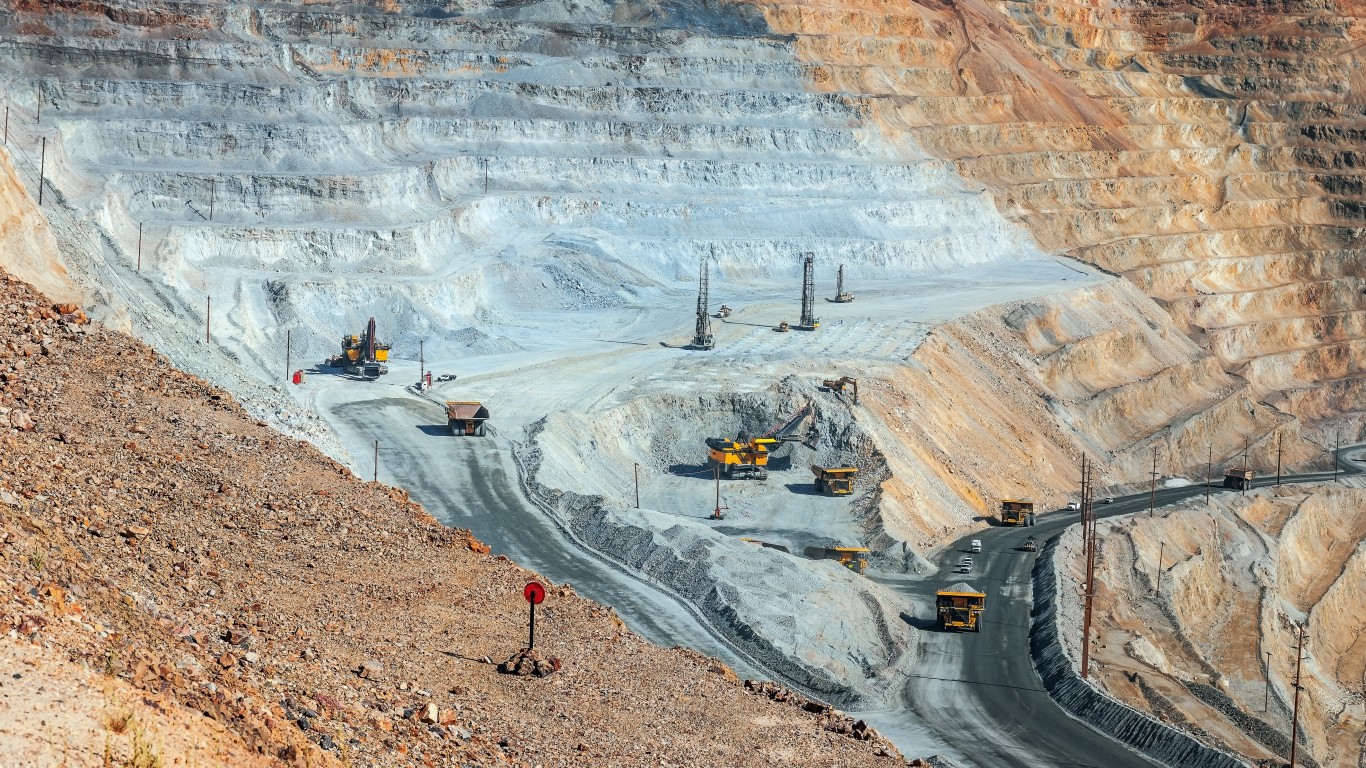
FCX’s Q4 was shaped almost entirely by the September 2025 mud rush at its Grasberg Block Cave mine in Indonesia, which killed seven workers and halted operations. Copper output collapsed to 640 million pounds in Q4, down from 1.0 billion pounds a year earlier. Gold production fell to 65,000 ounces versus 432,000 ounces in Q4 2024. Indonesia posted a gross loss of $51 million on $585 million in noncash and incident-related charges. What saved the quarter were copper prices: FCX realized $5.33 per pound, up from $4.15 per pound a year ago.
Newmont’s 2025 was the opposite. The world’s largest gold miner delivered record full-year free cash flow of $7.3 billion, retired $3.4 billion in debt, and closed the year in a $2.10 billion net cash position. Q4 realized gold prices hit $4,216 per ounce, with gold by-product all-in sustaining costs at just $1,302 per ounce.
| Metric | FCX (Q4 2025) | NEM (Q4 2025) |
|---|---|---|
| Revenue | $5.63B | $6.82B |
| EPS Beat | 51.6% | 27.9% |
| Free Cash Flow (FY2025) | $1.12B | $7.3B |
| Forward P/E | 23x | 14x |
Recovery Story Versus Execution Story
FCX’s 2026 thesis depends entirely on Grasberg. Management guided a phased restart beginning Q2, targeting about 85% of normal production rates in H2 2026, with copper sales recovering to 4.1 billion to 4.2 billion pounds annually by 2027–2028. CEO Kathleen Quirk stated: “our team has a clear focus on restoring operations at Grasberg safely and sustainably, and on continuing to build values in the Americas through our innovative growth and efficiency initiatives.” The leaching program adds another layer, targeting 300 million incremental pounds in 2026 and 800 million pounds by 2030.
Newmont’s 2026 challenge is different: production steps down to about 5.3 million ounces from 5.9 million in 2025 due to planned mine sequencing, and AISC rises to $1,680 per ounce. Ghana tax changes could add about $50 per ounce to total AISC. A bushfire at Boddington already trimmed about 60,000 ounces from Q1 2026 production. New CEO Natascha Viljoen inherits a clean balance sheet but faces a year of cost headwinds before the next wave of projects contributes.
What Needs to Go Right
For FCX, the Grasberg restart timeline is everything. Any further delay pushes high-volume, low-cost production further out. Copper prices matter too: FCX guided operating cash flow of around $8 billion at $5.00 per pound copper and about $11 billion at $5.75 per pound, illustrating how leveraged the business is to the metal’s price.
For Newmont, the key is whether gold stays above $3,000 per ounce to offset higher 2026 costs, and whether Viljoen’s capital allocation delivers. The analyst consensus target of $141.66 implies significant upside, but that depends on cost discipline holding through a lower-production year.
Comparing the Two Recoveries
FCX carries more upside potential if Grasberg restarts on schedule and copper prices hold, but that upside is concentrated in a single mine recovery. Newmont enters 2026 with a stronger balance sheet and a lower forward multiple (14x versus FCX’s 23x), and has committed to a $1.1 billion annual dividend. The two stocks represent different risk profiles: FCX is more leveraged to a copper supercycle thesis, while Newmont offers more balance sheet stability heading into a lower-production year.








 Top Gaining Stocks
 Top Losing Stocks